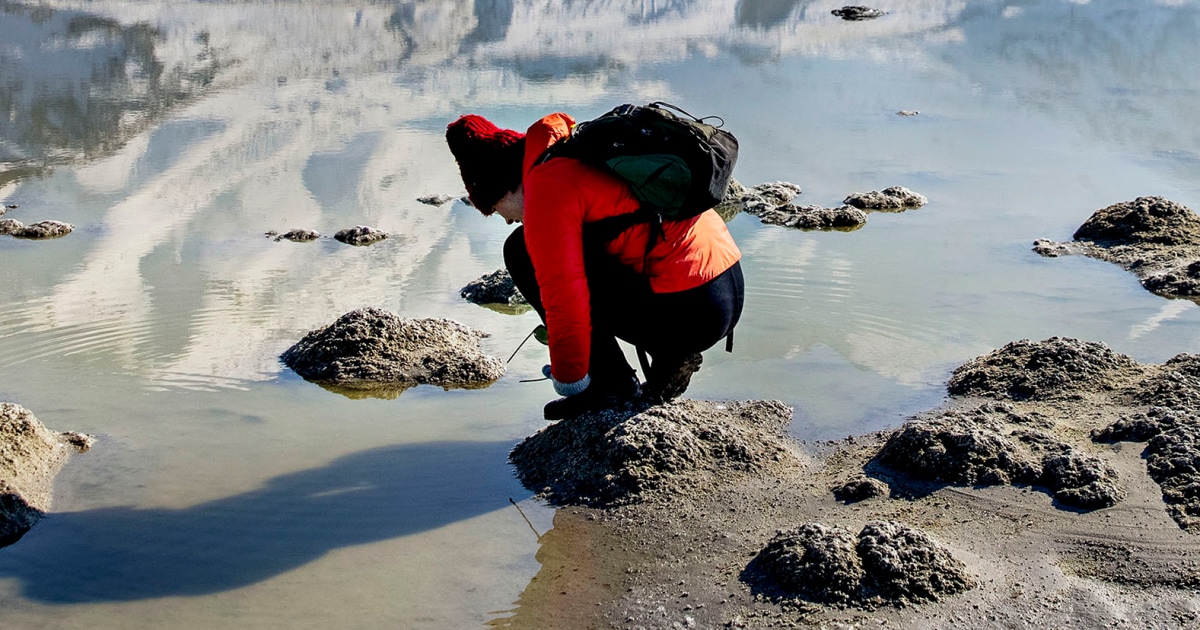
SALT LAKE CITY — An ambitious effort to restore Utah's shrinking Great Salt Lake has captured unlikely support from across the political spectrum, with a goal to refill it by the time the 2034 Winter Olympics return to the city. The plan, announced last fall by Gov. Spencer Cox, aims to raise the lake's water levels in just eight years, a timeline tied to the global event that could spotlight the state's environmental challenges or triumphs. Josh Romney, son of former U.S. Sen. Mitt Romney, launched a $100 million philanthropic campaign to fund water acquisitions, and last week, President Donald Trump endorsed the cause with a social media post declaring, “MAKE ‘THE LAKE’ GREAT AGAIN!”
The Great Salt Lake, a terminal saline lake with no outlet, has been receding for decades due to drought, climate change and heavy human water use, reaching a record low in 2022 when its volume had dropped about 67% since pioneers settled the Salt Lake Valley in the 19th century. At that point, the exposed lake bed unleashed toxic dust storms carrying heavy metals into nearby communities, prompting scientists to warn of an impending ecological disaster. “The lake is an ‘environmental nuclear bomb,’” a Utah official said at the time, highlighting fears of health risks from airborne pollutants and the collapse of a vital ecosystem that supports over 10 million migratory birds annually.
Tim Hawkes, interim director of Romney's fundraising project and a former Utah state representative, described the growing momentum as unprecedented. “Everybody’s on board,” Hawkes said. “You’ve got the president of the United States tweeting about it. So that’s a lot of momentum.” The initiative has bridged divides between Republican lawmakers, business leaders and environmental groups like Friends of Great Salt Lake, which have long advocated for action. Despite the bipartisan buy-in, experts caution that the task is monumental, requiring Utah to deliver about 800,000 acre-feet of water to the lake each year — equivalent to the volume of 400,000 Olympic-sized swimming pools — to have even a 50% chance of meeting the 2034 target, according to a January task force report.
The lake's decline stems largely from overallocation of its inflows, where water rights exceed the annual supply, compounded by agriculture, mining and urban growth. Agriculture alone accounted for 65% of depletions between 2020 and 2024, per the report, while residential use has surged 75% since the mid-1990s amid Utah's booming population. To reverse this, the state has implemented policy shifts over the past five years, including a $40 million water trust fund established in 2022 and revisions to water laws that recognize letting water flow to the lake as a “beneficial use” for farmers, preventing forfeiture of unused rights.
One key intervention came in 2022 when officials raised a berm along a railroad causeway separating the lake's north and south arms, allowing better control of water and salt flow. That winter's unusually heavy snowfall — twice the average — helped dilute salinity in the southern arm, temporarily reviving the lake's food web. “They filled up and diluted all the salt in the southern part of the lake with that huge snowpack,” said Kevin Perry, an atmospheric scientist at the University of Utah who studies the lake's dust emissions. Brine flies, a foundational species, rebounded dramatically. “The flies this year were just robust,” noted Bonnie Baxter, a biology professor at Westminster University, contrasting with 2022 when “the flies were just gone.”
Yet, current conditions are precarious. This year's snowpack in the region is dismal, threatening to push water levels back toward record lows by fall, according to Hawkes. “We’re approaching record low levels again,” he said. “That tends to put pressure back on policymakers.” Joel Ferry, director of the Utah Department of Natural Resources, acknowledged the fragile progress: “We have avoided that environmental nuclear bomb. We have put the red button away.” Still, levels remain nearly 10 feet below the healthy threshold, with marinas once bustling with sailboats now stranded in sand.
Efforts to secure more water have included patchwork solutions like subsidizing efficient irrigation for farmers, installing water meters and combating invasive phragmites reeds that cover up to 55,000 acres and consume twice as much water as native plants. In January, Utah purchased the bankrupt U.S. Magnesium mining operation for $30 million, gaining access to 65,000 to 80,000 acre-feet of water annually that the company had been using. However, the deal comes with a catch: the state must remediate a former mining site designated as a Superfund location, potentially costing $100 million to $200 million, Ferry said.
The state is also exploring redirecting water from the Newfoundland Evaporation Basin, a remote desert reservoir to the west, which could add another 30,000 acre-feet per year. Last year, Utah delivered a record 163,468 acre-feet to the lake — the highest in five years — but that's only about a fifth of what's needed annually for the 2034 goal. Lynn de Freitas, executive director of Friends of Great Salt Lake, called the challenge “herculean.” Romney echoed the scale, telling NBC News, “It is going to take a lot of money.” He has raised about 30% of his $100 million target so far and estimates $500 million may be required overall to stabilize levels.
Romney's approach focuses on voluntary transactions, leasing agricultural water rights to ensure farmers benefit financially. “I want any farmer participating to be ‘financially better off working with us than they would be without us,’” he said. His board, described as “very conservative and business-minded,” includes figures like television producer Mark Burnett and Crystal Maggelet, CEO of FJ Management, one of the largest privately held companies in the U.S. Ducks Unlimited, a conservation group rooted in waterfowl hunting, has pledged another $100 million for wetland restoration. Brian Steed, Utah's Great Salt Lake commissioner since 2023, emphasized the need for capital: “Those tools require a voluntary transaction between those that own the water and those that want to use the water, and that requires some capital.”
The push has avoided more aggressive measures like restricting development or a “buy and dry” strategy that would retire farmland irrigation, which the state has been reluctant to pursue amid economic growth pressures. Romney, a real estate developer himself, cited personal stakes: concerns over dust affecting his children's health and broader business risks. “Big real estate developers were like, ‘Wow, this could really impact our business and our livelihood if even just a small percent of Utahns begin to worry about the health impact of the lakes and move elsewhere,’” he said.
Trump's involvement adds a national dimension, despite his long feud with the Romney family — he recently called Mitt Romney a “real loser” in a speech. Gov. Cox met with Trump and described the lake's plight, leading to the president's endorsement at the annual Governors Dinner last month. “We’re not going to let it go. That’s what I call a real environmental problem,” Trump said. “Saving the Great Salt Lake, that’s what we’re going to be doing.” Cox later announced plans to seek about $1 billion in federal funding, according to KSL News.
Romney welcomed the support, despite policy differences. “I think it gives permission for a lot of people on the right, who are probably a little more wary of environmental issues, to see this is a real issue,” he said. He added that traditional advocacy from left-leaning groups like the Audubon Society and the Nature Conservancy hadn't fully engaged business leaders in his community. Casey Snider, a Republican state representative, praised the involvement of Utah's major foundations and family names: “You’ve got some of the biggest foundations and the biggest family names that are really helping us move this forward.”
Beyond ecology, the lake's fate ties to Utah's winter sports economy. A 2013 study attributed up to 10% of annual snowfall in the Wasatch Range — site of the 2034 Olympic events — to lake-effect snow, where cold air gains moisture over the warmer water. A 2024 analysis warned that the mountains could see half as much precipitation if the lake vanished entirely. No terminal saline lake has ever been fully restored in modern history, making Utah's bid groundbreaking or cautionary.
By 2034, Romney envisions two narratives: “The story is either going to be, ‘This is the first saline lake in modern history that’s been restored, or in the process of being restored.’ Or, ‘Look at this desert landscape. Look what’s happening to Utah. Look at the ecological disaster.’” As global terminal lakes shrink amid climate pressures, Utah's experiment could offer lessons, but success hinges on sustained funding, wetter winters and collective sacrifice from water users. State officials and philanthropists continue racing to leverage new tools, hoping the Olympic deadline galvanizes action before the next crisis looms.