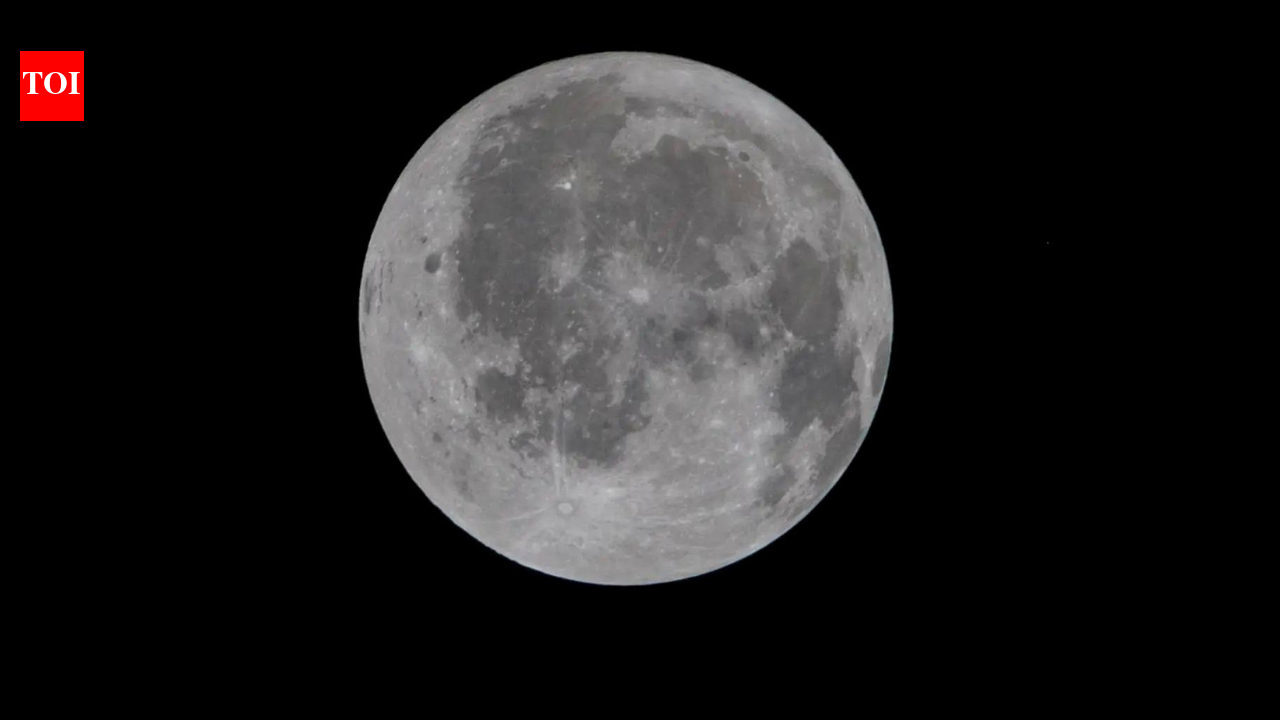
In a bold return to lunar exploration, NASA's Artemis II mission is set to make history as the first crewed flight to the Moon since the Apollo era, with astronauts relying primarily on their own eyes to capture the details of the lunar surface. Scheduled for launch no earlier than September 2025 from Kennedy Space Center in Florida, the mission will send four astronauts—Commander Reid Wiseman, Pilot Victor Glover, Mission Specialist Christina Koch, and Mission Specialist Jeremy Hansen—on a 10-day journey that circles the Moon without landing. This orbital flyby marks a crucial step in NASA's plans to establish a sustainable human presence on the lunar surface by the end of the decade.
At the heart of the scientific endeavor is an emphasis on human observation, a method that harkens back to the early days of spaceflight but is being elevated to new heights with modern training and technology. Lead scientist for the mission, Kelsey Young from NASA's Goddard Space Flight Center, described the astronauts' eyes as "the best camera to ever exist." According to Young, this approach allows for real-time, nuanced assessments that no instrument can fully replicate, enabling the crew to spot geological features, color variations, and potential sites for future landings with unparalleled precision.
The decision to prioritize visual study stems from the mission's dual goals of testing the Orion spacecraft's capabilities and gathering preliminary data for Artemis III, the planned lunar landing in 2026. During the 21-hour period when Orion is on the Moon's far side, out of direct communication with Earth, the crew will conduct detailed visual surveys. "We're training them to be geologists in space," Young explained in a recent interview, highlighting how the astronauts have undergone extensive simulations to identify craters, lava flows, and other surface anomalies from about 100 kilometers above the surface.
Artemis II builds on the uncrewed Artemis I mission, which launched successfully in November 2022 and looped around the Moon, validating the Space Launch System rocket and Orion capsule. That flight carried mannequins equipped with sensors to simulate human exposure to space radiation, but Artemis II introduces living observers who can adapt to unexpected sights. NASA officials, including Artemis program manager Pamela Melroy, have stressed that the human element adds a layer of intuition and flexibility that robotic probes cannot match.
The crew's preparation has been rigorous, involving months of geological fieldwork in Earth's volcanic regions like Hawaii's Kilauea and Iceland's lava fields to mimic lunar terrain. Astronaut Wiseman, a veteran of the International Space Station, noted during a press briefing, "Our eyes will be our primary tool, but we'll back it up with high-resolution cameras and spectrometers." This hybrid method ensures comprehensive data collection, with visual notes informing the use of onboard instruments to analyze composition and structure.
While the mission focuses on the Moon's south pole—a region rich in water ice that could support future bases—challenges abound. The far side's rugged landscape, pockmarked by ancient impacts, poses visibility issues even for trained eyes. Young acknowledged this, saying, "The lighting conditions will be tricky, with the Sun low on the horizon casting long shadows, but that's exactly why human observers are invaluable—they can interpret what machines might miss."
Beyond science, Artemis II carries symbolic weight as a milestone for diversity in space exploration. Koch, the first woman to complete a long-duration ISS mission, and Glover, the first Black astronaut to venture beyond low-Earth orbit, represent a new era. Hansen, from the Canadian Space Agency, underscores international collaboration, with partners like the European Space Agency contributing to Orion's service module. "This isn't just America's Moon; it's humanity's," Hansen said, emphasizing the global stakes.
Critics, however, question the mission's cost and timeline. The Artemis program has ballooned to an estimated $93 billion through 2025, drawing scrutiny from congressional watchdogs. Some experts, like planetary scientist Dr. Emily Lakdawalla from the Planetary Society, argue that while visual observation is poetic, it should complement, not supplant, advanced robotics. "Eyes are great, but we need data streams for verification," Lakdawalla commented, pointing to past missions like Lunar Reconnaissance Orbiter that have mapped the Moon in exquisite detail since 2009.
NASA counters that the human vantage point offers unique insights into site selection for Artemis Base Camp, targeted for the late 2020s. The south pole's permanently shadowed craters hold potential resources, but confirming accessibility requires on-the-spot judgment. According to mission planners, the crew will document at least a dozen candidate landing zones, using sketches, voice recordings, and photos to guide future robotic precursors.
The spacecraft itself, Orion, is designed for deep space endurance, featuring a heat shield tested to withstand reentry speeds of 11 kilometers per second. During Artemis II, it will perform a powered flyby of the Moon at 80 kilometers altitude, allowing close-up views. Engineers at Lockheed Martin, Orion's builder, have integrated windows optimized for lunar observation, larger than those on Apollo command modules to reduce distortion.
As the launch date approaches, excitement builds at Johnson Space Center in Houston, where the crew trains. Public engagement efforts, including live streams and educational outreach, aim to inspire the next generation. Young, who leads the science team, reflected on the mission's legacy: "By trusting our astronauts' eyes, we're not just looking at the Moon—we're seeing our future there."
Looking ahead, Artemis II paves the way for more ambitious steps. Success could accelerate Artemis III, involving SpaceX's Starship for landing, and eventual Mars missions in the 2030s. Yet, uncertainties linger, from technical glitches to geopolitical tensions affecting international partnerships. For now, all eyes—both on Earth and in orbit—are on this visual voyage.
In the broader context of space race 2.0, with China planning its own lunar station by 2030, NASA's human-led approach differentiates it from automated efforts. The European Space Agency's contribution, including fuel and power systems, strengthens alliances. As Melroy put it, "Artemis II isn't a photo op; it's the foundation for lunar sustainability."
Ultimately, the mission underscores a timeless truth in exploration: sometimes, the most powerful tool is the one we've always had. With the Artemis II crew poised to gaze upon the Moon's ancient face, humanity edges closer to reclaiming its place among the stars.