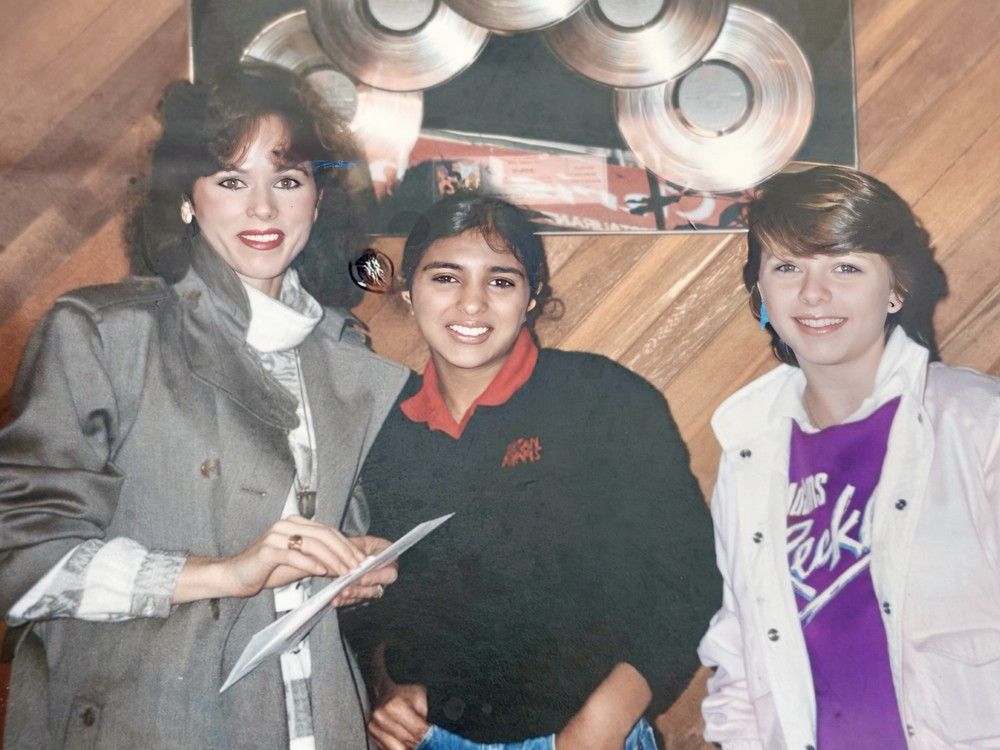
VANCOUVER, British Columbia — In an era dominated by digital snapshots and cloud storage, many people still cling to dusty shoeboxes filled with faded photographs, preserving fragments of lives long past. Jane Macdougall, a freelance writer and former National Post columnist based in Vancouver, explores this very dilemma in her latest column for The Vancouver Sun, titled "The Bookless Club: What's your old photo policy?" Published recently on the newspaper's opinion pages, the piece delves into the emotional tug-of-war between nostalgia and the practical need to declutter, using a decades-old image from her own past as a poignant entry point.
Macdougall's column opens with a personal anecdote, describing a photograph she has kept for "decades." In the image, she appears in her 20s, standing in the lobby of C-FOX radio station in Vancouver, where she unexpectedly landed a job as a morning-drive deejay. "Forget that I look more like a kindergarten teacher or a realtor, I had backed into what was considered a plum job for a rabble-rouser," she writes. The photo captures a moment from her hectic early career: on-air from 5:30 a.m. until 10 a.m. at the radio station, followed by shifts at BCTV doing the noon news weather and often the evening news weather as well. She wouldn't return home until after 8 p.m., leaving little room for a social life despite the good pay. "The genius part of the equation was I was making good money, but didn’t have a spare minute to spend it," Macdougall recounts.
Accompanying her in the photo are two young girls, identified only by their first names — Baljit and Andrea — who had mailed the picture to her after visiting the station. "They had written on the back of the photo before they mailed it to me, signing Baljit (if I’m deciphering her writing correctly) and Andrea," Macdougall notes. She remembers them as "the sweetest kids, and obsessed with radio, rock ‘n’ roll, and, in particular, a local recording artist." Their well-mannered, "delightfully girlish" demeanor stands out to her, a rarity in today's world, and she holds onto the hope that they have led "happy, prosperous lives, lives with satisfying careers, stable marriages and good kids." For reasons she can't quite articulate, discarding the photo feels impossible.
Macdougall's reflections extend beyond this single image to the broader challenge of managing personal archives. She stores hundreds of similar photos in shoeboxes on the top shelf of a closet, calling them a "depository of orphaned memories." These collections include "unflattering snapshots of yourself through the ages," family Christmas photos from acquaintances, excess school portraits, and oddities like "inexplicable snapshots of the inside of the garage" or "a terribly over-exposed photo of people skating on a pond." Opening the boxes is like stepping into quicksand, she says, as "unplanned encounters can swallow entire afternoons." Every few years, she stumbles upon the photo with Baljit and Andrea, reigniting questions about their fates.
The column touches on the sentimental attachments that complicate decisions about these relics. Among her photos are sequences of people jumping off diving boards, some of whom she has lost touch with — one recently died of cancer, she learned. Office Christmas parties at downtown Vancouver hotels are well-documented, but the participants have faded from her life. Yet, she still chuckles at a shot of co-workers balancing wine glasses on their heads. "It turns out that there are some terrific alternatives to setting fire to your archive of old photos," Macdougall suggests, highlighting options for those ready to part with their collections.
One such avenue is the Dead Fred Genealogy Photo Archive, a free searchable database that invites submissions of "unidentified and mystery photos of interest to genealogy enthusiasts." Historical societies also seek donations; Macdougall shares how her family's photos of the SS Greenhill Park explosion in Vancouver Harbour on March 6, 1945 — an incident that killed eight people — found a home in the Vancouver Maritime Museum's archive. She mentions unverified reports of selling lifetime image rights for quirky photos to manufacturers of greeting cards or fridge magnets, though she notes there's "no proof" of this practice's viability.
"The space between the boxes and those decisions, however, is riddled with questions, bafflement and tender recollections," Macdougall writes, capturing the universal struggle. Her piece, part of the recurring "Bookless Club" series that appears every Saturday online and in print, invites reader engagement. This week's question poses: "What’s your old photo policy? Any chance you recognize Baljit or Andrea in my old photo?" Responses are requested via email to thebooklessclub@gmail.com, limited to 100 words or less, with selected replies to be published the following week.
For context, Macdougall's column arrives amid a growing interest in personal history preservation, especially as baby boomers downsize and younger generations grapple with both physical and digital photo overloads. According to a 2022 report from the Journal of Archival Organization, an estimated 70 percent of U.S. households retain physical photo collections, but only 20 percent have organized them systematically. In Canada, similar trends persist, with libraries and museums reporting increased donations of family artifacts post-pandemic, as people reflected on mortality during lockdowns.
Experts in genealogy echo Macdougall's observations. Maureen Taylor, known as the "Photo Detective" and author of several books on photo identification, has long advocated for sharing unidentified images. In a 2019 interview with Smithsonian Magazine, Taylor said, "Old photos are bridges to the past; donating them to archives doesn't erase memories — it shares them with others who might recognize faces or places." While Macdougall doesn't cite Taylor directly, her mention of sites like Dead Fred aligns with this approach, where volunteers help identify subjects through crowdsourced efforts.
Not everyone is ready to let go, however. Some collectors view their photo hoards as private time capsules. A 2023 survey by the Canadian Heritage Information Network found that 45 percent of respondents felt emotionally attached to even mundane images, citing fears of losing irreplaceable stories. Macdougall's hesitation with the Baljit and Andrea photo exemplifies this: "I want to believe that they went on to happy, prosperous lives... that they are good citizens, that they don’t litter, or talk on their cellphones while driving." Such personal projections underscore the photos' role beyond mere documentation.
The column also nods to broader cultural shifts. In Vancouver, where Macdougall has lived for years, local history buffs have turned to digital platforms to preserve ephemera. The Vancouver Maritime Museum, which houses the SS Greenhill Park photos, has digitized thousands of images since 2015, making them accessible online. Curator Sarah Carter told The Vancouver Sun in a separate 2021 feature, "These aren't just pictures; they're windows into events that shaped our city, like the harbor explosion that tested wartime resilience." Macdougall's donation of her family's images to the museum illustrates how individual stories contribute to collective memory.
Reader responses to previous columns provide a glimpse into varied perspectives. Last week's query — "Are you glued to the Olympics, or giving them a pass?" — elicited diverse replies. One reader lamented the TV coverage: "Normally, I look forward to following the Olympics... Sadly, this is the year I’ve stopped. I have found the TV coverage insufferable. Too many former Olympians incessantly talking." Another praised athlete backstories: "I loved getting to know more about gold medalist Alysa Liu’s family during these Olympics. She seems like such a firebrand, and her family story is certainly unique." A third marveled at figure skater Ilia Malinin: "Both his parents were Olympians... When watching him, I couldn’t help but wonder if his skill was genetic or simply excellent training. His jumps were amazing." These snippets highlight how Macdougall's interactive format fosters community dialogue, much like discussions around photo policies might.
As digital photography proliferates — with smartphones capturing over 1.4 trillion images annually worldwide, per a 2023 IDC report — the fate of analog collections grows more pressing. Organizations like the Library of Congress in the U.S. and Library and Archives Canada in Ottawa urge preservation, offering scanning services and storage tips. Yet, for many, the emotional barrier remains. Macdougall's piece resonates because it humanizes the process, blending humor with heartache.
Looking ahead, Macdougall's call for reader input could uncover surprises. If someone recognizes Baljit or Andrea, it might close a loop decades in the making. In the meantime, her column serves as a gentle prompt for others to confront their own shoeboxes. As she concludes, the path from storage to sharing is fraught but rewarding, filled with "questions, bafflement and tender recollections." For Vancouverites and beyond, it's a reminder that old photos aren't just relics — they're invitations to remember, reconnect, and perhaps release.
In related Vancouver news, the city grapples with preservation on larger scales. A coalition has criticized plans for the 2026 FIFA World Cup, arguing they leave homeless residents exposed. Meanwhile, officials are addressing safety issues at Metro Vancouver's waste-to-energy plant, where single-use nitrous oxide cylinders have been exploding. And a manhunt continues after extortion-related shootings in Surrey and near Edmonton. Against this backdrop, Macdougall's intimate exploration of personal archives offers a quieter, reflective counterpoint.