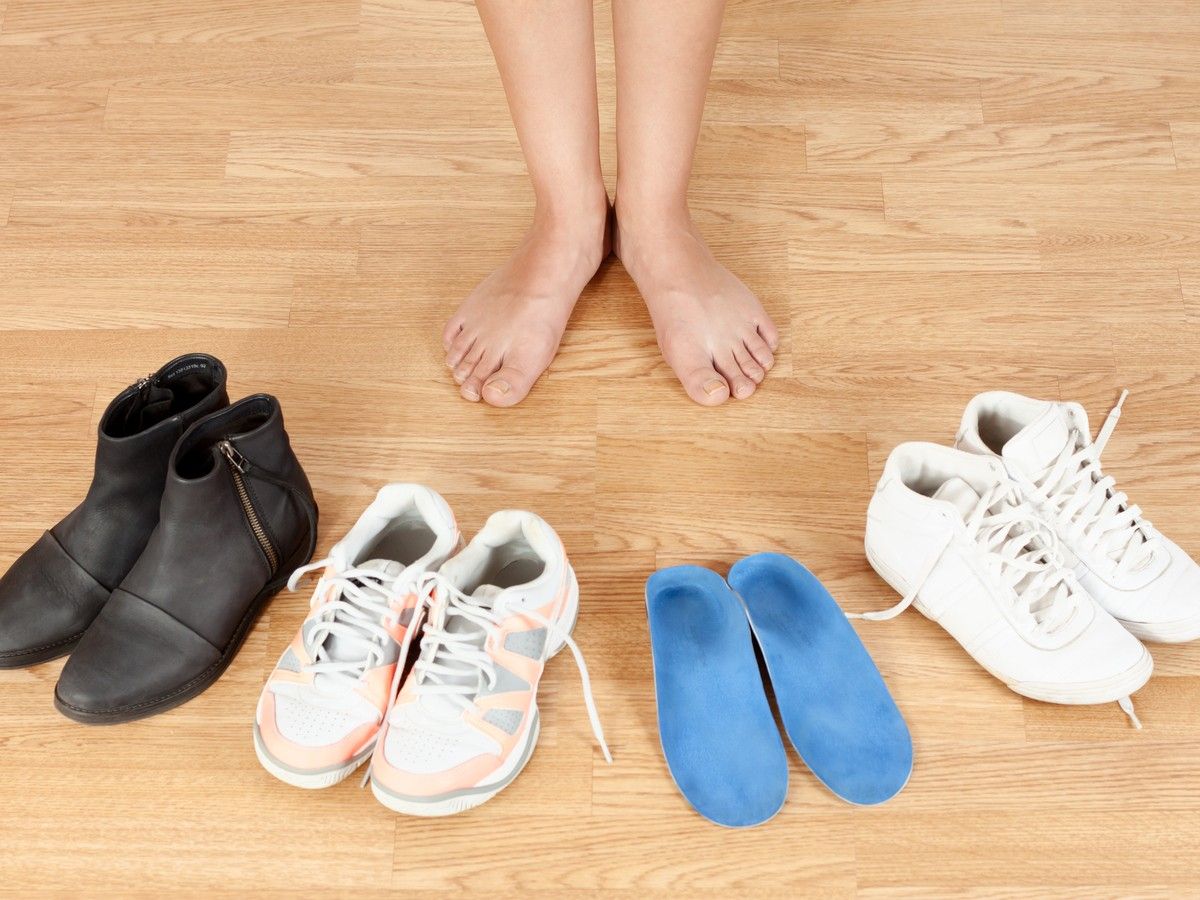
VANCOUVER, British Columbia — As people age, the simple act of walking can become a painful reminder of time's toll on the body, prompting many to rethink their footwear choices. Jane Macdougall, a freelance writer based in Vancouver, shared her personal journey in a recent column for the Vancouver Sun, detailing how a lifetime of stylish shoes led to chronic foot and knee issues, ultimately steering her toward practical solutions like custom orthotics.
Macdougall recounted an incident from her younger days in New Orleans, where wearing stilettos while enjoying the city's famous Hurricane rum drink contributed to long-term foot problems. 'Trouble is, they hurt. Especially one foot,' she wrote, explaining that the cumulative effects of such choices, combined with aging, forced her to swap her favored suede boots for comfortable Hokas equipped with custom orthotic inserts. 'I’m of an age now where my smile matters way more than my style,' she added, highlighting the shift in priorities as physical comfort overtakes fashion.
Her story underscores a broader appreciation for the human foot's remarkable engineering. According to Macdougall, a single foot accounts for about 1.5 percent of total body weight, weighing roughly one kilogram — or two pounds — for an average 68-kilogram (150-pound) person. She described feet as 'one of the greatest engineering marvels in the world,' capable of carrying individuals anywhere they wish to go, yet vulnerable to the interconnected woes of the aging body.
Macdougall's own brush with severe knee pain came unexpectedly while pushing her child in a wagon through Vancouver's streets. Eager to keep up with the child's demands for speed, she ran for blocks, only to end up at Vancouver General Hospital (VGH) with acute inflammation in both knees. 'Acute as in crutches,' she noted, with doctors estimating a recovery period of several months. This experience led her to explore treatments ranging from injections and physiotherapy to knee braces and surgery.
Surprisingly, the most effective frontline defense turned out to be better foot support. Initially skeptical of orthotics, Macdougall became open to them amid her knee agony. She referenced ongoing research by Kintec Footwear, a local company, in partnership with the University of British Columbia (UBC). The collaboration is investigating whether a novel type of orthotic can mitigate what experts term 'knee adduction moments' — the biomechanical force that pushes knees into a bow-legged position, exacerbating osteoarthritis.
The UBC/Kintec study aims to determine if biomechanical interventions for knee osteoarthritis can significantly reduce these moments, thereby improving quality of life and decreasing the need for invasive surgeries like knee replacements. Through their work, the team developed a variable density orthotic designed to unload stress from the knee while providing robust foot support. 'I’m sure you’ll agree [that this] trumps knee surgery any day,' Macdougall wrote, emphasizing the non-invasive appeal of the innovation.
Macdougall's column, part of her regular 'The Bookless Club' feature in the Vancouver Sun, invites reader input on personal experiences with aging and mobility. This week's prompt asks: 'What’s your shoe evolution? How are your knees holding up? What helps? What hurts?' Responses are to be submitted via email to thebooklessclub@gmail.com, limited to 100 words, with selected replies slated for publication the following week.
Looking back at the previous week's question — 'Of all your faculties, which one would you most hate to have compromised?' — readers shared poignant reflections that often circled back to physical independence. One respondent, an avid reader, said, 'The faculty I would most hate to have comprised is my eyesight. I have been an avid reader since childhood and, to this day, I read between a book and a half to two books per week.'
The thing I’d least want to lose is my ability to think clearly and express myself. My mind is how I make sense of my life, understand my feelings, and turn my personal experiences into stories. It’s how I stay grounded and, additionally, how I leave something meaningful for those I love. If I ever lost the part of me that reflects, observes, and puts things into words, I’d feel like I was losing the truest part of myself.
Another reader recounted a conversation with friends about aging, wishing for the eyesight of youth but being advised by a companion to prioritize collagen instead. A third shared a recent fall on a cement sidewalk that left their right hand bruised and swollen for over a week, leading to a newfound appreciation for hand mobility. 'One does not realize how much we depend on them,' the reader wrote, now opting for better shoes and more cautious steps.
Vertigo emerged as a debilitating concern for some, with one person noting, 'As much as I’d hate to lose my vision, or my hearing, vertigo is a life-changer. Being dizzy as a result of inner-ear problems can lead to so many other problems.' Mobility loss was another theme, as illustrated by a respondent who spent months in a wheelchair in their 20s: 'It made me appreciate mobility so much more when I was finally free of the wheelchair. We tend not to appreciate things until we lose them. I was lucky as I did walk again.'
Even sensory losses like smell drew commentary, with one reader describing their brother-in-law's experience: 'My brother-in-law lost his sense of smell and he says that it actually increases your appetite as you keep looking to satisfy your need for flavour but it’s hugely diminished. I will say that his cooking has gone downhill as he can no longer season anything to taste, unfortunately.'
Macdougall's piece arrives amid growing awareness of age-related musculoskeletal issues in Canada. According to Health Canada data, osteoarthritis affects over 3.9 million Canadians, with knees being one of the most commonly impacted joints. The condition often stems from years of wear and tear, including from improper footwear or repetitive strain, aligning with Macdougall's narrative of stilettos and wagon-pushing escapades.
Experts at UBC's Department of Mechanical Engineering, involved in the Kintec partnership, have been exploring orthotic technologies for years. While specific details on the variable density orthotic's clinical trials were not detailed in Macdougall's column, the project builds on prior studies showing that custom insoles can reduce knee loads by up to 20 percent in osteoarthritis patients, according to published research from the university.
Kintec Footwear, headquartered in Vancouver, specializes in gait analysis and custom orthotics, serving clients across British Columbia. Company representatives have not yet commented on the latest developments, but the collaboration with UBC underscores a push toward preventive care over reactive treatments. For individuals like Macdougall, who now envisions dancing at weddings in hidden running shoes with orthotics, such advancements offer a pathway to reclaiming daily joys without surgical intervention.
The column also touches on the emotional side of aging, where physical limitations intersect with life's milestones. Macdougall expressed wistfulness for the days when feet could simply rest for an hour to restore youth, but she embraces the practical alternative: 'The next best thing is slipping a custom orthotic into your shoe and getting back to living the life you want.' Her story resonates with readers navigating similar evolutions, from high heels to health-focused habits.
As responses to the shoe evolution question pour in, they are expected to reveal diverse strategies for managing knee and foot health — from physiotherapy regimens to dietary changes or even alternative therapies. In a city like Vancouver, known for its active lifestyle and outdoor pursuits, such discussions highlight the universal challenge of maintaining mobility amid urban demands and personal histories.
Broader implications extend to public health policy, where initiatives like those from the Squamish Nation and District of Squamish — recently forming a 'land back' task force unrelated but contemporaneous in local news — reflect community efforts to address interconnected well-being. Meanwhile, economic angles emerge in sectors like mining, where B.C. companies vie in critical minerals, but for everyday residents, the focus remains on accessible innovations like orthotics to sustain an active life.
Looking ahead, the UBC/Kintec research could influence orthopedic practices nationwide if proven effective in larger trials. For now, Macdougall's candid account serves as both cautionary tale and encouragement, urging readers to prioritize foot health before knee troubles escalate. As she put it, 'So, if you ever see me dancing at a wedding, know that under that long gown, I’m wearing running shoes with variable density orthotics. Look at me go!'