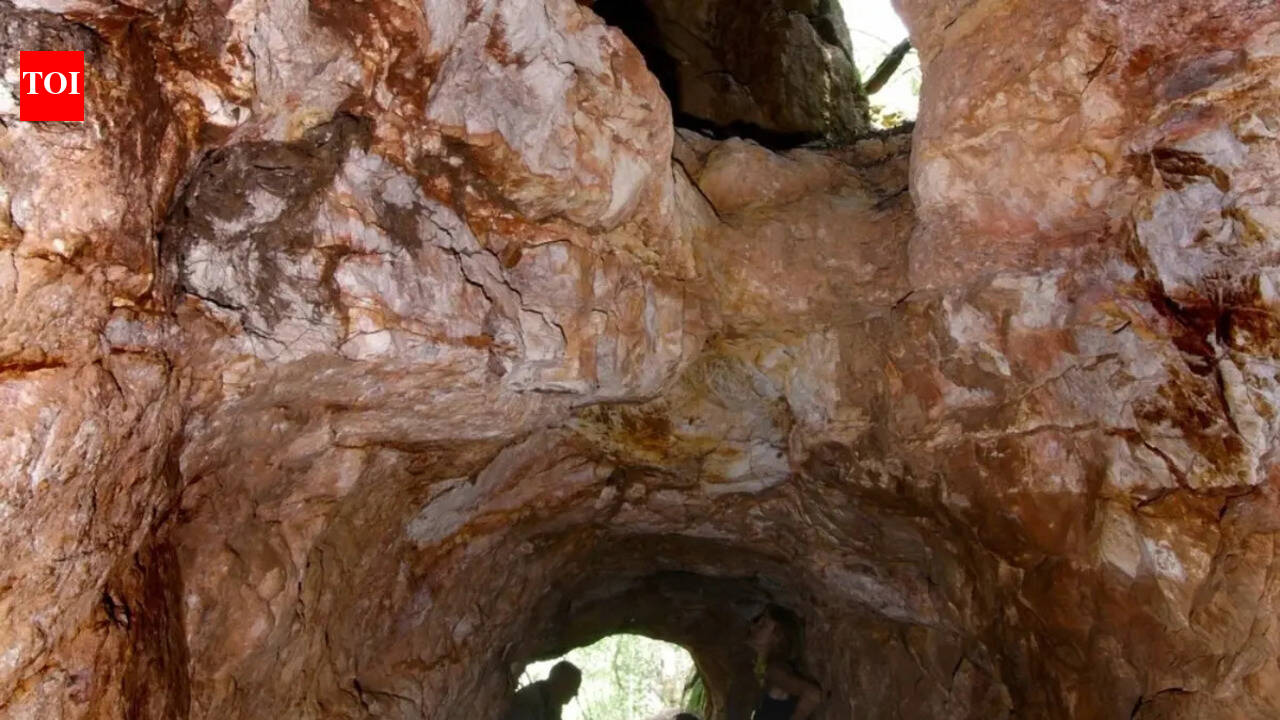
Scientists examining ancient rock formations in South Africa have uncovered new evidence pointing to the Vredefort Crater as the location of Earth’s largest known impact event, according to a report from the Times of India Science Desk.
The findings center on shock scars discovered deep within the crater’s broken rocks, which provide fresh clues about a violent collision that occurred billions of years ago. Researchers say these microscopic features formed under extreme pressures only possible during a massive meteorite strike.
Located near the town of Vredefort in the Free State province, the crater measures roughly 300 kilometers across and dates back approximately two billion years. It is widely recognized as the oldest and largest impact structure preserved on Earth, though much of its original form has eroded over time.
"The buried secret inside South Africa’s broken rocks that revealed Earth’s biggest impact" is how the Times of India described the discovery in its recent science coverage. The report highlights how geologists identified planar deformation features and other high-pressure signatures that confirm the crater’s extraterrestrial origin.
Officials and researchers involved in the study noted that the Vredefort site offers a rare window into early Earth conditions. The impact is believed to have released energy equivalent to billions of atomic bombs, reshaping the planet’s crust and possibly influencing the development of life.
Additional context from cross-verified summaries indicates the crater has long been studied for its geological significance. UNESCO has recognized the area as a World Heritage Site, drawing attention to its value in understanding planetary history.
Local experts have pointed out that the rocks contain evidence of melting and fracturing on a scale not seen in smaller impact sites. One analysis described the hidden clues as “shock scars” that survived despite extensive erosion and tectonic activity over the millennia.
While earlier studies had already established Vredefort’s status as Earth’s largest crater, the latest examination of internal rock structures adds precision to estimates of the original impactor’s size and velocity. Scientists estimate the asteroid may have been 10 to 15 kilometers wide.
According to the Times of India report, the research team focused on samples collected from deep boreholes and exposed outcrops around the crater rim. These samples revealed consistent patterns of shock metamorphism that align with models of a single, massive collision rather than multiple smaller events.
Some geologists have compared the Vredefort structure to other well-known craters such as Sudbury in Canada and Chicxulub in Mexico. However, Vredefort stands out due to its age and the degree of preservation of its central uplift, which rises more than 40 kilometers across.
The discovery has prompted renewed interest in field expeditions to the site. Researchers hope to gather additional data that could refine understanding of how large impacts affected Earth’s early atmosphere and crust.
Local communities near Vredefort have long been aware of the crater’s unusual geology, with some residents participating in educational tours organized by the South African government. Officials said these efforts help preserve the site while supporting scientific inquiry.
Further analysis is expected in coming months as laboratories process additional rock samples. The Times of India Science Desk noted that such studies continue to demystify the planet’s violent past and connect readers to ongoing discoveries in planetary science.
Broad implications include better models for assessing future asteroid threats and insights into similar features observed on Mars and the Moon. Scientists emphasized that continued international collaboration will be key to unlocking more secrets from the ancient rocks.