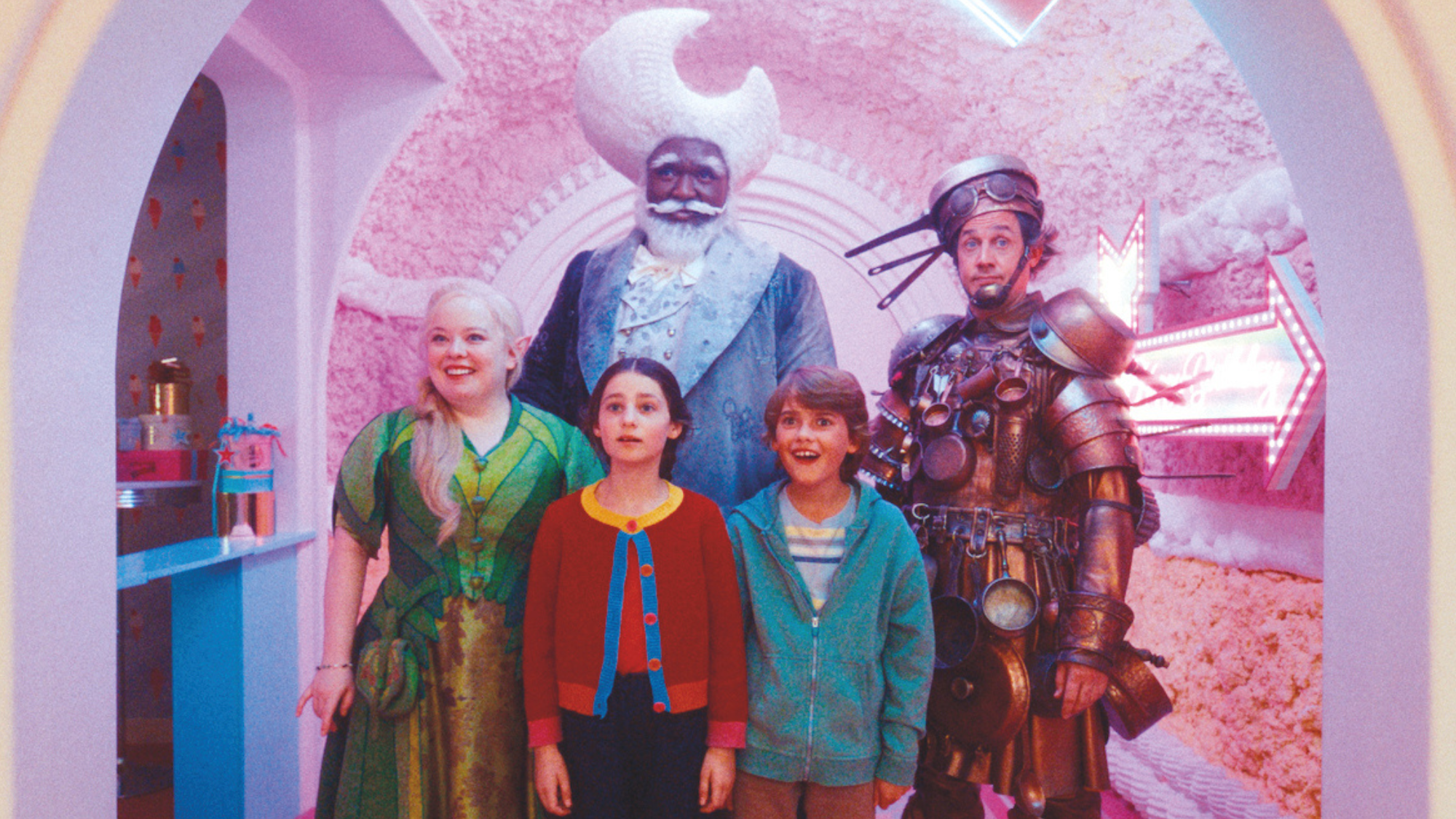
In a fresh adaptation of Enid Blyton's beloved children's tales, the magical world of the Faraway Tree has leaped from the pages of 1940s books to the silver screen, captivating audiences with a blend of whimsy and modern family dilemmas. The film, titled The Magic Faraway Tree, was penned by Simon Farnaby, known for his work on the hit Paddington 2, and directed by Ben Gregor. It stars Claire Foy as Polly, an electronic engineer who leaves her urban job over ethical concerns about data-collecting smart appliances, and Andrew Garfield as her husband Tim. The family relocates from their gadget-filled city home to a rundown barn in the countryside, where their three children—initially glued to screens—discover a enchanted tree teeming with fantastical inhabitants.
Enid Blyton's original stories, first published in the 1940s, have enchanted generations with their tales of children venturing into otherworldly lands via a massive tree in an enchanted wood. According to Brian Viner in the Daily Mail, these narratives "have delighted successive generations," and Farnaby's screenplay successfully updates them for today's viewers by embedding a "modern, relatable context." The move to the country serves as a backdrop for the family's digital detox, with the youngest child, who is mute, stumbling upon the tree first and drawing the siblings into adventures filled with quirky characters like Moon-Face and Silky.
The plot unfolds as the children navigate the tree's rotating lands at its top, each offering perils and wonders. Peril comes in the form of the villainous Dame Snap, portrayed by Rebecca Ferguson with a striking asymmetric hairdo, who adds tension to the otherwise lighthearted escapades. Viner praised the filmmakers for doing a "smashing job"—a nod to Blyton's quaint vernacular—in balancing humor and heart, appealing to both children and adults much like Farnaby's previous projects.
Critics have lauded the film's family-friendly tone, with Peter Bradshaw of The Guardian describing it as a "sweet-natured family fantasy" packed with "lots of jokes and peril too." Bradshaw highlighted how the story's charm lies in its ability to immerse viewers in a world where nature and magic trump technology, as the screen-addicted older children gradually embrace outdoor exploration. The film's setting in the English countryside evokes the pastoral idyll of Blyton's era, though updated to address contemporary issues like privacy in the digital age.
However, not all reviews are glowing. Kevin Maher in The Times argued that while Blyton's original works required modernization—particularly given her outdated references to "swarthy foreigners" and similar stereotypes—Farnaby's script becomes "over-complicated" and "strips the tale of its wonder." Maher pointed to the adventures as "poorly realised" with a "DIY aesthetic," suggesting the narrative rushes through fantastical elements before pivoting to Tim's side plot of launching a pasta sauce business.
The film's production drew on Blyton's expansive legacy, which includes over 700 books sold in the hundreds of millions worldwide. This adaptation marks one of several recent efforts to revisit her works through a contemporary lens, following projects like the 2020 BBC series Enid and Enid that explored the author's life. Farnaby, a British comedian and writer, brings his signature blend of silliness and sentiment, evident in scenes where the family bonds over tree-top mishaps, including encounters with Angry Pixie and the Saucepan Man.
Claire Foy, best known for her Emmy-winning role in The Crown, embodies Polly as a principled mother grappling with work-life balance in a tech-saturated world. Her decision to quit stems from refusing to develop a smart fridge that "gathers data on its owners," a plot point that underscores the film's subtle critique of surveillance capitalism. Andrew Garfield, reuniting with Foy after their collaboration in The Girl from Plainville, plays the affable Tim, whose entrepreneurial dreams provide comic relief amid the magical chaos.
Rebecca Ferguson's Dame Snap emerges as a memorable antagonist, her eerie appearance and schemes threatening the tree's harmony. The younger cast, including the three child actors portraying the siblings, delivers authentic performances of reluctance turning to wonder, according to early screenings reported by industry outlets. The film's visual effects, blending practical sets with CGI for the tree's portals, aim to capture the boundless imagination of Blyton's prose without overwhelming the story's intimacy.
Released in the UK on an unspecified date in late 2023—amid a surge in family-oriented fantasies post-pandemic—the movie arrives as theaters seek content to draw parents and kids back indoors. Box office projections, based on similar adaptations like Paddington in Peru, suggest strong opening weekend numbers, particularly in family demographics. Farnaby has spoken in interviews about his childhood love for Blyton, telling Variety that he wanted to honor the books' spirit while making them relevant for a generation raised on smartphones.
Yet, Maher's critique in The Times echoes concerns from literary purists who fear adaptations dilute the originals. He described the film as frequently collapsing into "skits" and "awkward flights of fancy," culminating in a "mess" that prioritizes modern subplots over magical consistency. In contrast, Viner in the Daily Mail celebrated the updates as necessary and effective, noting how the family's rural relocation mirrors broader societal shifts toward unplugging from devices.
The adaptation's handling of Blyton's problematic elements has sparked discussion among educators and parents. Organizations like the Enid Blyton Society have welcomed the toning down of racial stereotypes, viewing it as a step toward inclusivity in children's literature. The film's youngest character, the mute child who communicates through actions and the tree's magic, adds layers of empathy, reportedly inspired by real families navigating neurodiversity.
As the story progresses, the children thwart Dame Snap's plans, leading to heartwarming resolutions that reinforce themes of family unity and environmental appreciation. Bradshaw noted the perils, such as narrow escapes from the tree's slippery ladder or encounters with mischievous fairies, keep the pace lively without veering into true frights suitable for young viewers. The film's runtime, around 100 minutes, ensures it remains engaging for short attention spans.
Looking ahead, StudioCanal, the production company behind the film, has hinted at potential sequels drawing from Blyton's other Faraway Tree installments like The Folk of the Faraway Tree. With Farnaby attached to direct future entries, the franchise could expand, much like the successful Paddington series. Critics like Viner predict it will join the ranks of modern classics that bridge generational gaps, while skeptics like Maher urge audiences to revisit the books for unadulterated wonder.
In broader terms, The Magic Faraway Tree reflects Hollywood's and the UK's growing interest in adapting mid-20th-century British literature for global markets, amid debates over cultural sensitivity. As families flock to theaters, the film serves as a timely reminder of storytelling's power to foster imagination in an increasingly virtual world. Whether it achieves enduring status remains to be seen, but its release has already reignited interest in Blyton's timeless enchantments.
For now, the tree stands tall on screen, inviting a new generation to climb its branches and discover lands beyond the ordinary. With mixed but passionate reviews, the adaptation underscores the challenges and joys of translating childhood magic to the multiplex era.