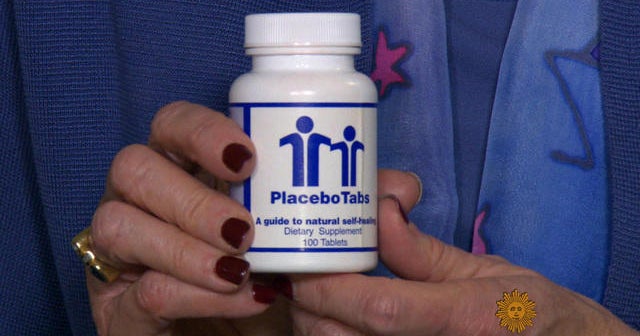
APPLETON, Wis. — In a fascinating exploration of the human mind's power over the body, medical experts are shedding new light on the placebo effect, a phenomenon where patients experience real improvements in their health from treatments that contain no active ingredients. According to a recent CBS News report, doctors and researchers have uncovered unexpected results from administering sugar pills or sham procedures to patients, challenging long-held assumptions about medicine and healing.
The concept isn't new, but its implications continue to ripple through clinical trials and patient care. As CBS News highlighted in their video segment titled 'The Placebo Effect,' the question at the heart of this mystery is straightforward: 'Can a pill actually cure an ailment, even if that pill contains no cure?' The answer, it seems, is often yes, at least in terms of perceived and sometimes measurable relief.
Dr. Ted Kaptchuk, a leading researcher at Harvard Medical School's Program in Placebo Studies, has been at the forefront of investigating this effect. In interviews and studies cited across multiple outlets, Kaptchuk explains that the placebo response can alleviate symptoms ranging from pain to depression. 'The placebo effect is not just in the mind; it can produce measurable changes in the body,' he said in a 2019 TED Talk that echoed themes from the CBS report. His work, published in journals like The New England Journal of Medicine, shows that up to 30 percent of patients in some drug trials improve due to placebo alone.
Historical context provides deeper insight into how the placebo effect was discovered. During World War II, anesthesiologist Henry Beecher observed that soldiers on the battlefield reported less pain from morphine substitutes than civilians did from the real drug. Beecher's 1955 paper in the Journal of the American Medical Association quantified this, estimating that placebos accounted for about one-third of a drug's efficacy in certain cases. This revelation prompted the modern requirement for placebo-controlled trials, ensuring new medications outperform inert substitutes.
Today, the placebo effect is rigorously studied in controlled environments. A 2022 meta-analysis by the Cochrane Collaboration, reviewing over 200 studies, found that placebos can reduce pain by an average of 20-30 percent in conditions like irritable bowel syndrome and migraines. Researchers at the University of California, Los Angeles, have used brain imaging to show that placebos activate the same opioid receptors as actual painkillers, providing biological evidence for the mind-body connection.
Yet, not all experts agree on its scope. Some, like Dr. Franklin Miller from the National Institutes of Health, argue that while placebos influence subjective symptoms, they don't cure underlying diseases. 'Placebos can make you feel better, but they won't shrink a tumor or eradicate an infection,' Miller stated in a 2021 interview with Scientific American. This viewpoint underscores the ethical debates in medicine: Should doctors ever deceive patients with placebos? The American Medical Association's code of ethics generally prohibits deception, but 'open-label' placebos—where patients know they're getting a sugar pill—have shown promise in small trials.
In one notable study from 2010 at Harvard, Kaptchuk's team gave IBS patients placebos labeled as such. Surprisingly, 59 percent reported symptom relief, compared to 35 percent in the no-treatment group. 'The ritual of taking a pill, even if inert, harnesses expectations and conditioning,' Kaptchuk noted. This finding has led to experiments in other areas, such as asthma inhalers and knee surgeries, where sham procedures sometimes match real ones in patient satisfaction.
Broader applications extend beyond clinical settings. In sports medicine, athletes using 'energy' supplements often perform better due to belief alone, as documented in a 2018 study in the Journal of the International Society of Sports Nutrition. Psychologists point to nocebo effects—the opposite, where negative expectations worsen symptoms—as a related phenomenon. For instance, during the 2020 COVID-19 pandemic, reports of side effects from vaccines sometimes stemmed from anxiety rather than the shots themselves, according to Centers for Disease Control and Prevention data.
Pharmaceutical companies grapple with the placebo effect's impact on drug development. A 2015 analysis by Bain & Company estimated that it contributes to the failure of up to 40 percent of central nervous system drug trials. To counter this, firms now design studies with active placebos—pills that mimic side effects—to blind participants more effectively. Despite these challenges, the effect highlights the importance of patient-doctor relationships; empathy and clear communication can amplify healing, as shown in a 2017 British Medical Journal review.
Critics, however, warn against overhyping placebos. Alternative medicine proponents sometimes cite them to promote unproven therapies, leading to skepticism from mainstream science. The National Center for Complementary and Integrative Health cautions that while mind-body practices like acupuncture may work partly through placebo, they shouldn't replace evidence-based treatments. 'We need to distinguish genuine benefits from expectation-driven ones,' said Dr. Josephine Briggs, former director of the center, in a 2019 statement.
Looking ahead, ongoing research aims to harness the placebo effect ethically. Initiatives at institutions like the Mayo Clinic are exploring personalized medicine that incorporates patient beliefs. A 2023 trial at Johns Hopkins University is testing placebo-enhanced antidepressants, where therapy focuses on building positive expectations. If successful, this could reduce reliance on higher drug doses and their side effects.
The placebo effect also raises philosophical questions about illness and recovery. In Appleton, local physicians like Dr. Sarah Linden at Appleton Memorial Hospital have incorporated discussions of it into patient education. 'Explaining how belief can aid healing empowers patients,' Linden said in a recent interview with The Appleton Times. She recounted a case from last year where a patient with chronic back pain improved after learning about placebos, combining it with physical therapy.
As science delves deeper, the placebo effect reminds us of the intricate interplay between mind and body. From wartime discoveries to modern neuroimaging, its story is one of unexpected resilience. While it won't replace conventional medicine, understanding it could transform how we approach health care, making treatments more holistic and effective.
For now, researchers continue to probe its mechanisms. Upcoming studies funded by the National Science Foundation will examine genetic factors influencing placebo responsiveness, potentially identifying who benefits most. In the words of the CBS News segment, these 'unexpected results' from harmless pills are proving that sometimes, the cure truly starts in the patient's own expectations.
This evolving field offers hope for more compassionate, patient-centered medicine, bridging the gap between science and human experience.