LONDON — The English Premier League, once the pinnacle of thrilling soccer spectacle, is mired in a tactical stalemate that has drained the excitement from matches, according to a detailed analysis published by ESPN. Through 28 weeks of the current season, Premier League teams have scored just 505 open-play goals, the fewest since the 2009-10 campaign and excluding the low-scoring 2020-21 pandemic season affected by empty stadiums. ESPN writer Ryan O'Hanlon argues in his article 'The Premier League is boring now: A tactical way to save it' that this drought stems from an overreliance on set pieces and defensive setups, leaving fans yearning for the risk-taking play that defined the league a decade ago.
O'Hanlon traces the roots of the current malaise back to around 2016, when Leicester City's improbable title win highlighted the mediocrity of England's top clubs compared to powerhouses like Bayern Munich, Real Madrid, Barcelona, and Juventus. 'The league offered nothing unique from a tactical or talent perspective,' O'Hanlon writes. 'The best soccer was being played in Germany, Spain and Italy.' The arrival of managers Jürgen Klopp at Liverpool and Pep Guardiola at Manchester City the following season injected vitality, with Liverpool's 'heavy metal football' — a high-pressing, vertical style — and Manchester City's possession-dominant approach revolutionizing the league and forcing others to adapt.
That era, spanning roughly the next decade, represented 'the peak of English soccer,' O'Hanlon contends, blending technical prowess with physical intensity and delivering compelling results. Yet today, despite the Premier League's financial dominance and success in the Champions League — where English clubs have outperformed European rivals — the on-pitch product has stagnated. Teams have registered only 1,659 open-play shots on target this season, the lowest in Opta's 17-season database and more than 300 fewer than in either of the previous two campaigns. Even passing in the attacking third has plummeted, with 48,248 completions marking the fewest since 2011-12 and nearly 10,000 below recent years.
The best soccer teams in the world have landed on a style of soccer that eschews most of the things most people love about the sport: risky, intricate passing patterns and shots on goal.
O'Hanlon attributes this shift to an overwhelming focus on set plays, a trend he first warned about in October. He notes that fixing the issue will demand rule changes, stricter enforcement, and innovative coaching. His bold proposal: a widespread adoption of the back-three formation, which he believes could disrupt the current equilibrium and restore dynamism.
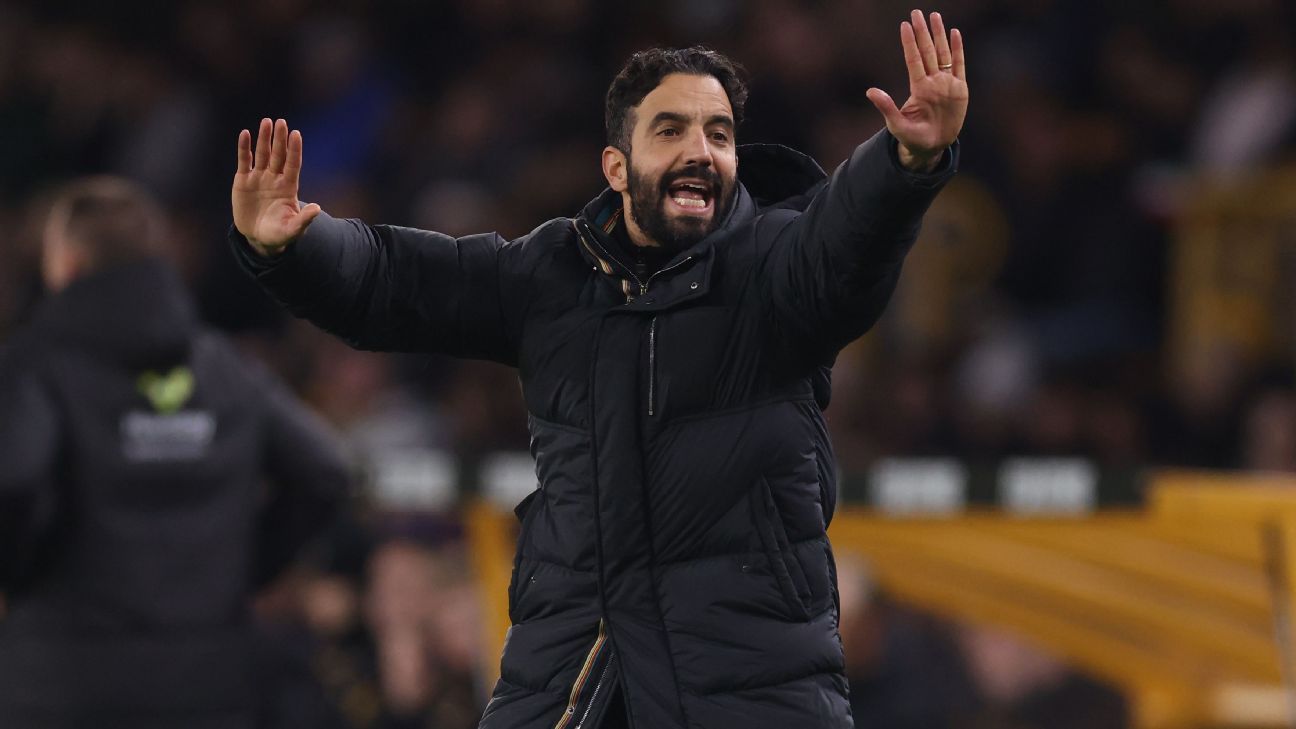
The back three, or three-defender setup, has garnered a poor reputation in recent years, particularly after Manchester United sacked manager Ruben Amorim in December despite the team sitting sixth in the standings. Critics pointed to Amorim's rigid insistence on the formation, but O'Hanlon counters that United under Amorim played 'risk-taking, wide-open soccer' with abundant shots at both ends. 'It's not like he got fired because the team wasn't doing well,' O'Hanlon writes. 'He got fired because he was a pain to work with, as his pre-firing news conference made clear.'
To bolster his case, O'Hanlon cites a 2022 academic paper titled 'Putting team formations in association football into context,' published in the Journal of Sports Analytics by experts Pascal Bauer of the German FA, Gabriel Anzer of RB Leipzig, and Laurie Shaw, formerly of Manchester City and now at Liverpool. Analyzing seven seasons of Bundesliga tracking data, the study examined formations during the buildup phase, where teams settle into possession against a set defensive shape. It found that building up with three defenders is 'more easily countered than the two-defender formation while showing less of an upside benefit,' and is less popular among Bundesliga sides.
However, O'Hanlon highlights exceptions where the back three has fueled overachievement. Xabi Alonso's Bayer Leverkusen, for instance, went undefeated to win the 2023-24 Bundesliga title using a back three, dethroning Bayern Munich after their 11 straight championships — which Bayern secured with a back four. In the Champions League, Inter Milan, typically the 13th- or 14th-richest club globally, reached two of the last three finals with a back-three system. Chelsea's 2021 European triumph came after Thomas Tuchel switched to it midseason, following a fourth-place Premier League finish; they also used it for their 2017 domestic title.
Other success stories abound: RB Leipzig's 2020 semifinal run, Atalanta's Serie A title challenges, Sheffield United's ninth-place finish in 2019-20 after promotion, and Tottenham Hotspur's last top-four Premier League season in 2019-20. Even Juventus relied on the formation during their dominant Serie A years before shifting away amid off-field issues. O'Hanlon points to Manchester City's 2022-23 treble-winning side, where Pep Guardiola adapted a back-three-like structure in key matches, such as the Champions League final against Inter Milan, with John Stones stepping into midfield alongside defenders Rúben Dias, Nathan Aké, Manuel Akanji, or Kyle Walker.
Opta data since 2009 shows the back four's dominance in the Premier League, evolving from 4-4-2 to 4-2-3-1 and 4-3-3, with superior collective goal differentials. Yet O'Hanlon questions whether this reflects inherent superiority or simply the preferences of top clubs like Guardiola's City and Klopp's Liverpool. He argues the league has evolved: opponents are now more athletic, capable of man-to-man marking, and less easily overwhelmed by pressing. 'Everyone is more athletic and everyone can man-to-man mark your players now,' Guardiola has complained weekly, per O'Hanlon.
The rise in quality across the league — with mid-table teams acquiring players once destined for clubs like Borussia Dortmund or AC Milan — has made deep blocks harder to breach. Counterattacks from these setups are more potent, and fixture congestion renders high-intensity gegenpressing unsustainable. Consequently, goals increasingly come from set pieces; O'Hanlon notes Liverpool's midseason turnaround after firing their set-piece coach, scoring seven straight from dead balls to climb within three points of third place.
Embracing the back three, O'Hanlon suggests, would introduce novelty, creating unfamiliar angles against the prevalent 4-2-3-1 or 4-3-3. It also offers recruitment advantages in a market starved for elite talent in key back-four roles: athletic ball-playing center backs, sideline-covering fullbacks, rangy defensive midfielders, and dominant wingers. A 3-5-2 system alleviates these demands, distributing responsibilities across three center backs, less defensively burdened wingbacks, supported midfielders, and forward-focused attackers.
Liverpool's squad, O'Hanlon observes, seems particularly amenable to this shift, aligning with modern, data-driven team-building where clubs scout undervalued players and managers adapt formations flexibly. Unlike rigid back-four systems requiring 'skeleton-key' stars — often costing hundreds of millions or relying on homegrown luck like Trent Alexander-Arnold — the back three allows customization: an attacking midfielder partnering a striker against top sides for midfield control, or dual forwards against weaker teams by dropping a midfielder back.
While no Premier League club has fully committed yet, the tactical inertia risks alienating fans who tune in for open play, not endless corners. O'Hanlon's call echoes broader concerns about soccer's global appeal, hinging on entertainment value rather than set-piece specialization. As the season progresses toward its May conclusion, managers face mounting pressure to innovate amid a title race led by Arsenal and a congested midfield battle.
League officials have not commented directly on the analysis, but past responses to similar critiques — such as post-2016 hiring sprees of continental coaches — suggest potential for change. If a trailblazing club adopts the back three and reaps rewards, it could cascade through the division, much like Klopp and Guardiola's arrivals a decade ago. For now, the Premier League's riches ensure competitiveness, but O'Hanlon warns that without tactical evolution, the 'universal language' of soccer — its fluid, end-to-end excitement — may fade further.