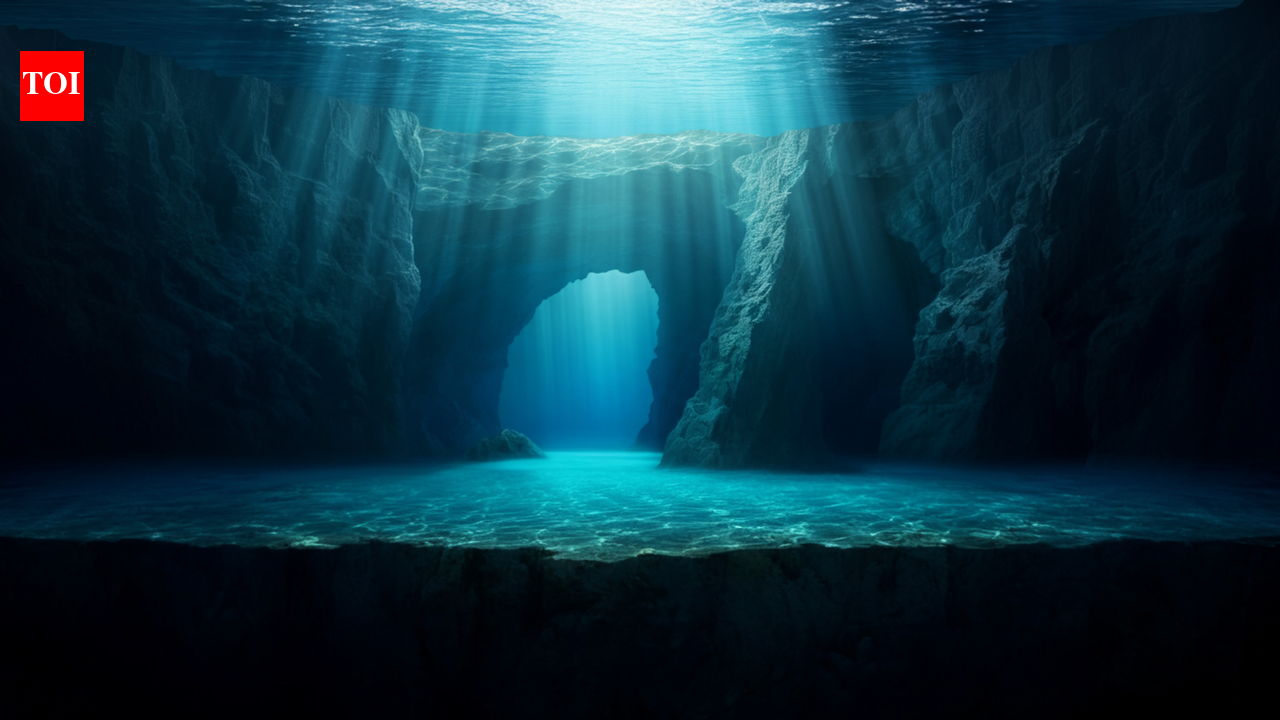
Mexico's Chetumal Bay is home to what scientists now believe is the deepest blue hole on Earth, a submerged sinkhole known as Taam Ja' that plunges to 420 meters below the surface. The discovery, reported by researchers exploring the region, has drawn attention for its potential to reveal new insights into underwater geology and marine ecosystems.
According to reports from the Times of India, the site stands out not only for its record depth but also for a hidden tunnel that appears to connect deeper sections in ways that challenge conventional understanding of such formations. Officials and scientists involved in the survey described the feature as an unmeasurable abyss in some respects, with instruments struggling to fully map its contours.
The blue hole sits within a bay that has long been studied for its unique water chemistry and biodiversity. Local marine biologists have noted that the structure acts as a natural filter, trapping sediments and creating distinct layers of water that support specialized life forms. This characteristic sets it apart from shallower blue holes found elsewhere in the Caribbean and around the world.
Exploration teams used advanced sonar and remotely operated vehicles to confirm the 420-meter measurement, a figure that surpasses previous records held by sites such as Dean's Blue Hole in the Bahamas. The work took place over several months, with initial findings emerging late last year before being verified through additional dives.
"This remarkable natural filter presents unique research opportunities," one summary of the findings stated, highlighting how the hole's extreme depth could help explain ancient sea level changes and geological processes that shaped the Yucatan Peninsula.
Residents and fishermen in nearby communities have long been aware of strong currents and unusual water colors in the area, though few suspected the true scale of the underwater cavern. Some older accounts from the region spoke of bottomless pits, stories that now appear to have a basis in the newly documented depths.
International teams are already planning follow-up expeditions to study the hidden tunnel more closely. Early data suggest it may link to underground river systems or even other sinkholes, though confirmation awaits further mapping. Experts caution that strong currents and low visibility make such work hazardous.
Comparisons with other famous blue holes show Taam Ja' exceeds them by a significant margin. While sites in Belize and the Bahamas reach depths of around 100 to 200 meters, none match the scale reported here. This has prompted discussions among geologists about revising models of karst formations in tropical coastal zones.
Environmental groups have called for protective measures around the site to prevent damage from increased tourism or unregulated diving. They point to past incidents at other blue holes where visitor pressure led to pollution and habitat disruption.
Funding for continued research comes partly from Mexican government agencies and university partnerships. Scientists expect the project to yield data on water temperature gradients, oxygen levels, and microbial communities thriving in the extreme conditions.
One researcher involved in the project noted that the tunnel feature defies simple explanation, as its orientation and size do not align with typical patterns seen in similar formations. Additional surveys using laser scanning are scheduled for the coming season.
The broader implications extend to climate studies, since blue holes often preserve records of past environmental conditions in their sediment layers. Samples collected from Taam Ja' could provide clues about regional weather patterns stretching back thousands of years.
Local authorities have expressed support for the scientific work while emphasizing the need to balance research with community interests. Tourism operators in Chetumal are watching developments closely, anticipating possible economic benefits if the site gains international recognition.
Further details are expected as analysis of collected data continues. For now, Taam Ja' stands as a striking example of how much remains unknown about the planet's underwater landscapes.