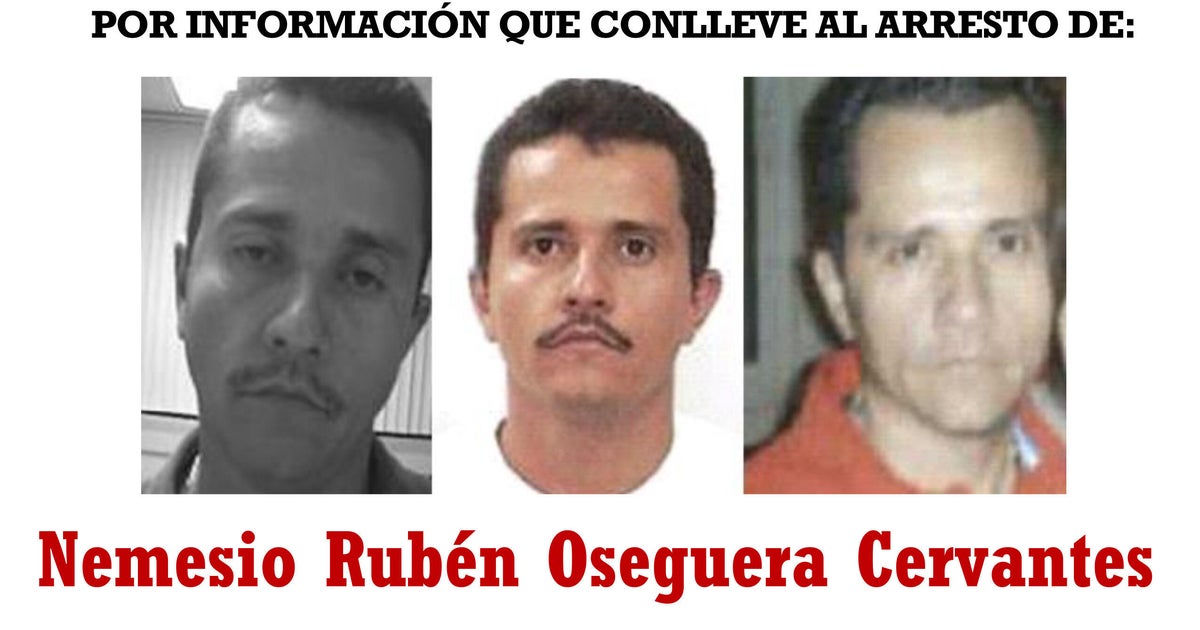
MEXICO CITY — Nemesio Rubén Oseguera Cervantes, the infamous leader of the Jalisco New Generation Cartel known as El Mencho, was killed during a military operation in western Mexico on Sunday, Mexican authorities announced. The raid, which targeted a suspected cartel stronghold in the state of Jalisco, sparked intense clashes that left six other individuals dead, according to officials. Two suspects were arrested in the aftermath, and security forces seized a cache of armored vehicles, rocket launchers, and other heavy weaponry from alleged cartel members. Three Mexican soldiers were wounded in the firefight, highlighting the escalating dangers faced by law enforcement in their battle against organized crime.
The operation marks a significant blow to one of Mexico's most powerful and violent drug trafficking organizations. Oseguera Cervantes, long considered a top target by both Mexican and U.S. authorities, had evaded capture for years despite a $15 million reward offered by the U.S. State Department for information leading to his arrest or conviction. At the time of his death, he faced multiple indictments in the United States for orchestrating the trafficking of fentanyl, methamphetamine, cocaine, and other drugs across the border.
Born in the rural community of Agua Fría in Michoacán, Mexico, Oseguera Cervantes first crossed into the United States illegally in the 1980s, settling in California. There, he became entangled in the drug trade, leading to his arrest on narcotics charges. Deported back to Mexico, he returned to the U.S. illegally and was arrested again in 1992 on similar charges. After serving three years in prison and being released on parole, he was deported a second time, according to reports from Rolling Stone and U.S. law enforcement records.
Upon his return to Mexico, Oseguera Cervantes quickly ascended the ranks of the criminal underworld. Around 2011, he and a group of associates splintered from the Milenio Cartel to form the Jalisco New Generation Cartel, or CJNG, as detailed by the U.S. State Department. Under his leadership, the CJNG expanded into a multinational enterprise deeply involved in the production, trafficking, and distribution of illicit drugs, including fentanyl, methamphetamine, and cocaine, alongside extensive money laundering operations.
The Drug Enforcement Administration has described the CJNG as a dominant force in the global drug trade. In 2019, DEA estimates indicated that the cartel was responsible for at least one-third of all drugs entering the United States via air and sea routes. "CJNG is heavily involved in the manufacturing, trafficking, and distribution of illicit drugs, such as fentanyl, methamphetamine, and cocaine, as well as maintaining a vast money laundering operation," the agency stated in official reports.
Former DEA agent Matthew Donahue, who tracked cartel activities for years, emphasized the group's priority status in law enforcement circles. "[Oseguera Cervantes] was the number one priority for DEA and frankly for federal law enforcement in the United States," Donahue told CBS News in a 2019 interview. He also highlighted the cartel's formidable arsenal, noting, "He has got an enormous amount of weapons, RPGs, 50 caliber weapons. He basically has his own SWAT teams."
The CJNG's rise has been marked by brazen acts of violence aimed at consolidating power and intimidating rivals and authorities alike. In February 2020, cartel gunmen launched a sophisticated ambush on Mexico City Police Chief Omar García Harfuch as he traveled in an armored SUV to a meeting. Attackers, equipped with high-powered rifles, grenades, and body armor, unleashed a barrage that left García Harfuch critically injured but alive. Two of his bodyguards and an innocent woman were killed in the assault, according to accounts from Mexico News Daily. García Harfuch, who now serves as Mexico's Secretary of Security and Civilian Protection, has credited enhanced security measures with his survival.
Earlier, in 2015, the CJNG allegedly demonstrated its military-grade capabilities by shooting down a Mexican military helicopter with a rocket-propelled grenade during a government campaign against cartels in Jalisco. U.S. prosecutors have cited this incident as evidence of the group's willingness to confront state forces directly. The downing of the helicopter killed nine people on board, including three soldiers, and underscored the cartel's transformation into a paramilitary-like entity.
The violence extended beyond high-profile attacks to more insidious tactics for recruitment and control. Authorities have accused the CJNG of using fake job advertisements on social media to lure vulnerable individuals, particularly young people from rural areas, into what they believed were legitimate employment opportunities. Once ensnared, recruits faced coercion, with those attempting to resist or escape subjected to torture or execution. In March 2024, a group of families searching for missing relatives discovered charred bones, shoes, and clothing at a site in Jalisco believed to be a CJNG training ground, according to Mexican media reports.
Internal purges within the cartel have also fueled its notoriety. In 2021, Cristian Fernando Gutierrez-Ochoa, a former high-ranking CJNG member, allegedly kidnapped two Mexican Navy personnel in a bid to secure the release of Oseguera Cervantes' wife, Rosalinda González Valencia, who had been arrested on money laundering charges. According to U.S. prosecutors, Oseguera Cervantes ordered Gutierrez-Ochoa's death for deception, though Gutierrez-Ochoa later faked his demise and fled to Riverside, California. González Valencia was released from prison in February 2025 after her charges were resolved.
The cartel's operations have drawn intense scrutiny from the United States, where the influx of fentanyl has contributed to a public health crisis. In February 2023, former President Donald Trump signed an executive order designating the CJNG and seven other Mexican cartels as foreign terrorist organizations. This paved the way for additional charges, such as the May 2023 indictment of Maria Del Rosario Navarro-Sanchez, a 39-year-old woman accused of supplying grenades to the CJNG.
Oseguera Cervantes' family has also faced the consequences of the cartel's activities. His son, Rubén Oseguera González, known as El Menchito, was extradited to the U.S. and convicted on drug and weapons charges. In March 2025, he was sentenced to life in prison. "El Menchito led the Jalisco Cartel's efforts to use murder, kidnapping, and torture to build the Cartel into a self-described 'empire' by manufacturing fentanyl and flooding the United States with massive quantities of lethal drugs," former U.S. Attorney General Merrick Garland said in a September 2024 statement announcing related convictions.
Before his death, Oseguera Cervantes himself was hit with his most recent U.S. indictment in April 2022, charging him with conspiracy to manufacture and distribute methamphetamine, cocaine, and fentanyl for importation into the United States, as well as the use of firearms in relation to drug trafficking crimes. These charges stemmed from investigations revealing the cartel's sophisticated networks spanning production in Mexico to distribution in American cities.
The Sunday operation in Jalisco is part of a broader pattern of confrontations between Mexican security forces and the CJNG, which has clashed repeatedly with authorities in recent years. While Oseguera Cervantes' death represents a major victory for the Mexican government under President Claudia Sheinbaum, experts caution that the cartel remains resilient. "The CJNG's structure is decentralized, with capable lieutenants ready to step in," said a senior Mexican security official, speaking on condition of anonymity. The group continues to control key drug routes and territories in states like Michoacán, Colima, and Guanajuato.
Looking ahead, the power vacuum left by El Mencho's demise could trigger infighting within the CJNG or provoke retaliatory strikes against government targets. U.S. officials, including those at the DEA, have expressed cautious optimism but stressed the need for sustained bilateral cooperation. As Mexico grapples with the ongoing scourge of cartel violence, which claimed over 30,000 lives in 2023 alone according to government data, the elimination of one of its most elusive kingpins serves as both a milestone and a reminder of the entrenched challenges posed by organized crime.