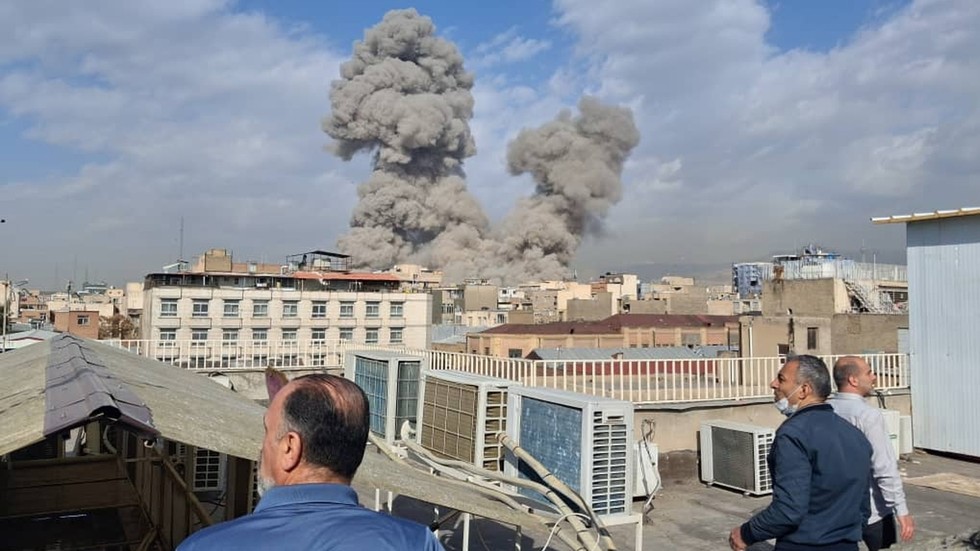
APPLETON, Wis. — The Middle East plunged into a new era of open conflict on Saturday, February 28, 2026, as Israel launched pre-emptive strikes against Iran, with the United States quickly joining the fray in what officials described as a coordinated effort to neutralize threats from Tehran's missile and nuclear programs. Explosions rocked Tehran and other Iranian cities early that morning, marking the start of what many fear could spiral into a regional war. Israeli Prime Minister Benjamin Netanyahu announced the operation, framing it as a necessary defense against 'imminent threats,' while U.S. President Donald Trump echoed the sentiment, vowing to destroy Iran's missile capabilities and prevent it from acquiring nuclear weapons.
According to reports from multiple outlets, including Reuters and the Associated Press, the strikes began around dawn local time, with Israeli aircraft targeting sites linked to Iran's missile infrastructure. Israel took immediate domestic measures, closing its airspace and imposing restrictions on daily life in anticipation of retaliation. 'This is a preventative move to protect our nation and our allies,' an Israeli military spokesperson said in a statement released shortly after the initial wave of attacks. Within hours, U.S. forces were reported to be actively participating, under the banner of Operation Epic Fury, as named by the Pentagon.
The escalation caught many by surprise, coming just days after indirect talks between the parties were described as promising by mediators. Oman's foreign minister had suggested only the previous week that 'peace was within reach' and urged all sides to allow diplomacy to proceed. Yet, Israeli officials indicated the strikes had been planned for months and coordinated closely with Washington, suggesting a deliberate pivot from negotiation to military action. Analysts noted that this timing undermined ongoing discussions, which had focused on potential limits to Iran's nuclear activities in exchange for sanctions relief.
From the White House, President Trump addressed the nation in a midday speech, declaring, 'We will not allow Iran to threaten the world with its missiles or its nuclear ambitions. This operation is about security for America and our partners.' His remarks went further, implying broader goals, including opportunities for the Iranian people to 'topple their rulers' and embrace change. The rhetoric drew immediate criticism from some quarters, with Iranian officials labeling it as evidence of regime-change intentions rather than a limited strike.
Iran's response was swift and multifaceted. Reports from the Times of Israel described missile and drone launches toward Israeli territory, triggering air-raid sirens across the country. Iran's Supreme Leader Ayatollah Ali Khamenei was reportedly moved to a secure location, according to Reuters, underscoring the gravity of the perceived threat to the regime's core. Tehran vowed retaliation not just against Israel but also against U.S. assets in the region, with state media claiming the attacks constituted an act of war by both nations.
Early indications pointed to strikes beyond Israel. The Associated Press reported explosions in several Gulf countries, including a hit on a U.S. Fifth Fleet service center in Bahrain. Smoke rose over Manama, Bahrain's capital, amid claims of Iranian targeting of American bases. The Washington Post cited Iranian warnings issued in recent weeks that U.S. facilities would be legitimate targets if Washington crossed into direct involvement. A Pentagon spokesperson confirmed damage to U.S. infrastructure but provided no details on casualties, stating only that 'all personnel are accounted for and defensive measures are in place.'
This outbreak is deeply intertwined with last year's tensions. In June 2025, a 12-day war between Israel and Iran ended in a fragile ceasefire without a lasting political resolution, serving more as a prelude than a conclusion. That conflict normalized direct strikes between the two nations, previously conducted largely through proxies like Hezbollah or the Houthis. Observers, including Murad Sadygzade, president of the Middle East Studies Center and a visiting lecturer at HSE University in Moscow, argued in an analysis for RT that the 2025 episode acted as a 'rehearsal,' lowering barriers to further escalation.
Sadygzade wrote that the current crisis reveals a strategic choice by leaders in Washington and Jerusalem to prioritize coercion over compromise. 'The political leadership in Washington and West Jerusalem had already chosen coercion over compromise and selected a date weeks in advance,' he noted, pointing to the strikes' pre-planning amid active talks. He emphasized that while Iran's regional actions have alarmed neighbors, the core debate has long centered on whether Western powers genuinely sought a negotiated deal or viewed a stable Iran as undesirable.
International reactions poured in as the day unfolded. The United Nations Security Council scheduled an emergency session for Sunday, with Secretary-General Antonio Guterres calling for 'immediate restraint to avoid a catastrophic widening of the conflict.' European leaders, including German Chancellor Olaf Scholz, expressed alarm, urging a return to diplomacy. 'Military action cannot replace the need for dialogue,' Scholz said in Berlin. Russia and China, longstanding Iranian allies, condemned the strikes as 'aggression,' with Moscow's foreign ministry accusing the U.S. and Israel of sabotaging peace efforts.
In Iran, state television broadcast images of damaged sites in Tehran, while officials reported minimal disruption to nuclear facilities. Iran has consistently maintained it does not seek nuclear weapons, a claim supported by some international assessments. U.S. intelligence reports, as referenced in various analyses, have debated the imminence of any weaponization, with uncertainty often cited to justify preventive measures. 'International bodies and U.S. intelligence assessments have been central to the debate over how imminent any weaponization actually is,' Sadygzade observed, highlighting the gap between asserted threats and evidence.
The involvement of U.S. forces marks a significant threshold. Previously, Washington had supported Israel defensively, but active participation shifts Iran’s deterrence strategy toward broader targets, including American regional posture. Early reports suggested Iranian strikes could extend to sea lanes and energy infrastructure in the Gulf, potentially disrupting global oil supplies. Bahrain, hosting the U.S. Navy's Fifth Fleet, became an immediate flashpoint, with local authorities declaring a state of emergency.
As night fell on the conflict's first day, the human toll remained unclear amid the fog of war. Israeli emergency services reported no major casualties from incoming fire, though several impacts were confirmed near population centers. In Iran, health officials in Tehran spoke of injuries from the initial blasts but withheld numbers. Witnesses in the capital described chaos, with one resident telling Reuters, 'The sky lit up, and we didn't know if it was the end.' Gulf states braced for spillover, evacuating personnel from U.S. sites.
Looking ahead, the path forward is fraught with uncertainty. An optimistic view holds that the operation could remain limited to a few days of strikes, followed by calibrated retaliation and renewed diplomacy through intermediaries like Oman. However, darker possibilities loom: a sustained campaign aimed at regime decapitation or a grinding regional war pulling in multiple actors. Sadygzade warned that 'the region has moved several steps closer to a catastrophic, full-scale war whose boundaries would be difficult to control,' citing the risk of multi-front escalation involving sea lanes and host nations' stability.
Every involved party faces immense stakes. For the U.S., entanglement could strain resources amid domestic debates over foreign policy. Israel seeks to degrade threats but risks prolonged exposure. Iran, absorbing blows, must balance retaliation with survival. As back-channel talks potentially resume, the world watches a region where a single miscalculation could ignite broader chaos. For now, the strikes of February 28, 2026, stand as a stark reminder of how fragile peace remains in the Middle East.