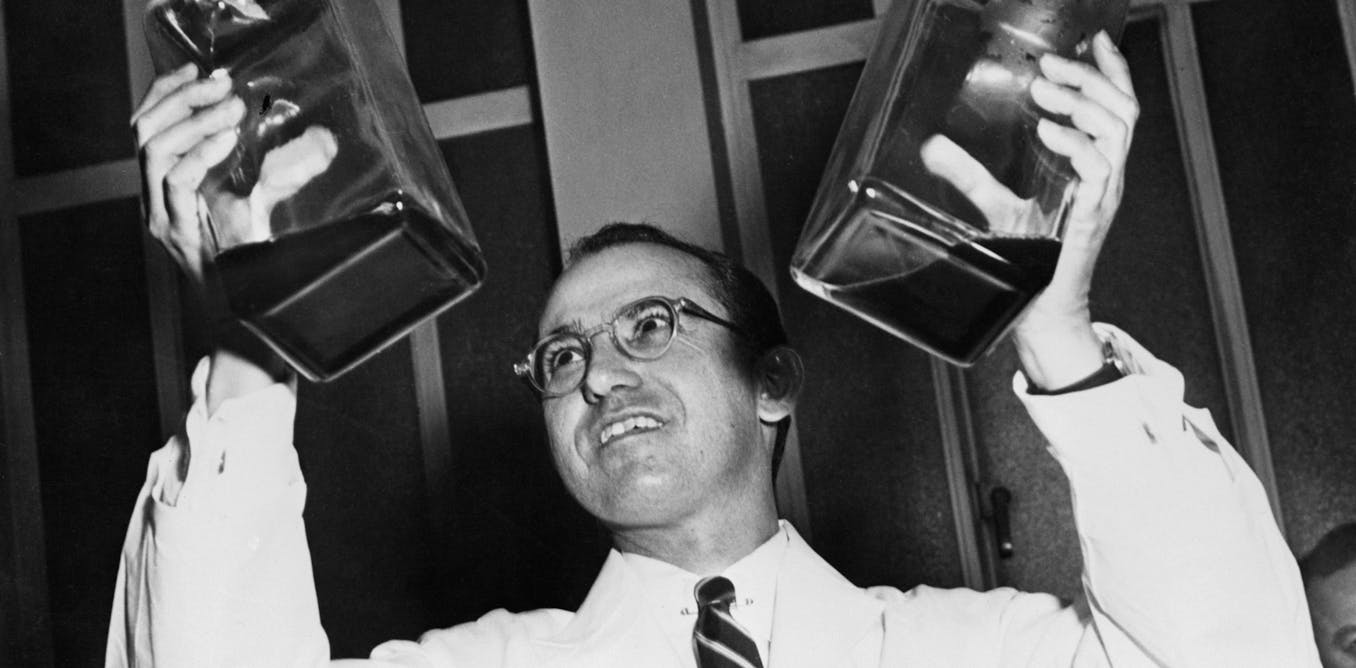
PITTSBURGH — As the world edges closer to eradicating polio, a disease that once terrorized generations with images of children in iron lungs and on crutches, experts warn that the monumental achievement risks fading from collective memory. This October marks 70 years since Jonas Salk's groundbreaking polio vaccine was declared safe and effective, a moment that sparked worldwide celebration and transformed public health. Yet, with polio now endemic in just two countries, Pakistan and Afghanistan, the Global Polio Eradication Initiative aims to wipe it out by 2029, raising questions about how future generations will remember the battle that brought humanity to this brink.
The story of the Salk vaccine begins in the shadow of fear that gripped mid-20th-century America. Each summer, polio outbreaks closed public pools and movie theaters, canceled birthday parties, and left parents in dread. President Franklin D. Roosevelt, himself paralyzed by the disease, spearheaded the National Foundation for Infantile Paralysis, later known for its "March of Dimes" campaign. Americans sent dimes to the White House, while celebrities like Lucille Ball and Elvis Presley rallied support. Basil O'Connor, Roosevelt's lawyer and the foundation's co-founder, directed funds to researchers battling the "Great Crippler," as polio was ominously called.
In Pittsburgh, 33-year-old Jonas Salk and his team labored in a modest lab at the University of Pittsburgh, sandwiched between a morgue and a darkroom. Their work culminated in the first successful inactivated polio vaccine. To validate it, the vaccine underwent rigorous testing: first on local schoolchildren, then in the largest medical field trial ever conducted, involving 1.8 million children across the United States. On April 12, 1955, the announcement came — the vaccine was safe and effective. Church bells rang, schools dismissed early, and global headlines hailed the triumph.
Salk's altruism became legendary when, in a 1955 interview with journalist Edward R. Murrow, he famously remarked that patenting the vaccine would be like "patenting the sun." The invention, he said, belonged to the people. This ethos underscored the collaborative spirit that drove the effort, from lab technicians handling the virus to volunteers who tested it on themselves.
Among the unsung heroes were the "Pittsburgh polio pioneers," local children who received the experimental shots. Many recalled Salk administering the injections personally, including to his own sons. His eldest, Peter Salk, then 10 years old, later collaborated with his father on an AIDS vaccine. Lab workers like Ethyl "Mickey" Bailey pipetted the deadly virus by mouth, while senior scientist Julius Youngner, who had contributed to the Manhattan Project, shifted from atomic research — which devastated Hiroshima and Nagasaki, killing tens of thousands instantly and hundreds of thousands more in the aftermath — to saving millions through the vaccine.
Upstairs in the same building, Dr. Sidney Busis performed tracheotomies on 2-year-old patients reliant on iron lungs, while Dr. Jessie Wright, a pioneer in rehabilitation, oversaw the polio ward and served as medical director of the D.T. Watson Home for Crippled Children, the site of the vaccine's initial human trials. Polio survivors like Jimmy Sarkett and Ron Flynn volunteered as test subjects, knowing the benefits might never reach them personally.
The documentary "The Shot Felt Round the World," filmed during the 50th anniversary celebration at the University of Pittsburgh in 2005, captured these stories. Producer and director David Grogan, who transitioned from screenwriting in Los Angeles to teaching, interviewed survivors and scientists. Bailey and Youngner shared their experiences, highlighting the human cost and ingenuity behind the vaccine. Grogan's film preserves voices now silenced, as many 50th-anniversary participants have passed away.
Salk's legacy extended beyond Pittsburgh. Tensions with the University of Pittsburgh administration led him to establish the Salk Institute for Biological Studies in La Jolla, California, in 1963. The institute became a hub for biotech innovation, bolstering San Diego's economy. Near the end of his life, Salk expressed quiet satisfaction when encountering people unaware of polio, a sign of the disease's retreat. Yet, he lamented the growing skepticism toward vaccines among those who never witnessed its horrors.
Today, that skepticism poses a risk as polio nears eradication. The Global Polio Eradication Initiative, launched in the 1980s, has reduced cases from 125 endemic countries to just two. On October 24, 2024 — coinciding with World Polio Day and the vaccine's 70th anniversary — Grogan screened a trailer for his documentary at an event on Roosevelt Island in New York City. The venue, adjacent to the ruins of the Smallpox Hospital, symbolized another public health victory: smallpox, the only human disease fully eradicated.
Attendees included UNICEF's executive director, the Gates Foundation's polio director, Rotary International's U.N. representative, and officials from various governments. They discussed the coalition's relentless efforts, which Grogan dubbed "The Avengers of Public Health." Despite progress, challenges persist in Pakistan and Afghanistan, where conflict and access issues hinder vaccination campaigns.
Grogan fears that upon eradication, the world may undervalue the feat. In the documentary, Dr. Jonathan Salk, Jonas's youngest son, recalls his father pondering whether the polio model could address poverty and social ills. The elder Salk's vision emphasized collective action against shared threats.
Polio's reach has touched prominent figures, forging unexpected connections. Director Francis Ford Coppola, a survivor, has spoken of his childhood battle with the disease. U.S. Sen. Mitch McConnell and former Secretary of State Marco Rubio's grandfather also endured its effects. Even comedian Bill Murray, who portrayed Roosevelt in the film "Hyde Park on Hudson," has a personal tie through his sister, a polio victim.
Grogan suggests revitalizing the "March of Dimes" approach to engage younger generations. He envisions a video featuring Coppola interviewed by his granddaughter, TikTok influencer Romy Mars, and daughter Sophia Coppola, with cameos from Murray, McConnell, and Rubio. Such efforts could bridge eras, reminding the world of polio's cruelty and the unity required to defeat it.
As the 2029 target looms, the initiative calls for sustained global commitment. Officials emphasize that forgetting polio's history could undermine trust in vaccines at a time when other diseases threaten resurgence. The path from Pittsburgh's lab to potential eradication underscores humanity's capacity for progress, but only if the story endures.
In New York, as speakers at the World Polio Day event reflected on the journey, the message was clear: the final mile demands vigilance. With resources poured into the effort since the 1980s, the coalition remains determined. Eradication would not just end a virus, but affirm the power of science and solidarity in an interconnected world.