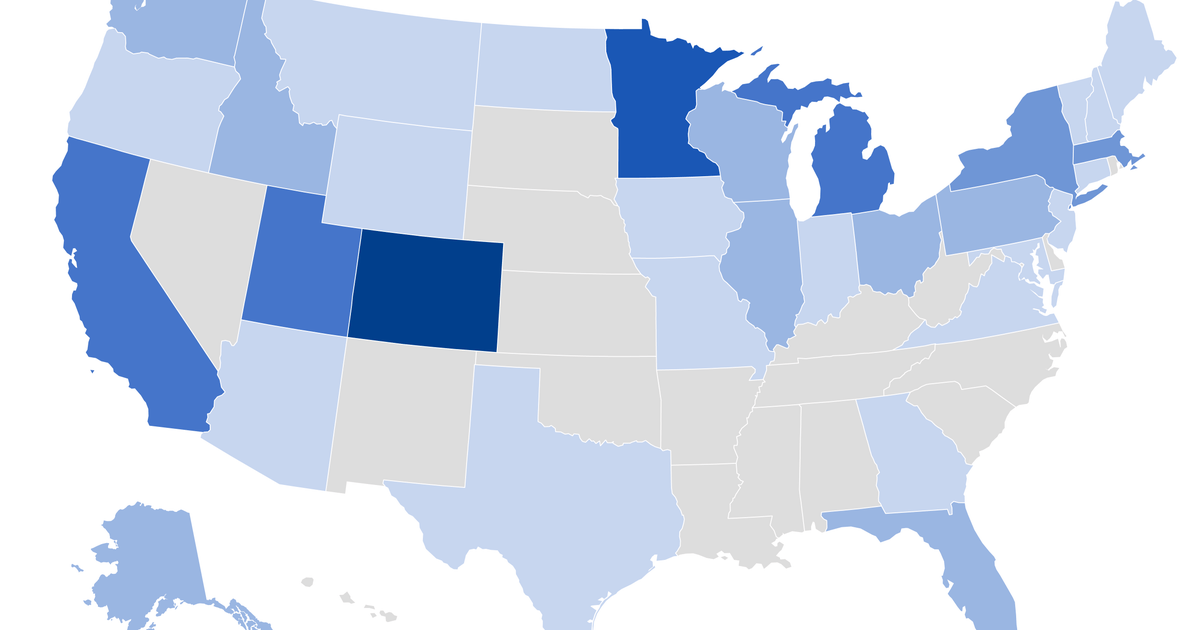
In a historic milestone for American winter sports, the United States Olympic and Paralympic Committee has assembled its largest Winter Olympics team ever, with 232 athletes set to represent the U.S. at the 2026 Games in Italy. This roster, drawn from 32 home states, surpasses the 228 competitors who participated in the 2018 PyeongChang Winter Olympics, signaling a growing depth in U.S. winter athletic talent. According to the committee, the team includes a mix of seasoned veterans and fresh faces, poised to compete in events ranging from alpine skiing to figure skating across the Italian venues of Milan and Cortina d'Ampezzo.
The CBS News data team, which analyzed the hometowns of these athletes, revealed stark geographic concentrations that reflect the nation's winter sports landscape. Colorado emerges as the powerhouse state, contributing 30 athletes to the delegation. This dominance is no surprise, given the state's array of world-class training facilities in the Rocky Mountains, where many Olympians hone their skills on snow year-round. Minnesota follows closely with 24 athletes, a testament to its strong tradition in hockey and speed skating, sports deeply embedded in the Midwest's cold-weather culture. California rounds out the top three with 19 representatives, drawing from its diverse terrain that includes Sierra Nevada slopes for skiing and coastal rinks for ice events.
Further down the list, states like New York, Utah, and Wisconsin also boast significant numbers, with 16, 15, and 13 athletes respectively, according to the CBS analysis. These figures highlight how proximity to natural snow and ice, combined with established youth programs, funnels talent toward Olympic contention. In contrast, representation thins out dramatically in warmer or less snowy regions. Georgia, Indiana, Iowa, North Dakota, and Washington, D.C., each send just one athlete, underscoring the challenges of developing winter sports in areas without consistent cold weather. Even more notably, 18 states— including southern powerhouses like Florida, Texas, and Arizona—have no athletes on the team, a gap that sports officials have long attributed to limited access to facilities and coaching.
Beyond state lines, the team's composition adds an international flavor. Three athletes list hometowns in other countries: one from New Zealand, one from Canada, and one from Ukraine. These individuals, who have chosen to compete for the U.S., bring diverse experiences to the squad and exemplify the global mobility in elite athletics. The official count excludes three alternate athletes, who could step in if needed during the Games. This careful selection process, overseen by the U.S. Olympic and Paralympic Committee, ensures a balance of experience and potential.
Experience is a key strength of this roster, with 98 returning Olympians who have collectively earned 22 gold medals in past competitions. These veterans, including multiple medalists in disciplines like snowboarding and biathlon, provide leadership and stability. As the committee noted in its announcement, their presence is expected to inspire the newcomers and elevate team performance. Among the debutants, 32 athletes previously competed at the Youth Olympic Games, with 20 of them making their senior Olympic debut at the 2026 event. This pipeline from youth to elite levels demonstrates the effectiveness of U.S. development programs in nurturing talent over time.
Drilling down to specific communities, the CBS News mapping uncovers hotspots that serve as cradles for Olympic dreams. Park City, Utah, a famed ski resort town that hosted events during the 2002 Salt Lake City Games, leads with 11 athletes. Its terrain and infrastructure make it a natural training ground for freestyle skiing and snowboarding. Steamboat Springs, Colorado, follows with a strong contingent, known for producing champions in Nordic combined and ski jumping thanks to its historic winter sports academy. Lake Placid, New York, site of the 1980 "Miracle on Ice," contributes several athletes, carrying forward a legacy of hockey and bobsled excellence. Anchorage, Alaska, rounds out the top hometowns with its representatives, leveraging the state's vast wilderness for cross-country skiing and biathlon training.
The full breakdown, available through a searchable database compiled by CBS News, allows fans to explore connections to their own communities. For instance, smaller towns like Truckee, California, and Eau Claire, Wisconsin, each have multiple athletes, showing how grassroots efforts in local clubs feed into national success. This granularity not only celebrates regional pride but also spotlights the infrastructure investments that have boosted U.S. winter sports since the early 2000s. The 2026 team size reflects these gains, outpacing not just the 2018 contingent but also approaching the scale of larger Summer Olympics delegations, which often exceed 500 athletes.
Contextually, the buildup to Milan-Cortina has been marked by expanded qualification pathways, allowing more athletes to earn spots through international competitions like the World Championships. The U.S. committee emphasized inclusivity in its selections, incorporating para-athletes alongside able-bodied competitors under the unified Olympic and Paralympic banner. While the primary focus remains on medal potential, officials have highlighted the team's role in promoting winter sports participation nationwide, especially in underrepresented states.
Challenges persist, however. The exclusion of 18 states from the roster has sparked discussions among sports administrators about equity. According to reports, initiatives like the U.S. Olympic and Paralympic Committee's grants for southern-based training centers aim to address this disparity, though progress is slow. In states with single representatives, such as Georgia's lone athlete in figure skating, personal determination often overcomes environmental hurdles, with many training in indoor facilities or traveling extensively.
The international hometowns add a layer of complexity to team dynamics. Athletes from New Zealand, Canada, and Ukraine, who have navigated citizenship processes to join Team USA, embody the evolving nature of Olympic eligibility under International Olympic Committee rules. Their stories, while not detailed in the committee's release, underscore themes of adaptation and resilience, particularly for the Ukrainian athlete amid ongoing global tensions.
Looking ahead, the 2026 Games represent a pivotal moment for U.S. winter sports, coming three years after the Beijing 2022 Olympics where America secured 25 medals. With returning stars like those from the 22-gold club leading the charge, expectations are high for podium finishes in Italy's Dolomites. The committee anticipates that this record team could inspire a new generation, especially through the 20 Youth Olympic alumni making their mark.
As preparations intensify, training camps in Colorado and Utah are buzzing with activity. Athletes are fine-tuning techniques for events scheduled from February 6 to 22, 2026, with opening ceremonies in Milan setting a glamorous tone. The broader implications extend to cultural exchange, as the U.S. team joins athletes from over 90 nations in a showcase of human achievement against the backdrop of the Italian Alps.
In the end, this diverse delegation from 32 states and beyond encapsulates the American spirit in winter sports: a blend of regional strengths, personal grit, and collective ambition. Fans can track their favorites via the CBS News database, connecting local pride to global competition. As the countdown to 2026 begins, the stage is set for what could be the most successful U.S. Winter Olympics campaign yet.
Rachel Gold of CBS News contributed to the data analysis and reporting on this story.