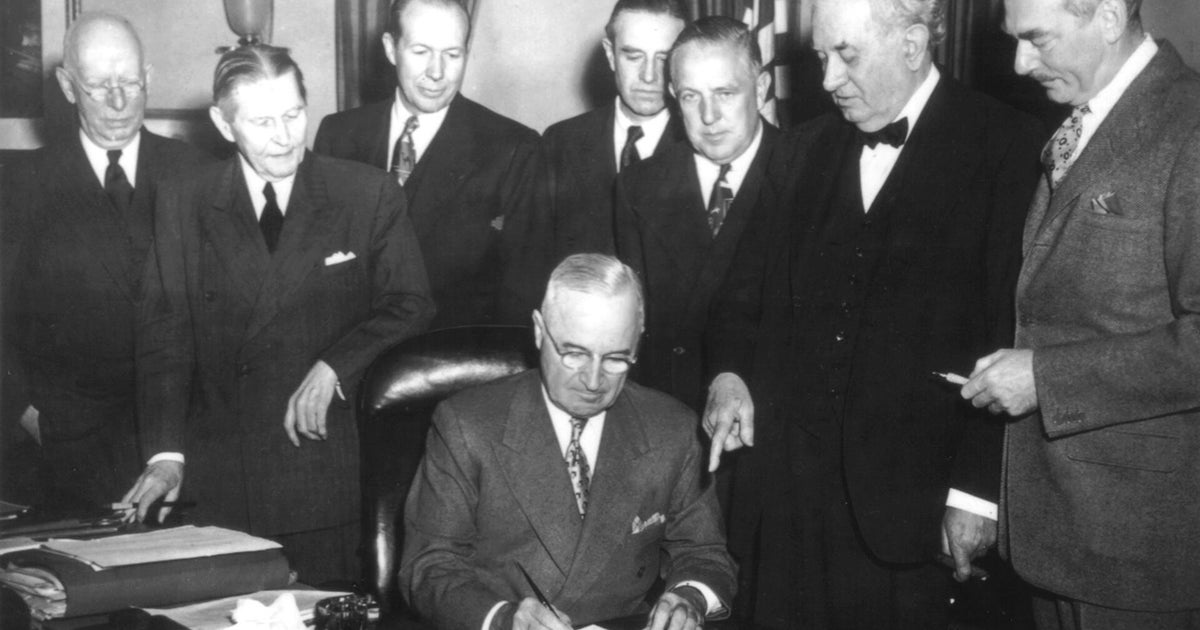
In 1947, two years after the end of World War II, President Truman's secretary of state, George C. Marshall, delivered a commencement speech arguing the U.S. should provide economic assistance to help rebuild Europe, according to a CBS News report on the Marshall Plan.
The address came at a time when much of the continent lay in ruins following years of conflict. Marshall outlined a vision for American aid that would later become known as the Marshall Plan, officials said.
According to the report, the speech emphasized the need for the United States to support European recovery to prevent further instability. "In 1947, two years after the end of World War II, President Truman's secretary of state, George C. Marshall, delivered a commencement speech arguing the U.S. should provide economic assistance to help rebuild Europe," the account stated.
Details from the period indicate that the proposal eventually led to billions in aid being sent across the Atlantic. European nations accepted the offer, with the program running from 1948 to 1952.
Contemporary observers noted that the initiative aimed to restore economic stability and counter the spread of communism in the postwar era. The CBS News segment titled "These United States: The Marshall Plan" highlighted these elements from the original address.
Marshall, who had served as Army chief of staff during the war, used the Harvard commencement platform to make his case. The speech did not immediately detail specific dollar amounts but set the framework for what followed, sources reported.
European leaders responded positively in the months after the address. Conferences were held to coordinate the aid distribution among participating countries.
The program ultimately provided more than $12 billion in assistance, though exact figures vary slightly in historical accounts. The effort helped modernize industries and infrastructure across Western Europe.
Critics at the time questioned the scale of American involvement, but supporters argued it was essential for global recovery. The CBS report focused primarily on Marshall's role and the speech's content.
By the early 1950s, the plan had contributed to significant economic growth in recipient nations. Trade between the U.S. and Europe also expanded as a result.
Marshall received the Nobel Peace Prize in 1953 for his contributions to the initiative. The recognition came several years after the program's launch.
Today, the Marshall Plan is often cited as an example of successful foreign aid policy. Historians continue to examine its long-term effects on transatlantic relations.
Additional reporting from the same CBS source reiterated the 1947 timeline and Marshall's position under President Truman. No conflicting details emerged from the available material.