NEW DELHI — For more than two months, Indian Captain Rahul Dhar and his crew have been anchored on their oil tanker in the Persian Gulf, their lives upended by the ongoing war between the United States and Iran. What began as a routine voyage has turned into a tense standoff, with the crew witnessing drones and missiles lighting up the sky as the Strait of Hormuz — a vital artery for global oil shipments — remains largely closed to commercial traffic.
The strait, which normally sees about 130 or more vessel transits per day and carries roughly one-fifth of the world's oil and liquefied natural gas, has become a no-go zone since the conflict escalated. According to maritime data firm Lloyd’s List Intelligence, only about 80 vessels passed through in the week of April 13-19, a sharp drop that underscores the paralysis gripping international shipping. Dozens of ships have come under attack since the war started, and the United Nations reports at least 10 seafarers killed in the violence.
Captain Dhar, speaking to the Associated Press from his vessel, described the crew's fragile morale amid the uncertainty. “The crew’s morale is holding as they carry on with their routines, but the strain is beginning to show,” he said. A shaky ceasefire extended indefinitely by U.S. President Donald Trump last week has offered a “careful sense of hope,” but with the U.S. maintaining a blockade on Iranian ports and Iran responding by firing on ships and seizing two vessels, there's no clear path forward. “Day to day, we try to keep things normal with open conversations and small team activities that help lift everyone’s spirits,” Dhar added.
The crew has endured heart-pounding moments, spotting drones and missile interceptions both near their ship and on the horizon during night watches. “Those moments were difficult and created real tension for the crew,” Dhar recounted. “None of us expected the warlike situation.” Reliable internet access has been a lifeline, allowing the sailors to connect with families back home. “Those calls and messages really keep us grounded and give us strength,” he said.
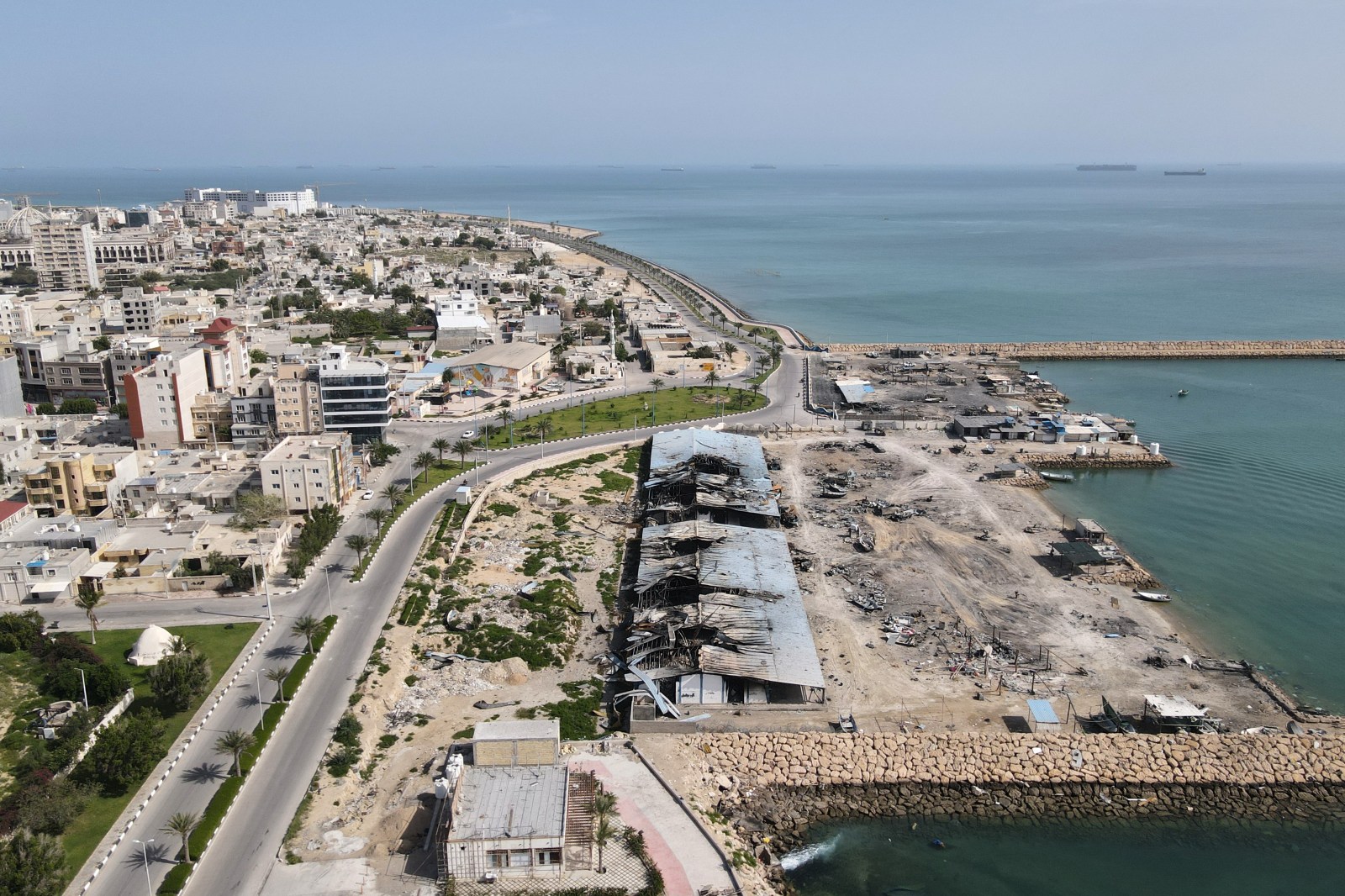
Around 20,000 seafarers on hundreds of vessels — including oil and gas tankers and cargo ships — are now stranded in the Gulf, unable to navigate the strait. Many are anchored near Iranian ports like Bandar Abbas and Khorramshahr, where explosions have rattled decks just hundreds of meters away. Manoj Kumar Yadav of the Forward Seamen’s Union of India, which represents thousands of Indian sailors aboard these ships, said his organization has fielded daily distress calls from crews and their families. “They were watching blasts from their decks,” Yadav told the AP. “Many of them were on board a ship for the first time, and you can imagine what mental state they have gone through.”
India, a major supplier of maritime labor, has over 20,000 nationals working on foreign-flagged ships in the region, many of whom are beyond easy reach for evacuation. The country's shipping ministry reported last week that at least 2,680 sailors have been evacuated since the conflict began, but thousands more remain stuck. Yadav highlighted acute shortages plaguing some vessels, including food and drinking water, forcing crews to ration supplies. Communication with loved ones has been spotty due to internet disruptions and signal jamming, and when possible, sailors face steep roaming charges for brief calls. Families in India are growing increasingly anxious, pressing authorities for the safe return of their relatives.
The plight extends beyond Indian crews. Reza Muhammad Saleh, an Indonesian chief officer on a Greek-owned cargo ship stranded off Oman for more than a month, described a drone exploding near the port shortly after their arrival on March 3. At least two more incidents followed, prompting repeated evacuations to onboard bunkers, though no one was injured. “The biggest problem is the uncertainty. We don’t know when Hormuz will be open again,” Saleh said in an interview with the AP. His vessel, which typically hauls iron ore across Gulf states and transits the strait once or twice a month, now requires written clearance from Iran to proceed. “No company wants to take the risk without it,” he noted.
Despite their experience in conflict zones, Saleh's 24-member crew — hailing from Indonesia, Arab countries, India, and Ethiopia — has been shaken by missile strikes and GPS disruptions that have forced a return to manual navigation. “Sometimes we think it’s safe, then suddenly it’s not. Today we’re safe. Tomorrow, nobody knows,” he said. Mohamed Arrachedi, the International Transport Workers’ Federation’s network coordinator for the Middle East, reported earlier this month that the group has received hundreds of assistance requests from seafarers, including pleas for food supplies.
Shipping companies are grappling with the logistics of supporting these isolated crews. Fleet Management Limited, which oversees dozens of stranded ships staffed by more than 400 seafarers, maintains multiple daily communications to monitor conditions. CEO Capt. Rajalingam Subramaniam said the firm conducts regular stock checks for food and has arranged pickups for fresh and dry provisions by repositioning vessels to accessible points. Crew changes continue but in limited numbers. “Who wants to go on the ship?” Subramaniam asked. “The inbound crew has the right to refuse and we respect that.”
Subramaniam emphasized the need to honor contracts that didn't anticipate war zones. “For mariners who did not sign up to be in warlike area, they also need to be respected so that they do not become the unintended collateral,” he said. None of the vessels under Fleet Management's care have attempted to cross the strait during the ceasefire, as several others that tried were fired upon or turned back. Germany's Hapag-Lloyd, the world's largest shipping company, has about 150 sailors stranded on six vessels near the strait. Spokesman Nils Haupt described the situation as “difficult days and weeks,” with the company checking in with captains and crews at least once a day. “We’ve been able to rotate some of them in the meantime, but you can easily imagine that after such a long time, monotony naturally sets in on board,” Haupt told the AP earlier this month.
Capt. ArunKumar Rajendran, another Indian captain stranded with his tanker crew for around eight weeks, echoed the human cost of the conflict. “Seafarers are the backbone of global trade, yet we are often the most affected by regional geopolitical conflicts,” he said. The International Maritime Organization, the United Nations' shipping agency, has joined calls for a safe corridor for commercial vessels through the strait. Most ships remain unable to pass, even as Iran has declared the waterway open to non-hostile vessels while demanding tolls for passage.
Reports indicate Iran has placed mines in the strait, a claim U.S. President Trump addressed last week by stating American forces were clearing them and would “shoot and kill” boats laying new ones. IMO Secretary-General Arsenio Dominguez warned that under the heightened risks of mines and attacks, “there is no safe transit anywhere in the Strait of Hormuz.” The ceasefire's fragility was evident when vessels attempting passage during the truce faced fire, highlighting the ongoing dangers despite diplomatic overtures.
This crisis is part of a pattern of disruptions for the maritime industry. Recent years have seen seafarers stranded due to the COVID-19 pandemic, Russia's invasion of Ukraine, and attacks by Yemen’s Houthi rebels on ships in the Red Sea. Subramaniam expressed concern that the Iran war could exacerbate the global shortage of skilled seafarers. “I worry that even after the Iran war ends, fewer people will be willing to sign up at a time when there is already a shortage,” he said. The International Transport Workers’ Federation and other groups continue to advocate for the stranded workers, urging swift resolution to allow safe passage and repatriation.
As the ceasefire holds tenuously, the eyes of the shipping world remain on the Strait of Hormuz. For the thousands of seafarers like Captain Dhar, Saleh, and Rajendran, each day brings a mix of routine and dread, their stories a stark reminder of the human toll behind the headlines of geopolitical strife. With global trade hanging in the balance, pressure mounts on world leaders to de-escalate and reopen this critical chokepoint.