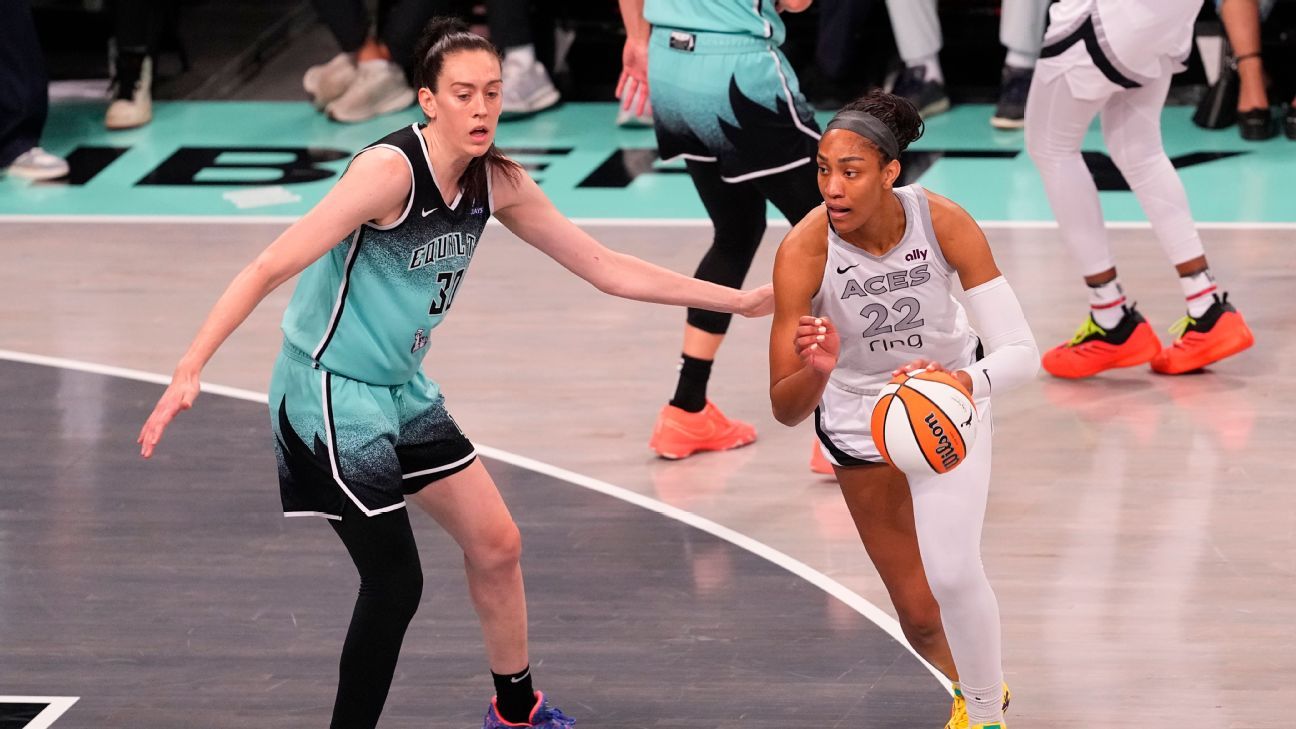
As the WNBA gears up for another thrilling season, fantasy basketball enthusiasts are diving into preparations with renewed excitement. ESPN Fantasy Women's Basketball returns for its fifth campaign, promising wire-to-wire action amid significant league changes. The offseason has been marked by fireworks, including a new collective bargaining agreement between the WNBA and the players' union that has reshaped the league's landscape, according to ESPN analysts.
This agreement has opened unprecedented opportunities for player movement during the free agency window, affecting team rosters and fantasy value assessments across the board. Every veteran in the league became a free agent following the CBA's ratification, leading to a flurry of transactions that fantasy managers must track closely. 'The best preparation is to follow the offseason moves, because that is where the changes in fantasy value take place,' advises ESPN fantasy expert Eric Cohen in a comprehensive guide published on the network's website. Cohen emphasizes that once free agency and the WNBA draft conclude, staying updated is crucial for drafting success.
The league's expansion to 15 teams this season adds another layer of complexity and opportunity. New franchises, the Toronto Tempo and Portland Fire, join the fold in their inaugural campaigns, following the Golden State Valkyries' entry last year. Despite this growth, the WNBA maintains half the number of teams compared to the NBA's 30, resulting in smaller fantasy roster sizes and a more compact free agency wire. A typical ESPN league features six fantasy teams, each with nine roster spots, leading to a nine-round draft where managers start two forwards, two guards, one center, and one utility player of any position.
Weekly head-to-head matchups accumulate fantasy points to determine wins and losses, with top teams advancing to end-of-season playoffs for the championship. Cohen highlights the uniqueness of women's fantasy basketball, noting its points-based, head-to-head format that rewards diverse contributions. 'Points, rebounds and assists are all potentially high-volume categories, so they earn one fantasy point each. Steals and blocks are harder to come by, so they are worth twice as much,' he explains. Made three-pointers provide a bonus point on top of the standard three for the field goal.
For those new to the game or refreshing their strategies, Cohen's top 10 tips offer a roadmap to victory, drawn from years of experience. He stresses the importance of not relying solely on public rankings, which are accessible to all league members. 'If you really know the subject matter yourself, you can make your own adjustments to my (or any public) rankings and come into the draft with clearer ideas about where you think the value is,' Cohen writes. This personalized approach can provide a competitive edge in snake drafts, salary cap drafts, or even offline formats where results are manually inputted into ESPN's system.
Drafting to the scoring system is another cornerstone of success. Managers should prioritize players who excel in high-value categories like steals and blocks, while balancing with volume stat producers. Cohen recommends practicing in the ESPN Mock Draft Lobby to hone skills. As the draft progresses, strategies evolve: early rounds focus on best player available, regardless of positional overlap, allowing flexibility in utility spots. 'I'm not super worried if two of my first three picks happen to both play small forward. It's more important to maximize the fantasy scoring potential of your best few players,' he notes.
In the middle rounds, attention shifts to team fit, ensuring coverage across positions without leaving glaring weaknesses. By the later rounds, with a solid foundation in place, it's time for calculated risks. 'By then it's time to pull up from 40 feet like Caitlin Clark and go for the gamble. I'm going after my sleepers. I'm taking more chances,' Cohen says, referencing the Indiana Fever star's bold shooting style. These late-round picks often prove pivotal, turning average teams into contenders.
Winning characteristics in players include career stage and team context. Younger veterans on playoff-contending squads tend to deliver durable, high-minute performances. 'You want to draft younger veteran players that are trying to carry their teams into postseason consideration, as they tend to be more durable and play more minutes because they're younger but have their WNBA legs under them,' Cohen advises. Durability and versatility are key in a league where minutes can fluctuate with expansion and roster shifts.
Post-draft, activity on the free agency wire is essential, especially in the season's opening weeks. Cohen warns against clinging to draft choices if early performances disappoint. 'If my seventh-round sleeper starts off the season on the bench or playing poorly and there's an undrafted free agent that has scored 20 points in the first two games, I have to be willing to drop my drafted player to move on to the better prospect,' he states. This flexibility allows managers to capitalize on breakout stars before rivals do.
Trading emerges as a vital tool for long-term success. Even the strongest drafts require adjustments as the season unfolds. Cohen advocates for frequent, fair offers that address mutual needs. 'If you make win-win trades, and you make them more often than everyone else in your league, then your team should have added more "wins" to the ledger than your opponents,' he explains. Over time, these incremental gains can secure a championship.
At the heart of it all, Cohen insists that true fantasy prowess stems from genuine engagement with the sport. 'Number 10 could have been number one to me, because it is really the "dirty secret" at the center of all fantasy sports success,' he reveals. Watching games via WNBA League Pass, debating rankings—like A'ja Wilson's place among all-time greats or the merits of young stars Caitlin Clark, Paige Bueckers, and Angel Reese—builds intuitive knowledge. Following SportsCenter breakdowns and ESPN fantasy articles keeps managers ahead without it feeling like work.
The broader context of the WNBA's evolution underscores the timeliness of these tips. The new CBA not only facilitated free agency but also promises increased salaries and visibility, potentially boosting player production and fantasy relevance. Expansion to 15 teams dilutes talent pools slightly but introduces fresh dynamics, with rookies from the recent draft vying for roles alongside established names. Fantasy leagues are now open on ESPN, encouraging users to create or join via the app available on Apple Store and Google Play.
As the season approaches, the intersection of real-world changes and fantasy strategy has never been more pronounced. Managers who heed Cohen's advice—tracking moves, drafting smartly, staying active, and immersing in the game—stand the best chance to thrive. With playoffs on the horizon and a championship at stake, the fifth season of ESPN Fantasy Women's Basketball invites both newcomers and veterans to elevate their game.
Looking ahead, ongoing analysis from ESPN will provide weekly insights to refine rosters amid inevitable surprises. Whether debating Clark's long-range prowess or Wilson's dominance, the joy of hoops remains the ultimate edge. Good luck to all participants as they chase glory in this evolving fantasy frontier.