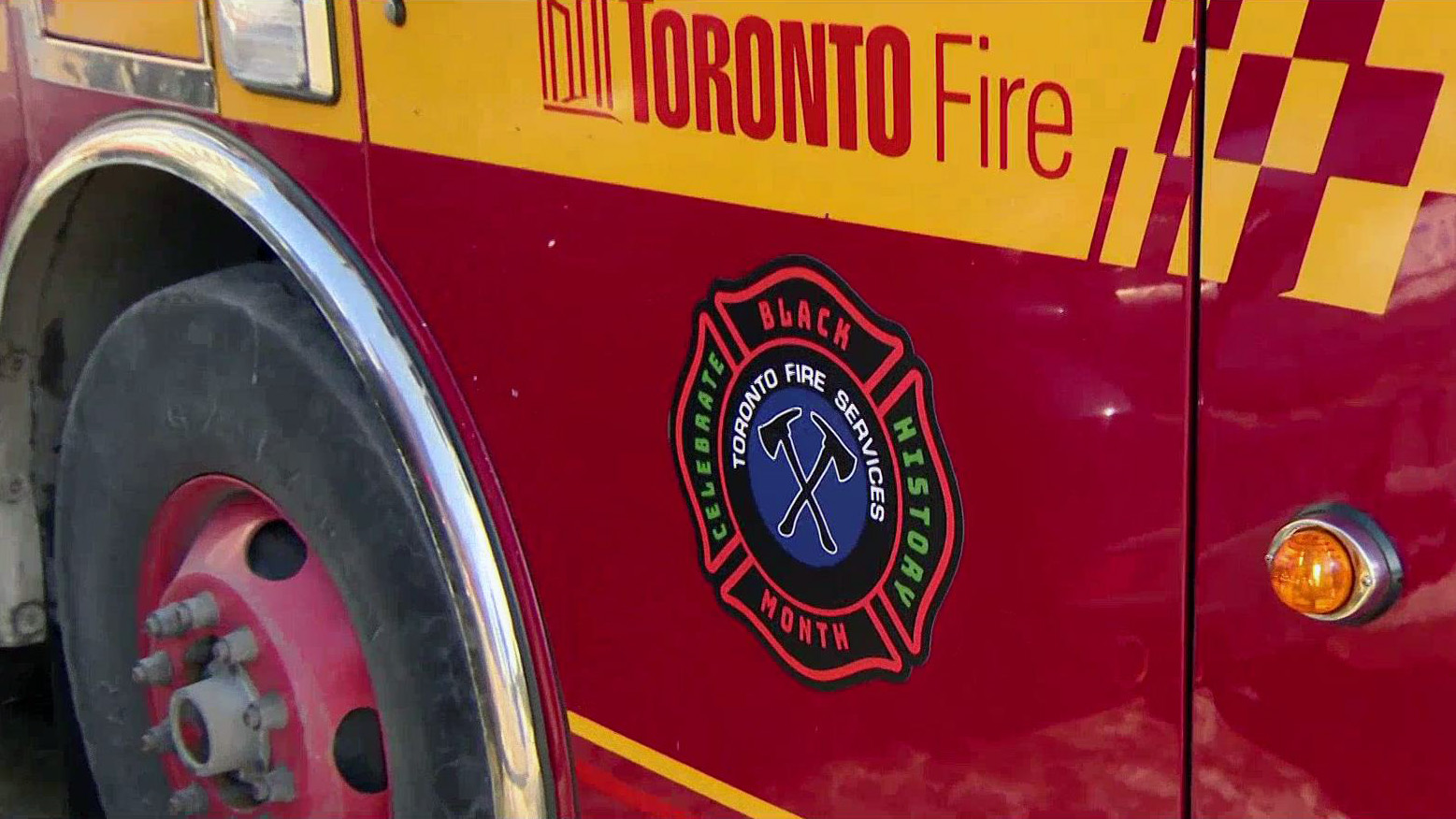
TORONTO — As Black History Month unfolds in 2026, the Toronto Fire Services is intensifying efforts to diversify its ranks, aiming to recruit more Black firefighters amid ongoing challenges in representation. Veteran firefighter Brian Porter, now serving as Acting District Chief of the Operations Division, recalls a time three decades ago when he was one of the few non-white faces in the department. 'No doubt, I was one of the very few Black or non-white individuals in the context 30 years ago,' Porter said in a recent interview.
Porter's journey into the fire service was far from straightforward. Coming from a family that did not initially support the career choice, he faced skepticism from his high school guidance counselor, who suggested he visit local fire stations to gauge the environment. 'And he asked me, ‘ok great, did you see any people that looked like you when you went out this weekend?’ and my honest answer to that was no,' Porter recounted. Despite these hurdles, Porter persisted and rose through the ranks, becoming a symbol of progress within the Toronto Fire Services (TFS).
Yet, even in 2026, the department's demographics tell a story of slow change. According to Porter, Black staff members comprise only about three percent of the TFS workforce. This figure stands in stark contrast to the city's diverse population, where Black residents make up a significant portion. 'It’s still not uncommon for us to go to a call and have somebody say ‘I’ve never seen a Black firefighter’ in 2026,' Porter noted, highlighting the persistent visibility gap.
To address this underrepresentation, TFS has ramped up initiatives in recent years. The TFS Black Staff Network, established in 2023, provides a vital space for support, mentorship, and community building among Black employees. During Black History Month this year, more than 100 fire trucks across the city are adorned with decals recognizing Black contributions to the fire service, serving as both a tribute and a recruitment tool.
Historical context underscores the department's evolution. Captain Barry Sharp holds the distinction of being the first Black firefighter hired by the City of North York in 1969, and the second in the amalgamated City of Toronto following municipal restructuring. Sharp's pioneering role paved the way for others, though the path remains arduous. Community outreach programs have become a cornerstone of TFS's diversity strategy, bringing the fire service directly to neighborhoods with high Black populations.
At mall events organized especially during Black History Month, children and families interact with firefighters, handling equipment and learning about the profession firsthand. 'We do mall events, especially during Black History Month, where a lot of kids come up. They get to speak to real firefighters, they get to touch the tools, see the gear,' said firefighter Frank Jones, who participates in these engagements. Such interactions aim to spark interest early and demystify the career.
For Nasteha Beinah, a TFS 911 dispatcher, these events echo her own entry into the field. She credits a recruitment clinic where firefighters introduced her to the various divisions within the service. 'There are so many different divisions. And so it was those firefighters at that clinic that introduced me, and so hopefully us at the malls and us here on the news, is what that does for another kid,' Beinah said, emphasizing the inspirational ripple effect.
Becoming a firefighter, however, is no simple feat. The recruitment process is rigorous, often spanning years and involving costly certifications that can deter applicants from underrepresented groups. Toronto Fire Chief Jim Jessop acknowledges these barriers but stresses the department's commitment to maintaining high standards. 'We cannot change our requirements and we certainly will never lower our standards in terms of the recruitment process but we do do is try to identify where people are falling off, we look at it and where we can make change, we will sit and have conversations,' Jessop explained.
Jessop has publicly pledged to make the TFS more reflective of the community it serves, a goal that aligns with broader equity efforts in public safety across Canada. The department analyzes dropout points in the application process and engages in dialogues to remove unnecessary obstacles without compromising safety protocols. These conversations often involve partnerships with community organizations and educational institutions to provide guidance on certifications and preparation.
While progress is evident — from the Black Staff Network to visible symbols on fire trucks — challenges persist. Economic factors, such as the cost of training, disproportionately affect lower-income applicants, many of whom come from diverse backgrounds. TFS has explored subsidies and partnerships to mitigate these issues, though details on specific programs remain in development, according to department officials.
The initiative also extends beyond recruitment to retention and promotion. Porter, as Acting District Chief, mentors younger Black firefighters, sharing insights from his 30-year career. His role in the Operations Division allows him to influence training and operations, ensuring inclusive practices trickle down to all levels. 'A lot has changed over the past 30 years, some things haven’t,' Porter reflected, pointing to both advancements and lingering biases.
Community feedback has been positive, with event attendees expressing appreciation for the outreach. At a recent mall event in downtown Toronto, dozens of children tried on gear and posed questions to firefighters like Jones, fostering a sense of belonging. Such moments, Beinah noted, could inspire the next generation to pursue public service careers.
Looking ahead, TFS plans to expand these efforts year-round, not just during Black History Month. Chief Jessop's pledge includes tracking diversity metrics annually and adjusting strategies accordingly. As Toronto continues to grow as one of North America's most multicultural cities, the fire service's ability to mirror that diversity will be crucial for building trust and effectiveness in emergency response.
The broader implications of TFS's work resonate nationally. Similar recruitment drives are underway in other Canadian cities, from Vancouver to Halifax, where fire departments grapple with comparable representation issues. By sharing best practices, such as the Black Staff Network model, Toronto's efforts could catalyze change elsewhere.
In the end, stories like Porter's and Sharp's serve as beacons. As Jessop put it, the goal is a fire service that not only saves lives but also reflects the faces of those it protects. With ongoing commitment, TFS hopes to turn the three percent figure into a number that better honors Toronto's vibrant mosaic.