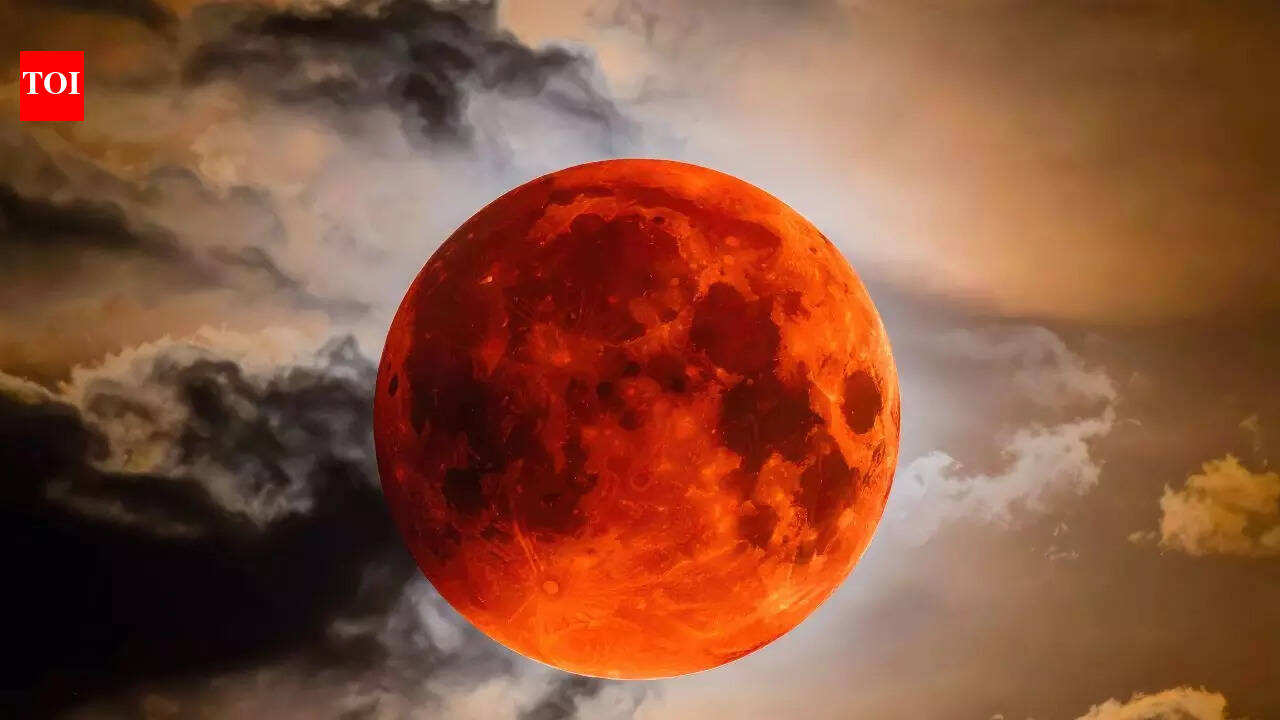
APPLETON, Wis. — Skywatchers across India and much of the world are in for a celestial treat next year when a total lunar eclipse paints the moon a striking red hue on March 3, 2026, coinciding with the vibrant Hindu festival of Holi. According to astronomers and reports from the Times of India, this event, often called a blood moon, will be fully visible from the Indian subcontinent, offering a rare blend of astronomical wonder and cultural celebration.
The eclipse is set to begin in the early hours of March 3, with the moon entering Earth's shadow around 5:09 p.m. IST, according to preliminary calculations from the Indian Astronomical Observatory. Totality, when the moon is fully immersed in the umbra and takes on its reddish glow due to sunlight refracted through Earth's atmosphere, will last from 6:26 p.m. to 7:31 p.m. IST. The entire event, including partial phases, will span over five hours, ending around 8:49 p.m. This timing aligns closely with Holi festivities, which typically start with the Holika Dahan bonfire on March 2 evening and peak with color-throwing on March 3.
"This is a spectacular alignment of science and tradition," said Dr. N. Rathnasree, director of the Nehru Planetarium in New Delhi, in a statement to the Times of India. "The blood moon rising during Holi will add a cosmic dimension to the festival of colors, reminding us of the universe's own palette." Experts note that the reddish tint occurs because Earth's atmosphere scatters shorter blue wavelengths of light, allowing longer red ones to reach the lunar surface.
Visibility will be optimal across India, from the northern plains of Delhi to the southern tip in Kanyakumari, provided clear skies prevail. The Times of India reports that the eclipse will also be observable in parts of Europe, Africa, Asia, and Australia, but for Indian viewers, it holds special significance due to the Holi overlap. In contrast, North and South America will miss the show, as it unfolds during their nighttime hours on March 2-3.
Holi, known as the festival of love and renewal, marks the arrival of spring and the triumph of good over evil, commemorating the legend of Prahlada and Holika from Hindu mythology. The bonfires lit on the eve of Holi symbolize the burning of Holika, and the subsequent day involves playful throwing of colored powders and water. This year's eclipse adds an layer of intrigue, as some astrologers in India have historically viewed lunar eclipses, or chandra grahan, with a mix of awe and caution, advising pregnant women and children to stay indoors during totality.
According to the summary provided by the Times of India Science Desk, the event is described as a "rare total lunar eclipse," emphasizing its blood moon appearance that "coincides with Holi, giving the sky its own festival of colors." While not every lunar eclipse turns dramatically red—depending on atmospheric conditions like volcanic dust or wildfires—this one is expected to deliver a vivid display, similar to the 2022 blood moon that captivated global audiences.
Astronomers at the Indian Space Research Organisation (ISRO) have confirmed the eclipse's parameters through orbital modeling. "The moon will be at perigee, its closest point to Earth, making it appear larger and brighter," noted ISRO scientist Dr. A.S. Kiran Kumar in related eclipse previews. This supermoon effect could enhance the visual drama, drawing crowds to observatories and rooftops across cities like Mumbai, Bangalore, and Kolkata.
Public interest in such events has surged in recent years, bolstered by social media and apps like Stellarium and SkySafari that provide real-time tracking. In India, where astronomy blends with ancient traditions, events like this often spark educational outreach. The Times of India highlights how the Science Desk aims to "demystify the intricacies of science," positioning the eclipse as a teachable moment about Earth's place in the solar system.
However, not all perspectives align seamlessly. Some cultural observers caution against over-romanticizing the overlap, pointing out that traditional Hindu almanacs, or panchangs, sometimes recommend avoiding outdoor activities during eclipses due to beliefs in negative energies. "While scientifically benign, the eclipse's timing with Holi may lead to varied interpretations," said astrologer Pandit Rajesh Sharma in a Delhi-based interview reported by local media. In response, planetariums plan virtual viewing sessions to accommodate those preferring to observe from home.
Historically, total lunar eclipses have inspired art, literature, and even policy. The 1865 eclipse visible in India coincided with colonial tensions, while more recent ones, like the 2018 super blue blood moon, boosted tourism in viewing hotspots. For 2026, tourism boards in Rajasthan and Kerala are already promoting eclipse-Holi packages, expecting an influx of international visitors to witness the dual spectacle.
From a scientific standpoint, lunar eclipses offer valuable data on atmospheric composition. Researchers at the Aryabhatta Research Institute of Observational Sciences (ARIES) in Nainital plan to monitor the event for insights into global air quality, as the red hue's intensity reflects particulate matter in Earth's atmosphere. "Eclipses like this are natural laboratories," ARIES director Dr. Annapurni Subramaniam explained, underscoring their role beyond mere spectacle.
The 2026 eclipse is part of a series of four total lunar eclipses between 2025 and 2028, but its Holi timing makes it uniquely memorable for South Asia. Previous blood moons, such as the one on May 26, 2021, drew millions of viewers despite pandemic restrictions, proving the enduring appeal of these events. Safety reminders from authorities include avoiding direct eye contact—though lunar eclipses pose no harm to vision—and steering clear of unverified eclipse-viewing glasses.
As preparations ramp up, amateur astronomy clubs in Appleton and beyond are buzzing with excitement, planning group viewings via live streams from Indian partners. "Events like this bridge cultures and continents," said local astronomer Elena Vasquez of the Fox Cities Planetarium, echoing global enthusiasm. For Indians celebrating Holi, the blood moon could symbolize renewal on a cosmic scale, blending ancient rituals with modern discovery.
Looking ahead, the next total lunar eclipse visible in India won't occur until 2029, making March 3, 2026, a date to circle. With clear weather forecasts essential—monsoon season still months away—enthusiasts are advised to check local almanacs and apps for precise timings adjusted for longitude. The Times of India encourages readers to join in this "journey where the mysteries of the universe unfold," promising a night where the sky itself joins the festival.
In the broader context of space exploration, this eclipse reminds us of ongoing missions like Chandrayaan-3, India's successful lunar landing in 2023, which deepened national interest in celestial phenomena. As the world grapples with climate change and technological advances, such natural events offer moments of unity, inviting reflection on our shared skies.