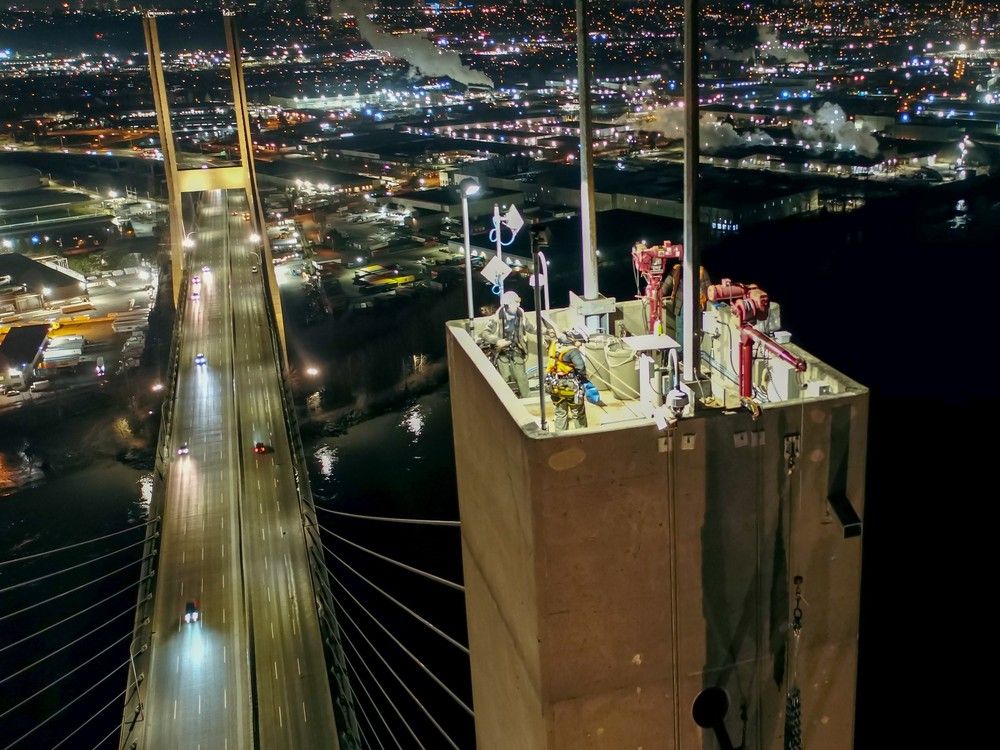
NEW WESTMINSTER, British Columbia — Commuters crossing the Alex Fraser Bridge in Metro Vancouver faced significant delays Tuesday morning following a vehicle collision that closed one southbound lane on Highway 91. According to DriveBC, the province's official highway information service, the incident occurred in the left lane between the Annacis Channel Bridge and Exit 9 in New Westminster, leading to major congestion for southbound drivers heading toward Richmond and Delta.
The crash, reported early Tuesday, reduced northbound traffic to a single lane on the East Annacis Channel Bridge portion of the route, exacerbating backups during the peak morning rush hour. DriveBC issued an alert stating, "Northbound now has one [1] lane open on the East Annacis Channel Bridge. Southbound remains blocked." The update specified that the blockage was not impacting traffic from the southbound Queensborough Bridge, providing some relief for drivers in nearby New Westminster and Richmond.
Officials from DriveBC emphasized the need for extra travel time, advising motorists to check real-time updates via their website or app. The Alex Fraser Bridge, a critical eight-lane cable-stayed structure spanning the Fraser River, handles tens of thousands of vehicles daily, connecting the North Delta area to Annacis Island and beyond. Built in 1985, it has long been a vital artery for industrial and commuter traffic in the region, but incidents like this one highlight its vulnerability to disruptions.
Adding to the morning's challenges, the nearby Pattullo Bridge remains fully closed until Friday for ongoing seismic upgrade work. The closure, which began last month, has already forced thousands of drivers to reroute, funneling more volume onto alternatives like the Alex Fraser and the George Massey Tunnel. Transportation authorities had warned of increased pressure on these routes, and Tuesday's collision amplified the strain.
According to a report from the Vancouver Sun, the southbound lane closure on the Alex Fraser stemmed from the collision, with emergency crews responding promptly to the scene. While details on the number of vehicles involved or any injuries remain unconfirmed, DriveBC's tweet included a photo showing slowed traffic and emergency lights flashing amid the backup. The image, shared via their official X account, captured the extent of the congestion stretching back several kilometers.
Witnesses in the area described a chaotic scene. One driver, speaking anonymously to local media, said the collision involved at least two vehicles and occurred around 7:30 a.m. "It happened right in the merge lane, and traffic just stopped cold," the motorist recounted. "By the time I got past, the backup was already a mile long, and that was before the northbound slowdown hit." Such accounts underscore the rapid ripple effects of bridge incidents in a region where public transit options are limited for cross-river travel.
The Alex Fraser Bridge's design, with its high-level spans over shipping channels, means that even partial closures can halt flows significantly. Highway 91, which incorporates the bridge, serves as a key north-south corridor linking Surrey and Langley to Vancouver International Airport and points south. Data from TransLink, the regional transportation authority, indicates that the bridge sees peak volumes exceeding 100,000 vehicles per day, making it one of the busiest in the Lower Mainland.
In response to the incident, DriveBC recommended alternate routes, including the Highway 99 corridor via the Massey Tunnel or the Queensborough Bridge for local traffic. However, with the Pattullo Bridge out of service, some commuters reported turning to the Knight Street Bridge or even the Port Mann Bridge, leading to spillover delays across the network. "This is not affecting traffic from southbound Queensborough Bridge," DriveBC noted in their alert, aiming to guide drivers away from the worst-hit areas.
The Pattullo Bridge closure, part of a $135-million project to improve earthquake resistance, has been a point of contention among residents. Opened in 1937, the two-lane span was deemed seismically vulnerable years ago, prompting the provincial government to accelerate upgrades. Engineers say the work, which includes replacing the deck and reinforcing supports, is essential given British Columbia's location on the Pacific Ring of Fire. The bridge is scheduled to reopen with four lanes by late 2025, but in the interim, closures like this one strain the system's capacity.
Local officials in New Westminster expressed frustration over the compounded issues. Mayor Patrick Johnstone stated in a recent council meeting that the city has been advocating for better contingency planning. "With the Pattullo down and now this on the Alex Fraser, our residents are bearing the brunt," Johnstone said. "We're pushing for more investment in public transit to ease the reliance on these bridges." His comments reflect broader concerns in Metro Vancouver, where rapid population growth has outpaced infrastructure expansion.
Historical context reveals that bridge collisions are not uncommon in the area. In 2022, a multi-vehicle pileup on the Alex Fraser caused hours-long delays during evening rush hour, injuring several drivers. Similarly, the Pattullo has seen its share of maintenance-related shutdowns, each time prompting traffic advisories from DriveBC. These events often lead to economic ripple effects, with delivery trucks and port-bound freight facing costly detours.
Experts in transportation planning point to the need for diversification. Dr. Lisa Chen, a civil engineering professor at the University of British Columbia, noted in a recent interview that Metro Vancouver's bridge dependency creates single points of failure. "When one goes down, the whole network feels it," Chen said. "Long-term solutions like expanded rapid transit or additional crossings are crucial, but in the short term, real-time information from services like DriveBC is a lifesaver for commuters."
As of mid-morning Tuesday, DriveBC reported gradual improvements, with southbound lanes beginning to reopen after crews cleared the wreckage. However, residual congestion persisted, and northbound traffic remained limited to one lane. Officials urged patience, promising further updates as conditions evolve.
The incident serves as a reminder of the fragility of urban mobility in growing regions like Metro Vancouver, home to over 2.6 million people. With the Pattullo's closure extending through the week, commuters are advised to plan ahead, using tools like the DriveBC app or Google Maps for live traffic data. Transportation Minister Mike Farnworth's office issued a statement emphasizing safety: "Our priority is clearing the scene safely and restoring flow as quickly as possible."
Looking ahead, the province faces ongoing challenges in balancing maintenance with mobility. The Alex Fraser Bridge itself is slated for minor upgrades in the coming years, but no major expansions are planned. For now, Tuesday's collision underscores the importance of cautious driving on these vital links, where a single mishap can cascade into widespread disruption for thousands.