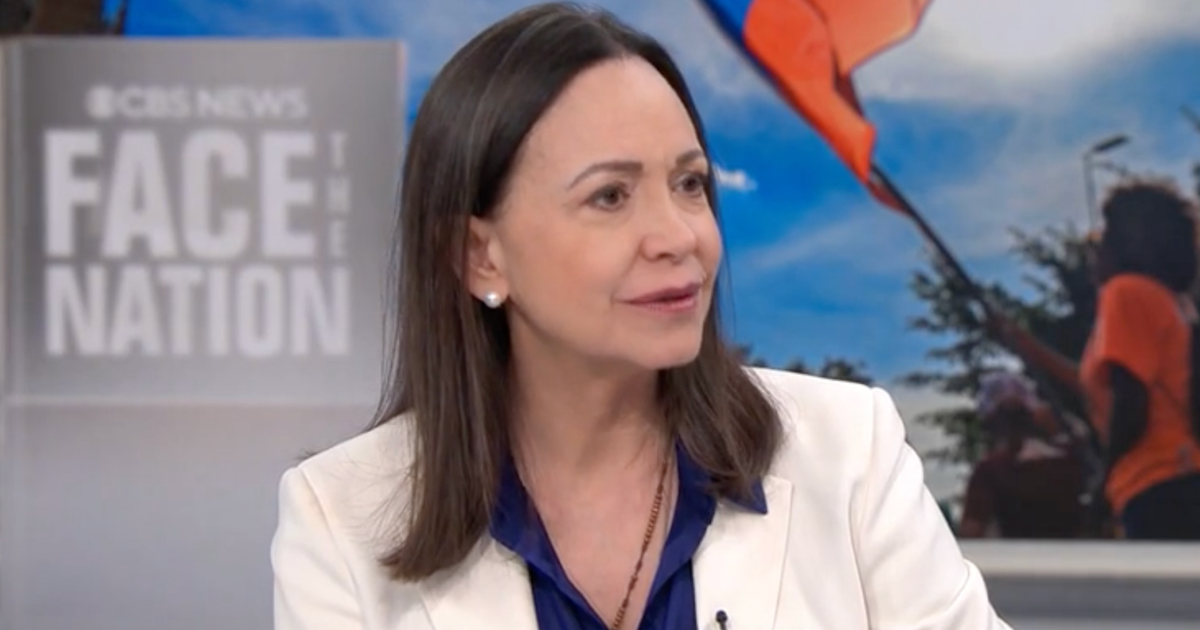
In a rare in-person appearance on CBS's Face the Nation, Venezuelan opposition leader María Corina Machado expressed optimism about the ongoing political transition in her country, crediting intense U.S. pressure under President Donald Trump for forcing changes within the Maduro regime. The interview, conducted on January 30, 2026, and aired on February 1, aired amid heightened tensions following what Machado described as a pivotal event on January 3 that shifted the dynamics on the ground. Speaking from Washington, D.C., Machado, who was barred from running in Venezuela's disputed July 2024 presidential election, detailed her recent meeting with Secretary of State Marco Rubio and highlighted the Venezuelan people's growing confidence in a democratic future.
Machado, who won widespread support alongside presidential candidate Edmundo González in the contested election, thanked the Trump administration for its unwavering support. "On behalf of the Venezuelan people, we're very, very grateful to the American people, and first and foremost, to President Trump, to the secretary of state, and also to your leaders in Congress," she said. She emphasized that U.S. actions have not removed pressure from the regime but rather amplified it, pointing to compliance by regime figures like acting President Delcy Rodríguez as evidence of this influence.
The opposition leader clarified that her movement has no direct contact with Rodríguez, despite offers for a negotiated transition after the opposition's landslide victory in the 2024 vote. "We had offered, since we won the election by a landslide, that we were willing to agree in the terms of a negotiated transition, they refused," Machado recounted. Instead, she accused the regime of launching a "cruel, brutal repression wave," resulting in thousands of political prisoners. Machado noted that while over 1,000 such prisoners were held as of January 1, 2026, more than 700 remained incarcerated as of the interview, including no military personnel and civilians like three officers from the Policía Metropolitana who have been imprisoned for 23 years.
Addressing the pace of change, Machado acknowledged frustrations among Venezuelans enduring daily hardships under the regime. "How much patience can the Venezuelan people have?" she posed, highlighting ongoing vigils by families of prisoners that have lasted over 23 days. Secretary Rubio has publicly stated that reforms are not progressing as quickly as the U.S. desires, a sentiment Machado echoed, insisting that releases must happen "immediately." She described the January 3 developments—though specifics were not detailed in the interview—as a turning point that empowered citizens and signaled to the regime that transition is "unstoppable."
Machado outlined the complex web of alliances sustaining the Maduro structure, including ties to Russia, Iran, China, Cuba, and groups like Hezbollah, Hamas, cartels, and guerrillas. Dismantling this network, she argued, requires an orderly process leading to legitimate elections for a national assembly, governors, mayors, and president. "The end game has to be... an electoral process in which we can have legitimate power," she said. While no specific timeline was provided by Rubio, Machado stressed alignment between Venezuelan aspirations and U.S. goals under Trump.
On economic fronts, Machado addressed recent U.S. actions easing some sanctions and air travel restrictions to Venezuela, as announced by President Trump. These steps, she suggested, send clear signals to the regime that there is "no way back." However, she questioned the safety and appeal of returning under current leadership, noting that Delcy Rodríguez's associations with cartels deter exiled professionals. "Imagine if a Venezuelan engineer working in Ghawar, the largest oil field in Saudi Aramco, would he leave his job and go back to Venezuela, where Delcy Rodríguez... is in power? Of course, not," Machado said.
Regarding a controversial law passed by Venezuela's National Assembly allowing privatization of the state-owned oil industry, Machado was cautious. She does not recognize the assembly's legitimacy, a stance shared by the U.S. government and rejected by most Venezuelans. "Whatever comes from that National Assembly has no legality," she asserted. Still, she viewed the reforms as positive indicators toward private property and investment, but only viable with rule of law and guarantees—conditions absent amid the exodus of nearly a third of Venezuela's population, including skilled talent.
Machado's personal safety remains a concern, given her history of evasion and a daring escape from Venezuela in late 2025 to accept a Nobel Peace Prize in Oslo. Details of that journey— involving land, sea, and air, during which she broke her back and feared for her life—remain private for security reasons. "If they had captured me before I left, I probably would have been disappeared or worse," she reflected. Now, with U.S. pressure, she believes the regime would hesitate to act against her, though her freedom of movement inside Venezuela is uncertain.
The interview touched on apparent discrepancies in U.S. messaging. While Secretary Rubio testified to Congress that the opposition's election win was legitimate, President Trump publicly questioned their public support levels, suggesting they could not yet form a transitional government. Machado focused on private assurances from Trump, whom she described as understanding the regime's untrustworthy nature. "I truly believe he understands the nature of this regime," she said, portraying Rodríguez's compliance as coerced rather than genuine, with loyalty ultimately to anti-Western powers.
Looking ahead, Machado envisioned her role in a future government to be determined by elections. "I will be president when the time comes. But it doesn't matter. That should be decided in elections by the Venezuelan people," she declared. Barred from the 2024 race out of Maduro's fear, she and González rapidly mobilized support, framing the struggle as a "spiritual fight" for freedom. Unlike other diasporas, she noted, Venezuelans abroad yearn to return to a secure, democratic homeland.
Machado dedicated her Nobel Peace Prize to Trump, a gesture of gratitude for his role in Venezuela's liberation. "We the Venezuelan people are truly grateful for what he has done, and we're confident in what he will do," she said. She argued that freeing Venezuela would cascade to toppling regimes in Cuba and Nicaragua, disrupt Iran's regional influence just three hours from Florida, and alleviate U.S. migration pressures while opening business opportunities.
As the transition unfolds without a firm timeline from the Trump administration, Machado urged swift action to involve the people and ensure legitimacy. "The voice of the people is what brings legitimacy to this process," she concluded. Her appearance underscored the high stakes for both nations, with Venezuelans vigiling for change and the U.S. balancing pressure with controlled de-escalation.
Broader implications extend to hemispheric security, as Machado warned of Venezuela's role as a haven for transnational threats. With over 700 political prisoners still held and repression lingering, the path to elections remains fraught. Yet, signals like eased sanctions and regime compliance suggest momentum, though patience among Venezuelans is waning. Observers note that while U.S. support bolsters the opposition, the regime's entrenched criminal ties complicate any rapid resolution.
In wrapping up, Machado invited host Margaret Brennan to visit a liberated Venezuela soon, promising a nation "very grateful" to America. The interview, broadcast from CBS studios in Washington, highlighted the personal toll of Venezuela's crisis— from family separations to exiled talent—while reinforcing international stakes in its outcome.