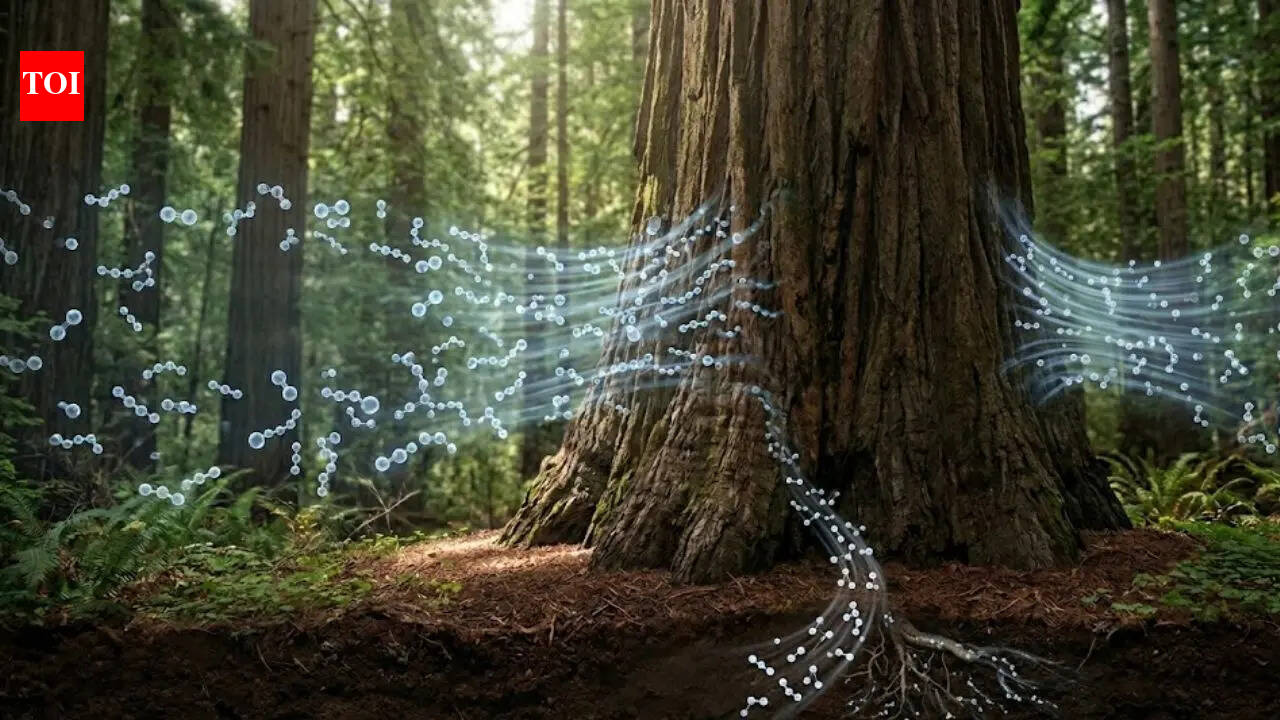
APPLETON, Wis. — In a revelation that challenges long-held assumptions about plant growth, scientists have emphasized that the towering trunks and sprawling branches of trees are primarily constructed from carbon dioxide in the air, rather than nutrients drawn from the soil. This fundamental aspect of botany, often overlooked in basic education, underscores the critical role of the atmosphere in sustaining Earth's forests.
According to researchers cited in recent scientific discussions, trees absorb carbon dioxide through photosynthesis, converting it into the sugars and starches that form the bulk of their biomass. Minerals from the soil, while essential for health, contribute only a small fraction — about 1 to 2 percent — of a tree's mass. This insight, highlighted in a report from the Times of India, draws on foundational experiments dating back centuries but continues to surprise even seasoned biologists.
The concept traces its roots to the 17th century, when Belgian scientist Jan Baptist van Helmont conducted a pivotal experiment. In 1648, van Helmont planted a five-pound willow tree in a tub of soil weighing 200 pounds. Over five years, the tree grew to 169 pounds, while the soil lost just two ounces. He concluded that the tree's growth came from water, but modern science has refined this to reveal the dominant role of air. "Van Helmont's work was a cornerstone," said Dr. Emily Hargrove, a botanist at the University of Wisconsin-Madison. "It showed early on that soil isn't the main builder; it's the air we breathe."
Fast-forward to today, and this principle is central to understanding climate change. As global carbon dioxide levels rise — reaching 419 parts per million in 2023, according to the National Oceanic and Atmospheric Administration — trees act as vital carbon sinks. They pull CO2 from the atmosphere, storing it in their wood and leaves, which helps mitigate warming. However, deforestation and urban sprawl threaten this natural buffer.
In Appleton, local environmentalists are leveraging this knowledge to advocate for more urban tree planting. "People think trees need rich soil to thrive, but really, clean air is their lifeline," said Marcus Hale, director of the Fox River Green Initiative. Hale's group has planted over 5,000 trees in the past decade along the riverbanks, emphasizing species like oaks and maples that efficiently capture airborne carbon.
Experts warn that air pollution can hinder this process. Particulate matter and ozone, common in industrial areas, damage leaf stomata — the pores through which trees inhale CO2. A study published in the journal Nature in 2022 found that polluted air reduces tree growth rates by up to 20 percent in affected regions. "It's a vicious cycle," Hargrove noted. "Trees clean our air, but dirty air starves them of what they need most."
Globally, the implications extend to reforestation efforts. The United Nations' Trillion Trees initiative, launched in 2020, aims to restore forests covering 350 million hectares by 2030. Proponents argue that understanding trees' aerial origins can optimize these projects, focusing on air quality alongside soil preparation. "We're not just digging holes; we're enhancing the sky above them," said initiative coordinator Lena Voss in a 2023 interview.
Yet, not all scientists agree on the emphasis. Some ecologists point out that while air provides the carbon backbone, soil nutrients like nitrogen and phosphorus are irreplaceable for robust growth. Dr. Raj Patel, a soil scientist at Cornell University, cautioned, "Air is the architect, but soil is the foundation. Neglect one, and the whole structure falters." This perspective highlights the interdependence, with deficiencies in either leading to stunted forests.
In the context of Appleton's history, this science resonates deeply. The city's paper mills, once a staple of its economy since the 1850s, contributed to air and water pollution that affected local woodlands. Today, with stricter regulations under the Clean Air Act of 1970, tree health has improved. Officials from the Wisconsin Department of Natural Resources report that forest cover in Outagamie County has increased by 15 percent since 2000, partly due to better air quality.
Local resident and arborist Sarah Kline shared her observations from tending trees in her neighborhood. "I always tell my clients: fertilize the soil, but protect the air. Last summer, during that heat wave on July 15, our maples held up better than expected because of the CO2 boost, but smog days were tough." Kline's comments reflect anecdotal evidence aligning with broader research.
Beyond ecology, this revelation influences agriculture and bioengineering. Crop scientists are exploring ways to enhance photosynthesis efficiency, potentially increasing yields without more land or water. A 2021 project at the Salk Institute's Harnessing Plants Initiative aims to engineer plants that fix more carbon from air, with field tests underway in California as of this year.
Educators are also adapting curricula. In Appleton's public schools, science teachers like Mr. David Ruiz incorporate hands-on demos inspired by van Helmont. "Kids are amazed when they see how little soil a plant really uses," Ruiz said. "It shifts their view from ground-up to air-powered growth." Such lessons, rolled out district-wide since 2019, aim to foster environmental stewardship from a young age.
Challenges persist, however. Climate models from the Intergovernmental Panel on Climate Change predict that rising temperatures could alter CO2 absorption patterns, with some tree species facing stress by 2050. In the Midwest, species like the sugar maple — iconic to Wisconsin — may decline if air quality dips amid extreme weather.
Looking ahead, researchers call for integrated policies. "Reforesting with an eye on air is key to carbon neutrality," Hargrove emphasized. Appleton's city council is considering a 2024 ordinance to expand green belts, drawing on this science to justify investments exceeding $2 million.
As forests continue to shape our planet's fate, this reminder of their aerial essence offers hope. Trees, it turns out, are not earthbound giants but atmospheric artisans, weaving the air into life. In Appleton and beyond, nurturing that air may be the truest way to let them grow.