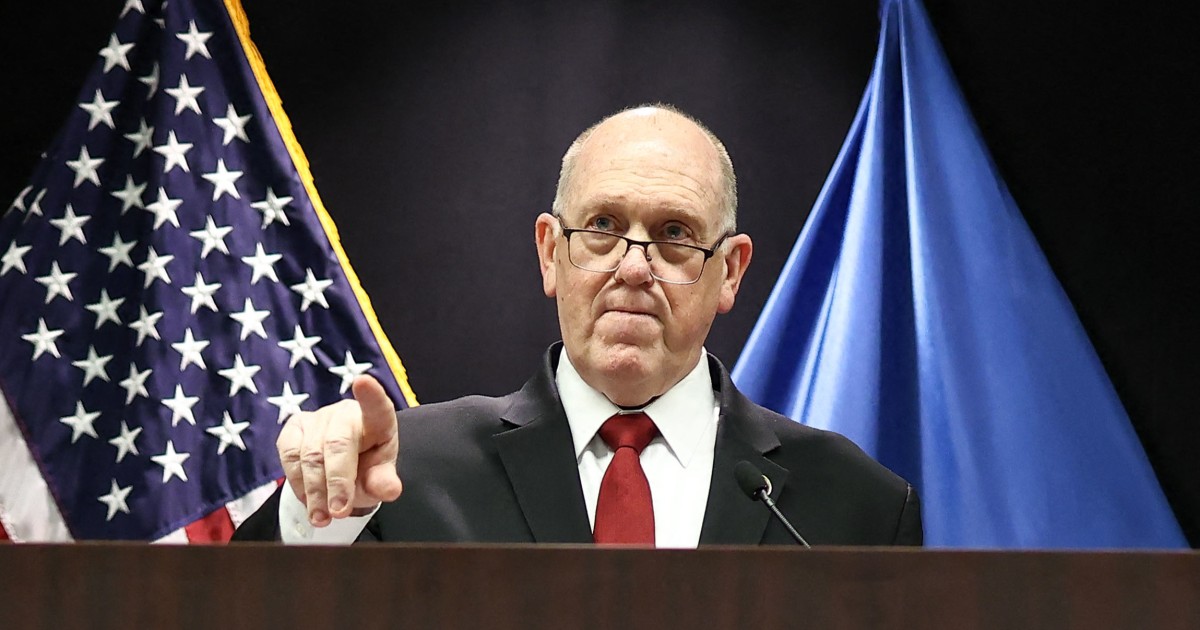
MINNEAPOLIS — The Trump administration announced plans to withdraw 700 federal immigration agents from Minnesota, a significant de-escalation in a contentious operation that has gripped the Twin Cities for months. Tom Homan, the administration's border 'czar,' made the announcement during a press conference on Wednesday, stating that the move aims to end what he described as an immigration 'surge' in the region.
The decision comes amid widespread protests and national outrage following the deaths of two U.S. citizens at the hands of federal agents. Renee Good, 37, and Alex Pretti, 37, were killed in separate incidents during the heightened enforcement efforts, sparking demonstrations across the country. According to the Department of Homeland Security, the operation, dubbed Operation Metro Surge, involved deploying more than 3,000 federal immigration agents to Minneapolis over the past two months—a force nearly five times the size of the city's 600 local law enforcement officers.
Since the operation began, agents have arrested approximately 3,000 undocumented immigrants, DHS officials reported. Homan emphasized during the press conference that the full removal of agents remains contingent on progress in immigration enforcement. "My goal, with the support of President Trump, is to achieve a complete drawdown and end this surge, as soon as we can," Homan said, adding that the administration would establish a single line of command in Minneapolis to streamline operations, replacing what he called a previous dual-command structure.
The killings of Good and Pretti have been central to the backlash. Good, a local community organizer, was fatally shot during a raid on a suspected safe house in late August, according to witnesses who described the scene as chaotic. Pretti, an ICU nurse, died in early September after an encounter with agents near a protest site in downtown Minneapolis. Federal authorities initially claimed Pretti had brandished a firearm, but video evidence later showed him kicking a vehicle driven by immigration officers, with no clear indication of him being armed.
Immediately after Pretti's death, DHS Secretary Kristi Noem and top adviser Stephen Miller labeled him a 'domestic terrorist' and accused him of posing an imminent threat. "This individual was no victim; he was a domestic terrorist endangering lives," Noem said in a statement released hours after the incident, before any formal investigation results were available. Miller echoed the sentiment on social media, calling for swift justice against those resisting federal operations.
However, the administration's messaging shifted in the days that followed. President Trump distanced himself from the initial characterizations, describing Pretti's killing as a 'very unfortunate' incident and expressing a desire to 'de-escalate' the situation in the Twin Cities. In a brief statement from the White House, Trump said, "We want peace in Minneapolis; this has gone on too long." The president also ordered the removal of Border Patrol commander-at-large Gregory Bovino, who had been a visible figure at several violent clashes between agents and protesters. Bovino, known for his aggressive tactics during arrests of immigrants, was reassigned to his previous post in El Centro, California.
Homan's arrival in Minneapolis the same week marked another pivot. The border czar quickly assessed the situation on the ground and advocated for scaling back the federal presence. "The situation can be improved, and we will draw down the operation in the state," Homan told reporters upon landing at Minneapolis-St. Paul International Airport. His comments aligned with Trump's initial call for de-escalation, but tensions persisted as new developments emerged.
By Friday, Trump appeared to reverse course again, posting on Truth Social that Pretti was an 'agitator and, perhaps, insurrectionist.' The shift came after viral videos surfaced showing Pretti's interaction with the agents' vehicle, prompting calls from hardline supporters to maintain pressure. Conservative podcaster Stephen Bannon, on his 'War Room' podcast, urged the president not to relent, declaring, "There can be no de-escalation at all." Bannon argued that any pullback would embolden opponents of the administration's immigration policies.
The mixed signals from Washington have left local officials and residents uncertain about the path forward. Minneapolis Mayor Jacob Frey, a vocal critic of the operation, welcomed the partial withdrawal but expressed skepticism about the administration's commitment. "Seven hundred agents leaving is a start, but we need the full drawdown to restore trust in our communities," Frey said in an interview Thursday. He pointed to ongoing viral videos of confrontations between immigration authorities and Twin Cities residents, which have appeared nearly daily since discussions of a drawdown began last week.
Complicating matters further, federal authorities recently arrested former CNN anchor Don Lemon, charging him with interfering in an operation while covering a protest during a church service last month. The protest, led by a pastor who officials allege is also an undercover ICE agent, drew hundreds to a Minneapolis-area church. Lemon, who was live-streaming the event for his independent media outlet, was detained after approaching agents to question their presence inside the sanctuary. "This is an assault on press freedom," Lemon said in a statement from jail, denying any wrongdoing.
The operation's roots trace back to a broader Trump administration push to intensify interior enforcement amid claims of a migrant 'surge' in Midwestern states. Minnesota, with its large Somali-American community and history of welcoming refugees, became a focal point. DHS data shows that arrests in the state spiked 400% since the operation launched, but critics argue the tactics have alienated communities and strained local resources. The city's police department, already stretched thin, has reported increased calls related to federal activities, diverting officers from routine patrols.
Protests erupted nationwide after the killings, with rallies in cities like New York, Los Angeles, and Chicago drawing thousands. In Minneapolis, demonstrations have centered on the Hennepin County Government Center, where activists demand independent investigations into the deaths. The family of Alex Pretti released a statement last week, calling for accountability. "Alex was helping his neighbors, not terrorizing anyone," his sister, Maria Pretti, said. "These agents need to answer for what happened." Renee Good's relatives have similarly pushed for transparency, filing a wrongful death lawsuit against DHS.
As the withdrawal of 700 agents proceeds—expected to begin early next week, according to Homan—the administration faces pressure from both flanks. Immigrant rights groups, including the ACLU, have filed injunctions to halt remaining operations, citing excessive force. On the other side, Republican lawmakers from Minnesota, led by Senator Amy Klobuchar's opponent in upcoming elections, have praised the enforcement but called for even more resources at the southern border.
Looking ahead, Homan indicated that the drawdown could lead to a 'complete end' to the surge if cooperation improves. Yet, with videos of clashes still circulating and arrests continuing, the Twin Cities remain on edge. Local leaders are preparing for potential fallout, including economic impacts from disrupted communities and tourism. "This operation has divided us, but healing starts with pulling back," said Representative Ilhan Omar, whose district includes much of Minneapolis, in a floor speech Wednesday.
The episode underscores the volatile intersection of immigration policy and local policing in an election year. As federal agents pack up, questions linger about accountability for the deaths and the long-term effects on Minnesota's diverse population. Officials from both parties agree that de-escalation is needed, but the path to lasting calm remains unclear.