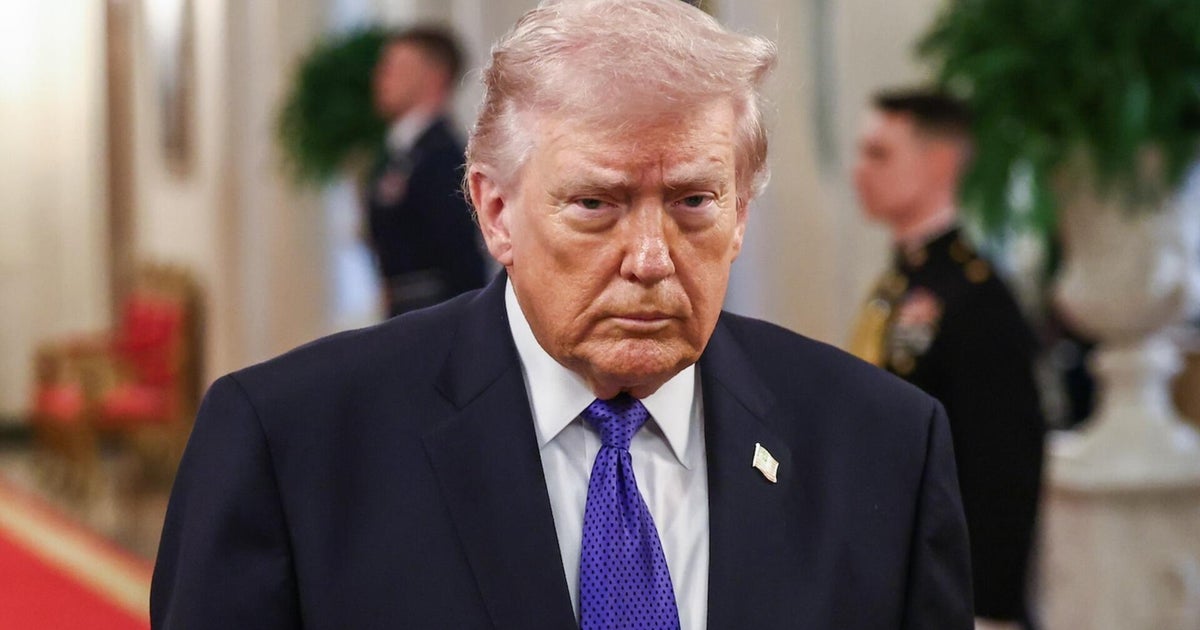
In a recent appearance, former President Donald Trump sought to clarify the motivations behind the U.S.-Israeli operations against Iran, offering insights into what he described as necessary actions to counter threats from the Iranian regime. Speaking to reporters, Trump emphasized the role of intelligence in prompting the military responses, though details remain a point of contention among policymakers and analysts. The comments come amid ongoing discussions about Middle East stability, nearly four years after the targeted strike that escalated tensions between Washington and Tehran.
According to a CBS News report by Weijia Jiang, Trump provided some insight into the reasons for the operations, framing them as defensive measures against Iranian aggression. 'We had to act to protect our interests and those of our allies,' Trump stated during the interview, highlighting the involvement of Israeli forces in coordinated efforts. The report, aired on CBS News, captured Trump's attempt to revisit the events that led to heightened conflict, including the 2020 drone strike on Iranian General Qasem Soleimani.
The strike occurred on January 3, 2020, at Baghdad International Airport in Iraq, where Soleimani, the head of Iran's Quds Force, was killed alongside Iraqi militia leader Abu Mahdi al-Muhandis. U.S. officials at the time, including then-Secretary of State Mike Pompeo, justified the action by citing imminent threats to American personnel. Pompeo told reporters in Washington that intelligence indicated Soleimani was plotting attacks that could have resulted in the deaths of dozens or even hundreds of Americans.
Trump's recent clarifications build on his administration's narrative, which portrayed the operation as a preemptive strike to deter further Iranian proxy attacks on U.S. forces in the region. In the CBS interview, Trump recounted, 'Iran was responsible for so much death and destruction; we couldn't let it continue unchecked.' He pointed to a series of incidents, including rocket attacks on U.S. bases in Iraq and the storming of the U.S. embassy in Baghdad on December 31, 2019, as direct provocations.
Israeli Prime Minister Benjamin Netanyahu, a close ally of Trump, echoed similar sentiments at the time, praising the U.S. action as a bold step against Iran's nuclear ambitions and regional influence. Netanyahu stated in a January 2020 address to the Knesset, 'This decisive action by President Trump will change the history of the Middle East.' The U.S.-Israeli partnership was evident in shared intelligence that reportedly informed the operation, though Israel has not officially confirmed direct involvement in the Soleimani strike itself.
Critics, however, have questioned the immediacy of the threat posed by Soleimani. Democratic lawmakers, including then-House Speaker Nancy Pelosi, argued that the strike violated congressional protocols by lacking prior authorization. Pelosi said in a statement shortly after the event, 'This was an escalation without strategy, risking a broader war.' Reports from congressional briefings later revealed that while intelligence supported Soleimani's role in past attacks, specifics on imminent plots were debated among U.S. intelligence agencies.
The CBS News segment featuring Trump's comments also touched on the aftermath, including Iran's retaliatory missile strikes on U.S. bases in Iraq on January 8, 2020, which injured over 100 American troops with traumatic brain injuries, though no fatalities were reported. Trump downplayed the injuries during his clarifications, noting, 'Our forces were prepared, and it showed the strength of our position.' Iranian officials, meanwhile, vowed continued resistance, with Supreme Leader Ayatollah Ali Khamenei declaring the strike a 'martyrdom' that would fuel anti-U.S. sentiment.
Broader context reveals a pattern of U.S.-Iran confrontations dating back to the 1979 Islamic Revolution, when the U.S. embassy in Tehran was seized, leading to a 444-day hostage crisis. Tensions peaked under Trump's presidency with the withdrawal from the 2015 Joint Comprehensive Plan of Action (JCPOA) nuclear deal in May 2018. Trump announced the exit, calling the agreement 'the worst deal ever,' and reimposed sanctions that crippled Iran's economy, prompting Tehran to resume uranium enrichment activities.
Israeli perspectives add another layer, with Jerusalem viewing Iran as an existential threat due to its support for groups like Hezbollah and Hamas. In 2018, Israeli intelligence reportedly provided evidence of Iran's secret nuclear archive, which Trump cited as justification for abandoning the JCPOA. Mossad's operation to steal 100,000 documents from a Tehran warehouse was hailed by Netanyahu as proof of Iran's duplicity.
Experts offer varied interpretations of Trump's clarifications. Michael O'Hanlon, a senior fellow at the Brookings Institution, told CBS News that while the Soleimani strike disrupted Iranian operations temporarily, it may have accelerated Tehran's nuclear program. 'The operation achieved tactical success but strategic ambiguity,' O'Hanlon said. Conversely, conservative analyst Eli Lake argued in a Bloomberg opinion piece that Trump's approach deterred further aggression, pointing to a decline in attacks on U.S. assets post-2020.
Recent developments underscore the enduring impact. In April 2024, Iran launched over 300 drones and missiles at Israel in retaliation for an alleged Israeli strike on its consulate in Syria, marking the first direct attack on Israeli soil from Iranian territory. The U.S. assisted in intercepting 99% of the projectiles, with Trump commenting on social media that his administration's policies had set a precedent for such defenses. 'Biden is following my lead, whether he admits it or not,' Trump posted.
As Trump campaigns for a potential return to the White House, his Iran stance remains a cornerstone of his foreign policy pitch. At a rally in Appleton, Wisconsin, on October 15, 2024, he reiterated, 'I took out the world's top terrorist without starting a war—something no one else could do.' Supporters credit him with projecting strength, while opponents warn of recklessness that could lead to unintended escalation.
The international community has weighed in as well. The United Nations Security Council held emergency sessions in January 2020, with Secretary-General Antonio Guterres urging de-escalation. Russia and China condemned the strike, with Russian President Vladimir Putin calling it a 'provocation' that undermined global stability. European allies, including France and Germany, expressed concerns over the JCPOA's collapse, advocating for renewed diplomacy.
Looking ahead, the implications of these operations continue to shape U.S. policy. The Biden administration has pursued indirect talks with Iran through intermediaries, but progress remains stalled. Analysts suggest that any future clarifications from Trump could influence congressional debates on Iran sanctions and military aid to Israel, especially as the 2024 election approaches. With Iran's nuclear stockpile reportedly nearing weapons-grade levels, according to the International Atomic Energy Agency, the stakes remain high.
In summary, Trump's efforts to clarify the Iran operations highlight a pivotal moment in U.S. foreign policy, blending decisive action with ongoing controversy. As reported by CBS News, his insights serve as a reminder of the complex alliances and threats defining the Middle East landscape.