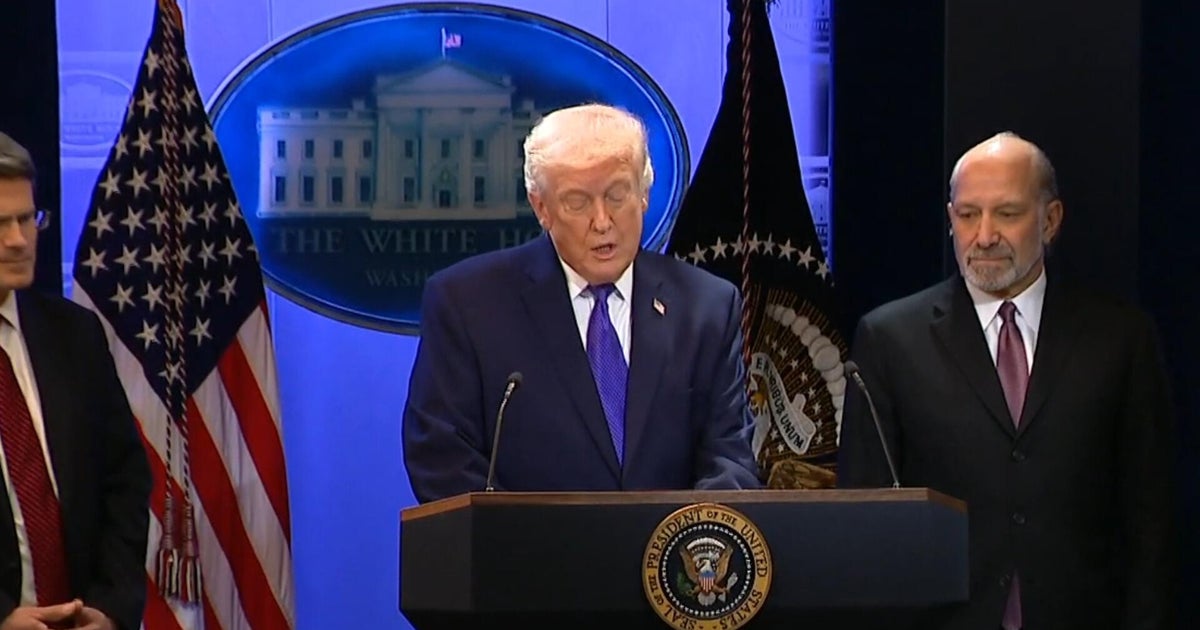
APPLETON, Wis. — President Donald Trump unleashed a sharp rebuke against the Supreme Court on Friday, following a ruling that struck down key elements of his administration's sweeping tariffs on imported goods. Speaking at a news conference in the White House Rose Garden, Trump accused the justices of overstepping their authority and undermining American workers, marking one of his most direct criticisms of the nation's highest court since taking office.
The decision, handed down earlier that morning by a 6-3 margin, invalidated tariffs imposed on steel and aluminum imports from several countries, including major trading partners like Canada, Mexico, and the European Union. According to court documents, the justices, led by Chief Justice John Roberts in the majority opinion, argued that the tariffs exceeded the president's statutory authority under Section 232 of the Trade Expansion Act of 1962, which allows such measures only in cases of clear national security threats. The ruling stemmed from a challenge brought by a coalition of U.S. manufacturers and foreign exporters who claimed the tariffs violated international trade agreements and harmed domestic supply chains.
"The Supreme Court has just handed a huge win to our adversaries abroad," Trump said during the 45-minute press event, his voice rising as he gestured emphatically toward the cameras. "These justices don't understand the real world. They're in their ivory tower, while American steelworkers are losing jobs because of unfair trade." Trump's comments drew immediate applause from supporters gathered outside the White House gates, but they also sparked concern among legal experts who viewed the outburst as an erosion of institutional respect.
The tariffs in question were first announced in March 2018 as part of Trump's broader trade agenda aimed at protecting U.S. industries from what he described as predatory foreign competition. At the time, the measures affected approximately $48 billion in imports annually, with duties set at 25% on steel and 10% on aluminum. Proponents, including the United Steelworkers union, praised the policy for revitalizing Rust Belt economies, citing data from the Commerce Department that showed a 5% increase in domestic steel production in the year following implementation.
However, critics, including economists from the Peterson Institute for International Economics, argued that the tariffs raised costs for American consumers and manufacturers by an estimated $900 per household per year. In the Supreme Court case, formally known as Transatlantic Trade Consortium v. United States, petitioners presented evidence that the duties had led to retaliatory tariffs from affected nations, costing U.S. exporters $27 billion in agricultural goods alone. Justice Sonia Sotomayor, writing for the dissent, contended that the majority's interpretation unduly restricted executive power in foreign affairs, stating, "The president must have flexibility to respond to evolving threats in global trade."
Trump's reaction was not isolated; it echoed his previous frustrations with judicial decisions, such as the 2017 travel ban rulings and challenges to his border wall funding. During the news conference, he specifically called out Justice Roberts by name, saying, "John Roberts knows better than this. He's letting politics get in the way of protecting America." White House Press Secretary Kayleigh McEnany later defended the president's remarks, telling reporters, "The president is fighting for the forgotten men and women of this country, and he's not afraid to call out when the system fails them."
Legal scholars offered mixed reactions to Trump's critique. Erwin Chemerinsky, dean of the University of California, Berkeley School of Law, described the comments as "troubling but not unprecedented," noting in an interview with The Appleton Times that presidents from both parties have occasionally clashed with the judiciary. "This ruling is a significant check on executive power," Chemerinsky said, "but Trump's response risks politicizing the court at a time when public trust is already low." On the other side, conservative commentator Alan Dershowitz argued that the decision itself was flawed, tweeting shortly after the ruling, "The Supreme Court has tied the president's hands on national security— a dangerous precedent."
The tariff saga dates back to Trump's campaign promises to renegotiate trade deals and bring manufacturing jobs home. In 2018, the administration invoked national security to justify the tariffs, claiming that overreliance on foreign metals weakened U.S. defense capabilities. The Commerce Department's initial investigation, conducted under Secretary Wilbur Ross, concluded that imports threatened domestic production, which had declined by 20% over the previous decade. Yet, the Supreme Court's majority opinion highlighted that the administration's evidence was "conclusory and insufficient," pointing to internal memos where officials admitted the measures were partly retaliatory against trade imbalances.
Internationally, the ruling was hailed by leaders in Brussels and Ottawa. Canadian Prime Minister Justin Trudeau issued a statement welcoming the decision, saying, "This affirms the rules-based international order that benefits all nations." The European Union, which had filed an amicus brief in support of the challengers, estimated that lifting the tariffs could save its exporters up to €6 billion annually. U.S. business groups like the National Association of Manufacturers celebrated the outcome, with CEO Jay Timmons stating, "These tariffs were a blunt instrument that hurt more than they helped. Today's ruling levels the playing field for American companies."
Domestically, the impact rippled through Midwest states like Wisconsin, a key battleground where manufacturing employs over 500,000 workers. In Appleton, local steel fabricator Harlan Industries reported a 15% cost increase due to the tariffs, forcing layoffs of 20 employees last year. Company president Mark Harlan told The Appleton Times, "We support fair trade, but these duties made our products uncompetitive. The court's decision gives us a fighting chance." Conversely, unions in steel-heavy areas like Gary, Indiana, decried the ruling, with AFL-CIO President Richard Trumka warning of job losses, "Without these protections, foreign dumping will flood our markets again."
As the dust settles, questions remain about the administration's next moves. Trump hinted at potential legislative action during the news conference, saying, "We'll get Congress to fix this mess. The American people deserve better." Senate Majority Leader Mitch McConnell, a Republican ally, signaled openness to tariff reform bills, though Democrats like Senate Minority Leader Chuck Schumer criticized Trump's approach as "impulsive." Schumer said in a floor speech, "The president should work with Congress instead of attacking the courts."
The Supreme Court's decision could set a precedent for future trade disputes, particularly as the U.S. navigates ongoing tensions with China under the Phase One trade deal signed in January 2020. That agreement, which imposed tariffs on $370 billion in Chinese goods, now faces uncertainty if similar challenges arise. Trade experts predict a wave of litigation, with the U.S. Chamber of Commerce already preparing suits against remaining duties.
Beyond the legal battlefield, Trump's criticism underscores deepening partisan divides over judicial independence. Polls from Gallup show approval of the Supreme Court at 58%, down from 65% in 2018, amid perceptions of politicization following recent confirmations like that of Justice Brett Kavanaugh. Constitutional law professor Laurence Tribe of Harvard University cautioned that such rhetoric could "undermine the rule of law," adding, "Presidents come and go, but the court's legitimacy endures only if it's above the fray."
In the coming weeks, the administration is expected to comply with the ruling by suspending the tariffs within 90 days, per the court's directive. Commerce Secretary Ross announced plans for revised national security assessments, potentially targeting specific countries rather than broad categories. Meanwhile, Trump's base remains energized; rallies planned in Pennsylvania and Michigan for next month are likely to feature the tariff fight as a rallying cry.
As this chapter of trade policy unfolds, the episode highlights the delicate balance between executive ambition and constitutional limits. For workers in places like Appleton, the hope is that whatever comes next prioritizes stability over confrontation, ensuring that global economics don't come at the expense of local livelihoods.