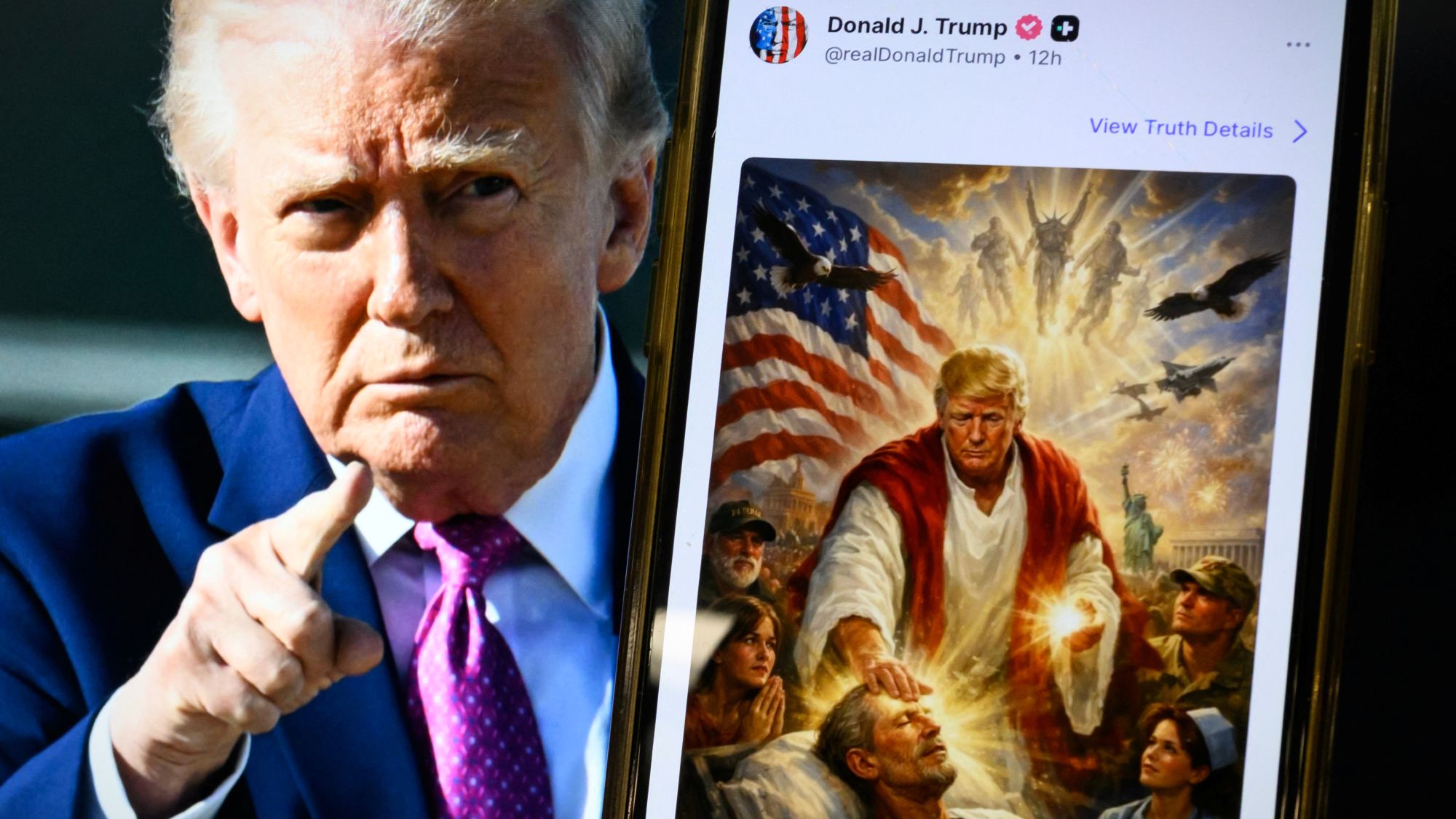
APPLETON, Wis. — President Donald Trump deleted a controversial social media post on Monday after it drew widespread backlash for depicting him in an apparently AI-generated image as a Christ-like figure healing a man with orbs of light emanating from his hands. The image, surrounded by religious and patriotic symbols, was shared on Trump's account before being removed following sharp criticism from conservative Christian supporters and others who viewed it as blasphemous.
Trump addressed the uproar briefly while speaking to reporters outside the White House, claiming he had intended the post to show him as a doctor rather than a religious savior. "I thought it was me as a doctor," Trump said, adding that "only the fake news" would interpret it as him portraying himself as Jesus. The president's explanation did little to quell the outrage, with many observers noting the image's clear messianic overtones, including the glowing hands and halo-like effects amid crosses and American flags.
The deletion marked what The New York Times described as a "rare retreat" for Trump, who has built a reputation for rarely backing down from statements or actions that offend. Throughout his political career, Trump has faced accusations of insensitivity toward religious groups but has maintained strong support from evangelicals, who stood by him through two impeachments and three elections. This incident, however, appeared to test that alliance, particularly among the religious right that has long rallied behind him.
Megan Basham, an evangelical Christian writer at The Daily Wire, was among the most vocal critics, calling the image "OUTRAGEOUS blasphemy" on X, formerly known as Twitter. She urged Trump to "ask for forgiveness from the American people and then from God." Her comments echoed a broader sentiment among conservative Christians, who saw the post as a step too far in Trump's pattern of blending personal imagery with sacred themes.
Conservative commentator Rod Dreher went further in an interview with The Wall Street Journal, stating that Trump is "radiating the spirit of Antichrist, no question." Dreher, a prominent voice in religious circles, highlighted the image's potential to alienate the very base that has propelled Trump's political resurgence. The Journal reported that the post "depicting himself as a Christ-like figure sparked outrage on the religious right," a group that has been instrumental in Trump's victories despite controversies over his personal life and rhetoric.
The backlash extended beyond evangelicals to include Catholics, a demographic Axios described as "America’s largest swing religious vote." According to Axios, Trump's support among Catholics was already sliding prior to this incident, and the social media post could exacerbate that trend. Reports also surfaced of Trump's recent pointed criticism of Pope Leo XIV, adding fuel to concerns about his relationship with the Catholic community. While the exact nature of those criticisms wasn't detailed in immediate accounts, they were cited by the Journal as contributing to the overall consternation over Trump's online activity.
The image itself was reportedly created using AI tools, a technology Trump has embraced in other contexts but which here amplified the surreal and offensive elements. Shared on Monday morning, it quickly amassed thousands of views and shares before Trump removed it by early afternoon. Social media platforms buzzed with reactions, from memes mocking the president's self-aggrandizement to serious theological debates about the dangers of such depictions in a polarized political climate.
Context for the post traces back to Trump's ongoing use of social media as a direct line to his supporters, often bypassing traditional news outlets. Since returning to the presidency, Trump has ramped up his posting frequency, blending policy announcements with personal anecdotes and visual content. This Jesus-like image fit into a pattern of patriotic and heroic portrayals, but its religious framing crossed a line for many, according to analysts.
Evangelical leaders who have previously defended Trump, such as those from the Faith and Freedom Coalition, remained silent in the immediate aftermath, suggesting a possible rift. One unnamed source close to the administration told The Week that internal advisors had urged Trump to delete the post within hours of its upload, citing risks to his religious base. Trump, however, initially resisted, only relenting after the volume of criticism became overwhelming.
"The image was OUTRAGEOUS blasphemy, and Trump needed to ask for forgiveness from the American people and then from God," Basham wrote on X, capturing the intensity of the response from within conservative media circles.
Broader implications for Trump's political strategy were quick to emerge. The Wall Street Journal noted that the "consternation over Trump’s social-media posts" could "turn into a political liability for Republicans," especially as the party eyes midterm battles and future nominations. With Catholics representing a key voting bloc in swing states like Pennsylvania and Wisconsin, any erosion of support there could prove costly. Polling data from recent months, as reported by Axios, showed Trump's favorability among Catholics dipping below 50 percent for the first time since his reelection, a shift attributed partly to his handling of social issues and foreign policy toward the Vatican.
Trump's history with religious imagery isn't new; during his first term, he posed with Bibles after protests and invoked faith in rallies to appeal to conservative voters. Supporters often framed him as a divinely appointed leader fighting secular forces, but critics argued this bordered on idolatry. The AI-generated image amplified those debates, with some online commentators drawing parallels to historical figures who blended nationalism with messianism.
In Appleton, a city with a strong Catholic presence and a history of supporting Trump in 2016 and 2020, local reactions were mixed. Father Michael O'Connor, pastor at St. Mary's Church, told The Appleton Times that while he doesn't follow politics closely, the incident "raises questions about respect for sacred symbols in public life." Community members at a midweek discussion group expressed concern that such posts could deepen divisions in an already fractured electorate.
As the story unfolded, White House press secretary Karine Jean-Pierre addressed questions during a briefing, stating that the president values his relationship with faith communities and that the post was a misunderstanding. She declined to elaborate on the AI origins or who approved the image, saying only that Trump remains committed to religious liberty. Meanwhile, Republican leaders in Congress, including House Speaker Mike Johnson, a devout evangelical, issued a statement praising Trump's defense of Christian values but stopped short of commenting on the specific post.
Looking ahead, political observers predict this episode could influence how Trump manages his social media presence, potentially leading to more vetting of visual content. With the 2024 election cycle still influencing party dynamics, mending fences with religious voters will be crucial. Evangelical organizations have scheduled virtual town halls to discuss the matter, and Catholic advocacy groups like the Knights of Columbus are monitoring for further statements from the administration.
The deletion of the post, while swift, leaves lingering questions about the role of AI in political messaging and the boundaries of religious rhetoric in American politics. As Trump continues to dominate headlines, incidents like this underscore the tightrope he walks between bold self-promotion and alienating core supporters. For now, the backlash serves as a reminder of the power—and peril—of a single image in the digital age.