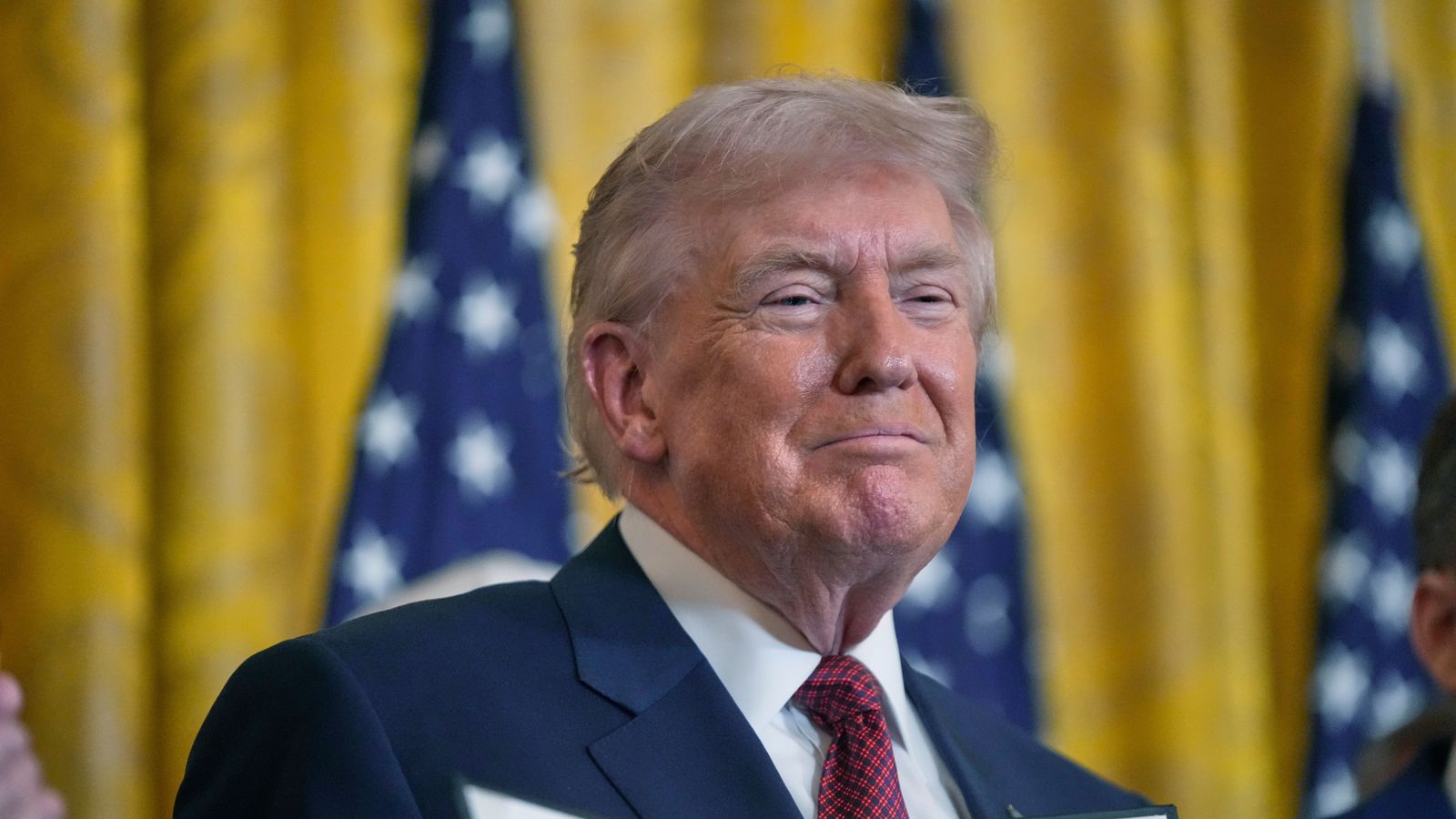
WASHINGTON — President Donald Trump announced on Thursday that he will direct the Pentagon and other federal agencies to begin releasing government files related to alien and extraterrestrial life, unidentified aerial phenomena (UAP), and unidentified flying objects (UFOs). The decision, shared via a post on his Truth Social platform, comes amid heightened public fascination with the topic and just hours after Trump accused former President Barack Obama of disclosing classified information by stating that aliens are real.
In his post, Trump wrote: "Based on the tremendous interest shown, I will be directing the Secretary of War, and other relevant Departments and Agencies, to begin the process of identifying and releasing government files related to alien and extraterrestrial life, unidentified aerial phenomena (UAP), and unidentified flying objects (UFOs), and any and all other information connected to these highly complex, but extremely interesting and important, matters." The reference to the "Secretary of War" appears to be a nod to historical terminology, though the modern equivalent is the Secretary of Defense. Trump described the subject as "extremely interesting and important," highlighting the widespread curiosity that has fueled discussions in recent years.
The timing of Trump's announcement is notable, as it followed closely on the heels of Obama's appearance on the podcast hosted by Brian Tyler Cohen, which was released on Saturday. During the interview, Obama remarked, "They're real, but I haven't seen them, and they're not being kept in Area 51. There's no underground facility unless there's this enormous conspiracy and they hid it from the president of the United States." Obama, who served as president from 2009 to 2017, clarified his comments in a subsequent Instagram post, stating that he meant "the odds are good there's life out there" and that he had seen "no evidence" of alien existence during his time in office.
"He's not supposed to be doing that," Trump said when asked about Obama's remarks during a Thursday press interaction. Pressed on whether he personally believes aliens are real, Trump replied, "I don't know if they're real or not. I don't have an opinion on it. I never talk about it. A lot of people do. A lot of people believe it."
Trump's accusation that Obama revealed classified information underscores ongoing tensions between the two leaders, who have traded barbs since Trump took office in 2017. Obama's podcast comments, while lighthearted, touched on a topic that has long intrigued the public and policymakers alike. The former president's remarks align with a broader scientific consensus that extraterrestrial life is statistically probable given the vastness of the universe, though concrete evidence remains elusive.
This is not the first time the Trump administration has engaged with questions surrounding UAP and UFOs. In 2020, the Pentagon established the All-domain Anomaly Resolution Office (AARO) to investigate unidentified aerial phenomena, following congressional mandates for greater transparency. That year, the Department of Defense also released declassified videos showing encounters between military pilots and unexplained objects, sparking renewed interest. Trump's latest directive builds on these efforts, potentially accelerating the declassification process that has been gradual under both his and previous administrations.
Earlier this week, Lara Trump, the president's daughter-in-law and a prominent Republican figure, added to the speculation during an appearance on the New York Post's Pod Force One podcast. She suggested that Trump had a speech prepared on the topic of aliens that he would deliver at the "right time." Lara Trump, who is married to Eric Trump and serves as co-chair of the Republican National Committee, did not provide further details but implied the address could be a significant moment.
However, White House Press Secretary Karoline Leavitt dismissed the idea of any such pre-planned speech. "A speech on aliens would be news to me," she said with a laugh, indicating no formal preparations were underway in the West Wing. Leavitt's response highlights the administration's cautious approach to the subject, balancing public curiosity with national security concerns.
The announcement has elicited mixed reactions from lawmakers and experts. Supporters, including some conservative voices, praised it as a step toward government transparency, arguing that decades of secrecy have only fueled conspiracy theories. "It's about time we let the public in on what we know," said Rep. Tim Burchett, R-Tenn., a vocal advocate for UAP investigations, in a statement to reporters. Burchett has previously called for hearings on the matter, citing pilot testimonies from Navy encounters off the coasts of Virginia and California in 2014 and 2015.
On the other side, skeptics within the intelligence community warn that releasing sensitive files could compromise defense technologies or reveal nothing substantial. "Much of what gets labeled as UFOs are likely advanced foreign drones or optical illusions," according to a senior official from the Office of the Director of National Intelligence, speaking on condition of anonymity. The official referenced the 2021 preliminary report from the intelligence community, which examined 144 UAP incidents but concluded most were unexplained due to insufficient data rather than extraterrestrial origins.
Public interest in extraterrestrial life has surged in recent years, driven by whistleblower claims and Hollywood depictions. In 2023, former intelligence official David Grusch testified before Congress, alleging the U.S. government possesses non-human biologics recovered from crash sites—a claim the Pentagon has denied. Trump's directive could address such allegations by systematically reviewing and releasing relevant documents, though the process is expected to take months or years given the volume of classified material.
Historically, UFO disclosures have been incremental. The CIA's declassification of thousands of pages in 2017 revealed Cold War-era investigations into sightings, many attributed to experimental aircraft like the U-2 spy plane. Area 51, the Nevada test site mentioned by Obama, has long been a focal point for conspiracy theories, though officials maintain it's used for developing stealth technology, not hiding aliens.
Trump's move also intersects with his administration's broader agenda on transparency and declassification. In his first term, he declassified documents related to the Russia investigation, and recently pledged to release files on the assassination of President John F. Kennedy. This latest initiative fits into a pattern of challenging what Trump has called the "deep state" by bringing hidden information to light.
As the directive moves forward, questions remain about the scope and timeline. The Pentagon has not yet commented on specifics, but sources indicate an interagency task force may be formed to catalog files from agencies like the FBI, NASA, and the National Archives. Legal experts note that exemptions under the Freedom of Information Act could still withhold certain details for national security reasons.
The broader implications of Trump's announcement extend beyond policy to cultural impact. With polls showing that about half of Americans believe the government is hiding UFO evidence, this could either dispel myths or ignite new debates. Scientists like Harvard astronomer Avi Loeb, who leads expeditions searching for interstellar objects, have welcomed similar calls for openness, arguing it could advance astrobiology research.
Looking ahead, the release of these files could reshape public trust in government institutions. If substantial evidence emerges, it might prompt international cooperation on space monitoring; if not, it risks disappointing enthusiasts. For now, Trump's pledge marks a pivotal moment in the ongoing quest for answers about whether we are alone in the universe, echoing Obama's sentiment that the odds favor life beyond Earth.
In related developments, the administration continues to focus on domestic and foreign policy priorities, including pledges of billions in aid to Gaza through Trump's Board of Peace initiative. Meanwhile, questions persist about high-profile figures like Prince Andrew and his alleged knowledge of Jeffrey Epstein, as claimed by U.S. politicians. But for the moment, the cosmos has captured the spotlight in Washington.