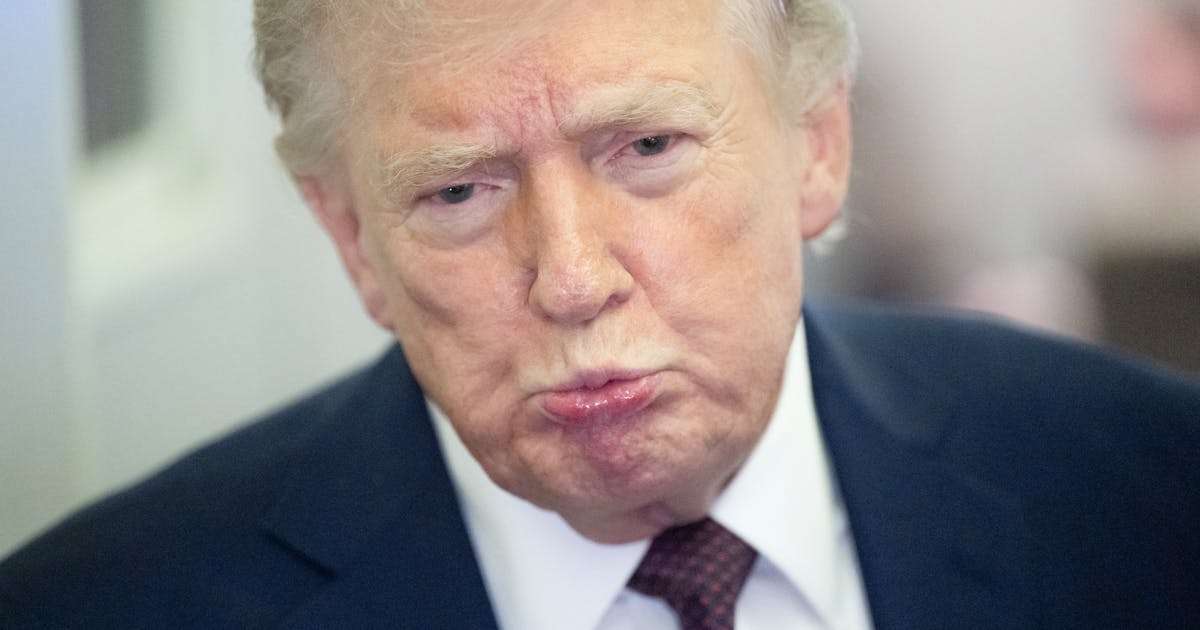
Washington, D.C. — President Donald Trump unleashed a series of sharp criticisms against the U.S. judiciary and media outlets over the weekend, amid ongoing legal setbacks and escalating tensions in the war with Iran. In multiple posts on Truth Social, Trump accused courts of being politicized and unfair, particularly after a recent Supreme Court ruling that blocked his proposed tariff plan. The outbursts come as the administration faces mounting challenges, including skyrocketing oil prices, military deployments, and reports of detainee deaths in immigration facilities.
Trump's frustration with the courts boiled over following the Supreme Court's February decision in what he called the "Liberation Day" tariff case. The ultraconservative court ruled that the president's tariff plan exceeded his executive authority, effectively undermining key elements of his foreign and economic policies. In a Truth Social post, Trump wrote, "The Courts treat Republicans, and me, so unfairly, always seeming to protect those who should not be protected. They are highly politicized. Cases don’t matter, the Judge does!" He specifically highlighted the tariff ruling, stating, "The decision that mattered most to me was TARIFFS! The Court knew where I stood, how badly I wanted this Victory for our Country, and instead decided to, potentially, give away Trillions of Dollars to Countries and Companies who have been taking advantage of the United States for decades."
The president named three dissenting justices—Samuel Alito, Clarence Thomas, and Brett Kavanaugh—thanking them for opposing the majority. Notably, two of Trump's own appointees, Justices Amy Coney Barrett and Neil Gorsuch, sided with the majority. Trump lamented what he described as disloyalty among Republican justices, saying, "The Democrats on the Court always ‘stick together,’ no matter how strong a case is put before them—There is rarely even a minor ‘waver.’ But Republicans do not do this. They openly disrespect the Presidents who nominate them to the highest position in the Land, a Justice of the United States Supreme Court, and go out of their way, with bad and wrongful rulings and intentions, to prove how ‘honest,’ ‘independent,’ and ‘legitimate’ they are." He further labeled the Supreme Court a “weaponized and unjust Political Organization” that has “ransacked” the country.
Trump's judicial ire extended to lower courts as well. He targeted U.S. District Judge James Boasberg, who on Friday issued a 27-page opinion dismissing the Justice Department's case against Federal Reserve Chair Jerome Powell. Boasberg wrote that the government had produced “essentially zero evidence” to support the criminal allegations, pointing to Trump's own social media posts as signs of political motivation. Trump responded by calling Boasberg “Wacky, Nasty, Crooked, and totally Out of Control,” accusing him of suffering from “the highest level of Trump Derangement Syndrome.”
Despite his complaints, Trump has had significant success in shaping the judiciary. Over his two administrations, the Senate confirmed 267 judges, including three Supreme Court justices—more than any president since Richard Nixon. This context underscores the irony of his attacks on a branch of government he helped populate.
“All I want,” said Naseer Paktiawal, “I want justice for my brother. I don’t need anything else from this government.”
Amid these domestic clashes, Trump's war with Iran, now in its third week, continues to dominate headlines. On Sunday, the president accused media outlets of treason for their coverage of the conflict, claiming Iran was using AI to fabricate videos of attacks on U.S. ships. He cited a purported fake video of the USS Abraham Lincoln “burning uncontrollably in the ocean,” insisting, “Not only was it not burning, it was not even shot at — Iran knows better than to do that! The story was knowingly FAKE and, in a certain way, you can say that those Media Outlets that generated it should be brought up on Charges for TREASON for the dissemination of false information!” Trump specifically called out The Wall Street Journal and praised FCC Commissioner Brendan Carr for threatening to revoke broadcasting licenses of outlets sharing “fake” news.
Carr, on Saturday, warned of action against local outlets, and under his leadership, the FCC has previously targeted networks like NBC, ABC, and CBS over issues including diversity, equity, and inclusion initiatives and interpretations of existing statutes. Defense Secretary Pete Hegseth has also criticized the media, recently gloating about potential right-wing ownership of CNN as the war falters.
The conflict has severely disrupted global energy markets, with Iran mining the Strait of Hormuz, the vital waterway through which about one-fifth of the world's crude oil passes. Treasury Secretary Scott Bessent addressed the issue in a Monday interview with CNBC's Brian Sullivan, stating, “The Iranian ships have been getting out already, and we’ve let that happen to supply the rest of the world. We think that there will be a natural opening that the Iranians are letting out, and for now we’re fine with that. We want the world to be well supplied.” Bessent added that further actions on rising oil prices would “depend on the duration of the conflict.”
However, Iranian oil continues to flow, primarily to China, allowing Tehran to profit despite U.S. efforts. The strait, situated between Iran and the United Arab Emirates, remains under Iranian influence, lined with explosives. This follows Trump's Sunday appeal from Air Force One, where he urged allies like China, France, Japan, South Korea, and the U.K. to help secure the passage. “I’m demanding that these countries come in and protect their own territory, because it is their territory. It’s the place from which they get their energy. And they should come and they should help us protect it,” Trump said. He claimed China relies on the strait for 90 percent of its crude imports, though analysts told CNBC that Beijing has diversified supplies over the past two decades and built strategic reserves.
U.S. imports through the strait account for about 500,000 barrels per day, or seven percent of total crude imports, according to the U.S. Energy Information Administration's 2024 data. Some allies have rebuffed Trump's calls: French President Emmanuel Macron said France would escort tankers only after stabilization, while leaders from the U.K., Germany, Poland, and Spain refused involvement. Trump has threatened to delay a summit with Chinese President Xi Jinping if Beijing does not assist, according to the Financial Times.
The war's human toll is mounting. Thirteen U.S. soldiers have been killed, along with over 20 Iranian officials, including Supreme Leader Ayatollah Ali Khamenei. Iranian government spokesperson Fatemeh Mohajerani reported more than 1,200 civilian deaths, including dozens of children at a girls’ school in southern Iran, and damage to over 42,000 civilian sites such as homes, hospitals, and schools. Some 3.2 million people have been displaced.
A particularly tragic incident involved the February 28 strike on an elementary school in Minab, in Iran's southern Hormozgan province, which killed at least 175 people, mostly children. A leaked U.S. assessment suggested a Tomahawk missile was responsible, possibly due to outdated intelligence mistaking the school for a military site. On Friday, Hegseth announced a Pentagon investigation, stating, “The command investigation will take as long as necessary to address all the matters surrounding this incident... But I will note to this group and to the world, there’s only one entity in this conflict between us and Iran that never targets civilians, literally never targets civilians.” The U.S. Central Command has appointed an investigating officer from outside the command, a general officer, to lead the probe.
Domestically, immigration enforcement has drawn scrutiny after the death of Mohammad Nazeer Paktiawal, an Afghan man who worked with U.S. forces for over a decade. On Friday, federal agents detained him in Richardson, Texas, while he dropped his two children at preschool. His brother, Naseer Paktiawal, told CBS News, “He was arrested in front of these kids while taking them to school at seven in the morning. Some people surrounded him, put him in the car, and drove him away while they were screaming, asking for help.” Paktiawal, a former Afghan special forces member paroled into the U.S. in 2021 under Operation Allies Refuge, died the next day at Parkland Hospital after complaining of chest pain and shortness of breath. His parole expired in August 2025, and ICE claimed he had no record of military service on file and prior arrests for SNAP fraud and theft.
ICE reported that Paktiawal's tongue swelled overnight, leading to unsuccessful resuscitation efforts. The agency has faced criticism for increased detainee deaths, with nearly 70,000 people in custody and no funding for health care. As of Monday, ICE's website listed only two deaths in 2026, but press releases documented nine since January, including one from a guard choking a detainee. Independent outlet Zeteo reported ICE's repeated failure to disclose such incidents fully.
Military reinforcements underscore the war's escalation. The Pentagon is deploying 5,000 additional Marines and several warships to the Middle East to counter Iran's strait attacks, which have paralyzed trade. Aboard Air Force One on Sunday, Trump dismissed questions about the move, calling one reporter “a very obnoxious person” and avoiding comment on the six servicemembers killed in retaliatory strikes, responding only, “Who else?” Last week, Trump claimed the war was “won” but needed finishing, and on Thursday, he described rising gas prices as beneficial.
Trump has not sought congressional approval for the war or addressed the nation formally, breaking with precedent. As oil prices surge and allies hesitate, the administration's strategy faces growing questions. The conflict, initiated without broad international support, risks further isolation and economic strain at home.