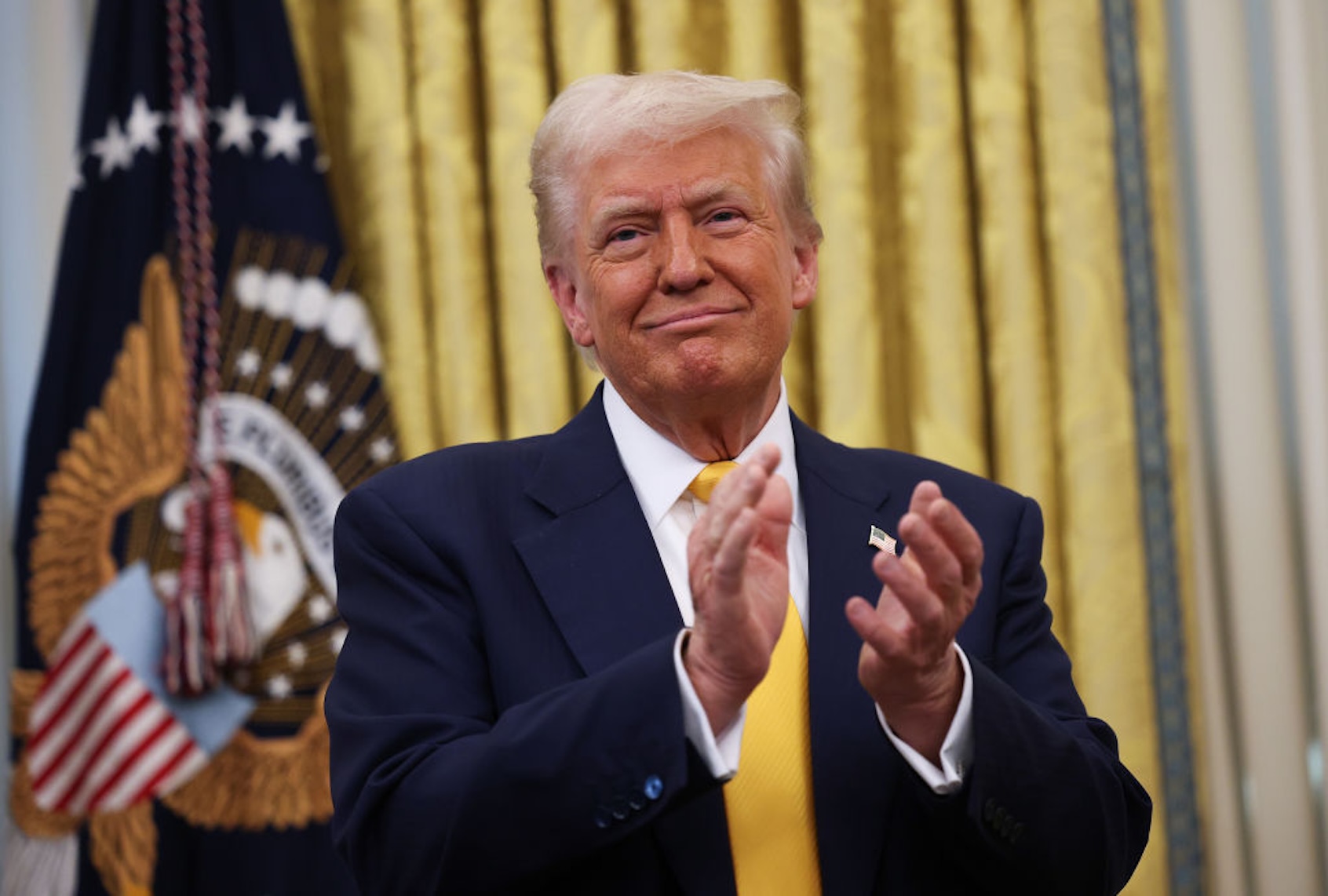
In a surprising move that has sparked debate across political circles, Gallup announced on Wednesday that it will cease tracking presidential approval ratings after nearly nine decades of doing so. The decision, revealed on February 14, 2026, ends a tradition that began in 1938 with a simple question about President Franklin D. Roosevelt's performance. Gallup's spokesperson described the change as 'part of a broader, ongoing effort to align all of Gallup’s public work with its mission,' explicitly denying any influence from external pressures, including from the Trump administration.
The timing of the announcement has raised eyebrows, particularly amid reports of President Donald Trump's frustration with his persistently low approval numbers during his second term. Just two months prior, a Gallup poll recorded Trump's approval at 36 percent, marking a low point for his presidency and one of the lowest ratings for any president at this stage in their term. Democratic strategist James Carville voiced strong skepticism about Gallup's explanation in a recent video, stating, 'I’m going to tell you right now, Gallup, I don’t believe you. I believe you were pressured. I believe this story needs to be explored, because the surrender and capitulation we are seeing at a time of need for the United States is unbelievable.'
Trump's administration has been marked by aggressive policies that appear to disregard public sentiment, according to observers. These include an ongoing mass deportation campaign, the arrests of journalists Don Lemon and Georgia Fort, and an FBI raid on election offices in Fulton County, Georgia. Critics argue these actions represent an escalation in efforts to silence dissent and undermine democratic institutions, even as polls show widespread disapproval.
The president has publicly lashed out at unfavorable surveys, often labeling them as part of a 'vast left-wing conspiracy.' On January 22, 2026, following a New York Times/Siena poll that highlighted his low approval, Trump posted on Truth Social about the 'fake results' and threatened to incorporate the poll into his ongoing defamation lawsuit against the outlet. This follows a pattern, as evidenced by his December 2024 lawsuit against pollster Ann Selzer and the Des Moines Register over a pre-election poll that projected him losing Iowa—a state he ultimately won. That case remains in litigation.
Experts in political science and polling have weighed in on the significance of Gallup's decision. Henry E. Brady, former president of the American Political Science Association and current dean of the Goldman School of Public Policy at the University of California, Berkeley, emphasized the historical value of these polls. He noted that Gallup's founder, George Gallup, believed public opinion surveys could reveal insights elections alone could not provide. 'Elections only tell us about public opinion every two to four years, and they do not tell us much about the opinions that lead to one candidate being elected over another,' Brady said, summarizing the founder's perspective. 'They do not tell us why people voted as they did. They tell us only whether the public prefers one candidate to another, and the reasons are often hard to decipher—leading to the contentious debates about electoral ‘mandates.’'
Brady further argued that approval ratings have served as a vital barometer, creating 'the longest-running time series that we have on politics' and allowing comparisons of presidential performance across eras, from Roosevelt to Trump. Without this data, he suggested, understanding the public's pulse on policy becomes more challenging.
Andrew J. Seligsohn, president of the nonpartisan nonprofit Public Agenda, highlighted the role of reliable polls in countering misinformation. 'It’s easy to conclude that we know what everyone believes based on what we see on social media or in partisan news sources. But these conclusions are often false,' Seligsohn said. 'If we don’t have reliable, methodologically sound, independent evidence from credible sources about what members of the public believe, we can be misled—as can legislators, courts, and leaders of other powerful institutions.'
Seligsohn acknowledged Gallup's claim that the decision was a 'genuine strategic decision unrelated to external pressure,' adding, 'I have no basis for doubting that.' However, he cautioned about the broader context: 'In the current climate, though, appearing to capitulate can matter if it normalizes that behavior, even if the decision was based on unrelated business factors.'
Not all experts see political pressure as the driving force behind Gallup's shift. Marc Farinella, executive director of the Center for Survey Methodology at the University of Chicago Harris School of Public Policy, expressed doubt that the move stemmed from Trump administration influence. Instead, he pointed to changes in the polling landscape. 'There are now numerous polling firms that use less rigorous, and arguably less accurate, methodologies to track presidential approval and take other simple measurements that political junkies like to read about,' Farinella explained. 'News consumers aren’t focused on the limits and potential pitfalls of various methodologies; they are just focused on the results.'
Farinella noted that the polls most valued by presidents and candidates are typically far more detailed and rigorous than public-facing surveys. This perspective suggests Gallup may be refocusing on areas where it can offer unique value, rather than competing in a crowded field of topline approval trackers.
The decision comes at a time of heightened tension over democratic norms. Recent events, such as widespread 'No Kings' protests and strikes, alongside Republican losses in various elections, indicate growing public opposition to Trump's agenda. Historian Timothy Snyder, a leading authority on authoritarianism, has described how such environments foster 'anticipatory obedience,' where institutions preemptively align with power without direct coercion. In his book On Tyranny, Snyder writes, 'Most of the power of authoritarianism is freely given. In times like these, individuals think ahead about what a more repressive government will want, and then offer themselves without being asked. A citizen who adapts in this way is teaching power what it can do. Anticipatory obedience is a political tragedy. Perhaps rulers did not initially know that citizens were willing to compromise this value or that principle.'
Patterns of institutional accommodation have appeared elsewhere, with news organizations, law firms, and universities reportedly adjusting behaviors in attempts to appease Trump and his allies—sometimes unsuccessfully. Gallup's long-standing reputation in American political life amplifies the impact of its withdrawal from approval tracking, potentially setting a precedent for other entities.
Presidents have historically paid close attention to their approval ratings, but Trump's fixation stands out, according to analysts. His threats and legal actions against media and pollsters, including the suit against Selzer, underscore a desire to shape narratives around public opinion. Even if such efforts succeeded in altering perceptions, empirical data consistently shows majority disapproval of his leadership.
Seligsohn described public opinion research as performing a crucial 'corrective function' amid democratic backsliding. 'If we think that everyone else accepts that as normal, we might be inclined to do so ourselves,' he said. 'If we learn that many people do not, we might be more inclined to ask questions. Public opinion research gets us outside of our echo chambers and confronts us with the fact that Americans have ideas, including ideas that are very different from what we might assume to be the case based on our own experience.'
As the political landscape evolves, the absence of Gallup's approval ratings could complicate efforts to gauge public sentiment in real time. While other pollsters continue their work, the loss of this historic benchmark raises questions about accountability in governance. Trump administration officials have not commented directly on Gallup's announcement, but the president's past rhetoric suggests he may view it as validation of his criticisms of polling. For now, the debate over the decision's motivations persists, with implications for how public opinion shapes—or fails to shape—policy in the months ahead.