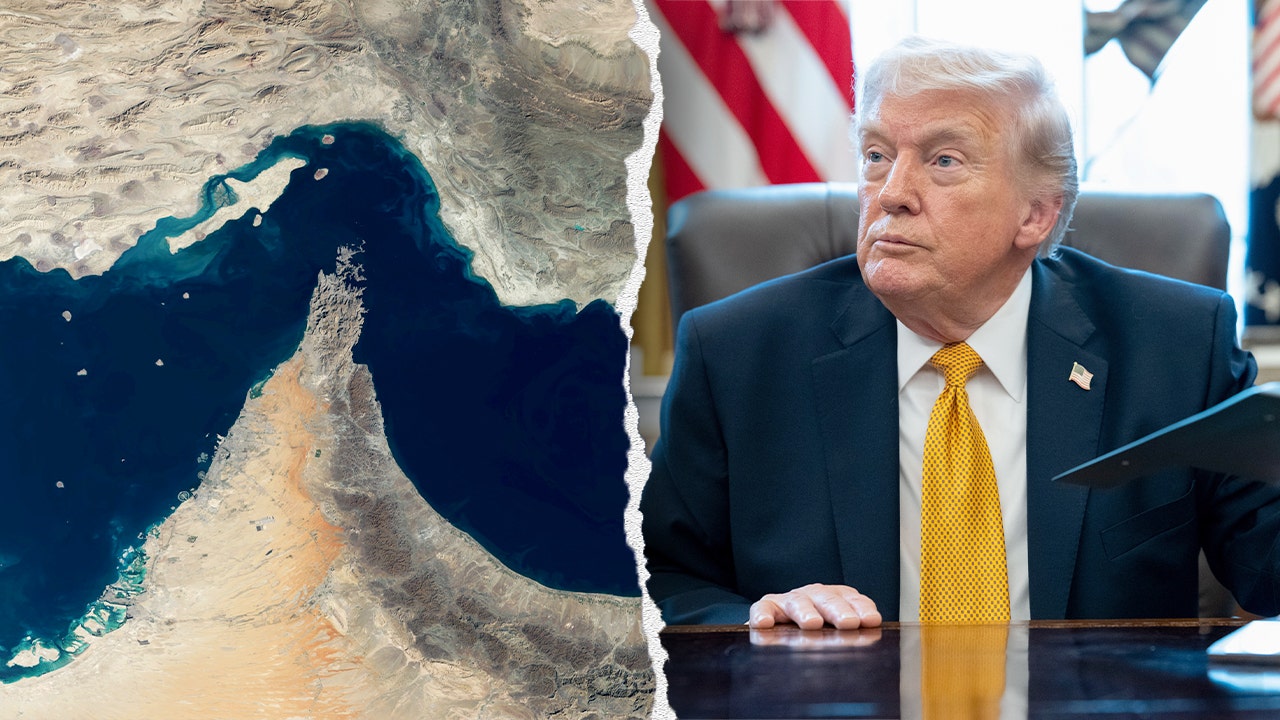
WASHINGTON — President Donald Trump issued a stark 48-hour ultimatum to Iran on Saturday, threatening to strike and obliterate the country's power plants if the Strait of Hormuz is not fully reopened without threats. The announcement, posted on his Truth Social platform, marks a significant escalation in the ongoing tensions between the United States and Iran over the vital waterway, which serves as a global choke point for oil and gas transport, supplying roughly one-fifth of the world's crude oil.
"If Iran doesn’t FULLY OPEN, WITHOUT THREAT, the Strait of Hormuz, within 48 HOURS from this exact point in time, the United States of America will hit and obliterate their various POWER PLANTS, STARTING WITH THE BIGGEST ONE FIRST!" Trump wrote in the post, emphasizing the urgency with capital letters. The Strait of Hormuz, a narrow passage connecting the Persian Gulf to the Gulf of Oman, has seen traffic largely limited since early March, shortly after the war with Iran began, according to reports from U.S. officials.
Trump's warning comes amid surging tensions in the region, where Iranian forces have been accused of attacks on commercial vessels and infrastructure. The president's post follows his comments to reporters on Friday, where he described reopening the strait as a "simple military maneuver." "It's relatively safe, but you need a lot of help in the sense of you need ships, you need volume," Trump said, highlighting the logistical challenges involved.
The U.S. leader also expressed frustration with NATO allies, accusing them of lacking the "courage" to assist in reopening the waterway. Earlier on Friday, Trump posted on Truth Social, calling NATO members "cowards" for complaining about high oil prices resulting from the closure but refusing to help. "NATO could help us, but they so far haven't had the courage to do so, and others could help us," he added during his remarks to reporters. "But, you know, we don't use it. You know, at a certain point, it'll reopen itself."
Despite Trump's criticisms, a growing coalition of international partners has signaled support for efforts to secure safe passage through the strait. More than 20 countries, including the United Kingdom, France, Germany, Italy, Japan, Canada, and the United Arab Emirates, issued a joint statement expressing their "readiness to contribute to appropriate efforts to ensure safe passage through the Strait." The statement, attributed to these leaders, condemned Iran's actions in strong terms.
We condemn in the strongest terms recent attacks by Iran on unarmed commercial vessels in the Gulf, attacks on civilian infrastructure including oil and gas installations, and the de facto closure of the Strait of Hormuz by Iranian forces. We express our deep concern about the escalating conflict. We call on Iran to cease immediately its threats, laying of mines, drone and missile attacks and other attempts to block the Strait to commercial shipping, and to comply with UN Security Council Resolution 2817.
The joint statement also welcomed commitments from nations engaging in preparatory planning, though it stopped short of detailing specific military contributions. This international backing contrasts with Trump's pointed remarks toward NATO, which he has warned could face risks to the alliance if members do not step up.
Traffic through the strait has thinned considerably, with images showing tankers like the Callisto anchored off Muscat, Oman, amid the U.S.-Israeli conflict with Iran. U.S. signals readiness to escort tankers through the area, but no mission has been launched as of Saturday, according to defense officials. The closure has exacerbated global energy concerns, driving up oil prices and affecting economies worldwide.
Earlier this week, U.S. forces conducted strikes on Iran's anti-ship missile sites near the Strait of Hormuz, deploying 5,000-pound bunker-buster bombs, according to U.S. Central Command (CENTCOM). These actions were part of broader efforts to counter Iranian threats in the region. Trump has previously claimed that the U.S. "obliterated" targets in a strike on a key Iranian oil hub, underscoring the military dimension of the standoff.
The backdrop to these developments includes a series of Iranian actions, such as laying mines, drone and missile attacks, which the joint statement attributes to efforts to block commercial shipping. UN Security Council Resolution 2817, referenced in the international declaration, reportedly calls for compliance with maritime freedoms in the area, though specifics on its enforcement remain unclear.
Analysts note that the Strait of Hormuz's strategic importance cannot be overstated; a satellite image from the region illustrates its narrow 21-mile width at the tightest point, making it vulnerable to disruption. The waterway's partial closure since early March has not only limited oil exports but also heightened fears of broader regional instability involving U.S. and Israeli interests.
Trump's ultimatum arrives at a sensitive juncture, with the 48-hour clock starting from the time of his Saturday post. White House officials have not immediately elaborated on the potential strikes, but the rhetoric suggests a readiness to act unilaterally if international support falls short. NATO heavyweights have reportedly balked at committing to a Hormuz mission, citing risks amid the escalating conflict.
The implications of the ultimatum extend beyond immediate military concerns, potentially affecting global energy markets and diplomatic relations. Countries reliant on Persian Gulf oil, including many in Europe and Asia, are watching closely as the deadline approaches. The joint statement's signatories represent a diverse group, from European powers to Gulf states, indicating a multilateral push against Iran's actions despite Trump's frustrations with specific allies.
As the situation unfolds, U.S. Central Command continues to monitor developments, with recent strikes demonstrating operational capabilities in the area. The president's comments on NATO's role highlight ongoing transatlantic tensions, even as broader coalitions form. Whether Iran responds to the ultimatum or the strait sees renewed traffic remains to be seen, but the next 48 hours could prove pivotal in this flashpoint of international security.
In related developments, the U.S. has emphasized its commitment to protecting commercial shipping, with escort preparations underway but not yet activated. The anchored Callisto tanker, visible in images from Oman, symbolizes the stalled commerce at the heart of the dispute. Experts suggest that any strikes on Iranian power plants could further disrupt the region's stability, potentially leading to retaliatory measures.
Looking ahead, the international community's response will be crucial. While Trump's post demands immediate action from Iran, the joint statement underscores a collective call for de-escalation and compliance with international norms. As oil prices fluctuate and global leaders convene, the fate of the Strait of Hormuz hangs in the balance, with the potential for either diplomatic breakthrough or intensified conflict.