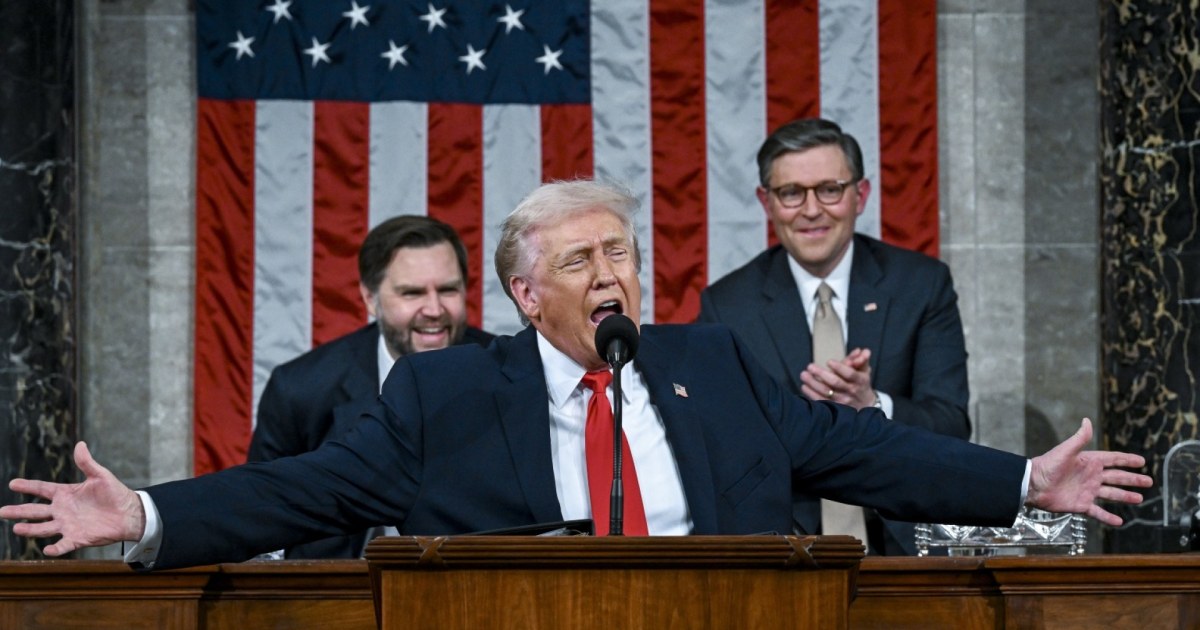
In a lighthearted moment during his State of the Union address on Tuesday evening, President Donald Trump quipped that the current year should mark the beginning of his third term in office, drawing chuckles from the audience as he discussed efforts to lower prescription drug prices. The remark, delivered amid broader comments on healthcare affordability, underscored Trump's ongoing push to reshape the pharmaceutical industry, a key promise from his 2016 campaign. Speaking from the rostrum in the U.S. Capitol, Trump said, "This should be my third term," according to reports from NBC News, which captured the exchange in a video clip from the event.
The State of the Union address, attended by members of Congress, Supreme Court justices, and First Lady Melania Trump, lasted over an hour and covered topics ranging from the economy to national security. Trump's joke came during a segment focused on prescription drugs, where he highlighted initiatives aimed at reducing costs for American consumers. According to NBC News, the president noted that his administration had made strides in negotiating lower prices with drug manufacturers, though critics have pointed to limited progress in delivering widespread relief.
Trump's comment about a third term appeared to reference the political turbulence of recent years, including his 2020 election loss to President Joe Biden and ongoing legal challenges. While the U.S. Constitution limits presidents to two terms under the 22nd Amendment, ratified in 1951, Trump's jest evoked speculation about his future ambitions. White House officials did not immediately clarify the intent behind the remark, but it followed a pattern of off-the-cuff humor that has characterized many of Trump's public appearances.
Prescription drug prices have been a focal point of Trump's domestic agenda since he took office in January 2017. In his 2018 State of the Union, he first pledged to bring down costs, citing examples like insulin prices that had soared for many patients. According to the Centers for Medicare and Medicaid Services, average drug spending per capita reached $1,200 in 2022, up from $900 a decade earlier, fueling bipartisan calls for reform.
During Tuesday's address, Trump touted specific actions, including executive orders issued in 2018 and 2020 that sought to import cheaper drugs from Canada and tie Medicare payments to international prices. "We're finally getting it done," Trump reportedly said, per NBC News coverage, emphasizing deals with pharmaceutical companies to cap price increases. However, the Kaiser Family Foundation reported that while some rebates were negotiated, overall out-of-pocket costs for patients remained high, with 25% of Americans skipping medications due to expense in a 2023 survey.
Democrats in attendance offered a contrasting view. House Speaker Nancy Pelosi, seated behind the president, was seen shaking her head during the drug pricing segment, according to observers in the chamber. In a post-address statement, Pelosi said, "The president's words on healthcare ring hollow after years of inaction," highlighting the failure to pass comprehensive legislation like the Lower Drug Costs Now Act, which stalled in the Senate.
Republicans, meanwhile, praised Trump's approach. Senate Majority Leader Mitch McConnell, who applauded the third-term joke, later told reporters, "The president is right to focus on real results over partisan gridlock." McConnell's office pointed to a 2020 rule change allowing drug importation from Canada, implemented under Trump's administration, as evidence of progress, though implementation has been slow, with only a few states pursuing pilots as of early 2023.
The context of Trump's remark ties into his broader narrative of achievement despite obstacles. Since leaving office in January 2021, Trump has maintained a high profile, launching a 2024 presidential bid in November 2022 and facing multiple indictments related to election interference and classified documents. His State of the Union appearance, as an invited guest rather than speaker, was arranged through Republican leadership, marking a rare return to the Capitol podium for the former president.
Experts on presidential rhetoric noted the joke's potential to energize Trump's base. Political analyst Julian Zelizer of Princeton University commented to NBC News, "Such humor humanizes Trump while subtly challenging term limits, a theme that resonates with his supporters who question the 2020 election." Zelizer added that the drug pricing discussion served as a vehicle to revisit unfulfilled promises, keeping policy issues alive in public discourse.
Looking back, Trump's first term saw several attempts at drug reform. In July 2019, he signed an executive order directing the Department of Health and Human Services to explore international pricing benchmarks, but legal challenges from the pharmaceutical industry delayed rollout. The COVID-19 pandemic further complicated efforts, as vaccine development took precedence, with Operation Warp Speed—led by Trump—accelerating mRNA technology but not directly addressing chronic medication costs.
Stakeholders in the healthcare sector reacted variably. The Pharmaceutical Research and Manufacturers of America (PhRMA), the industry's trade group, issued a statement post-address welcoming "innovative solutions" but cautioning against measures that could stifle research. PhRMA President Stephen Ubl said, "Lowering costs is important, but we must protect the incentives for new drug discovery," referencing the $1.2 billion average cost to bring a medicine to market, per industry estimates.
Patient advocacy groups, however, were more critical. The American Diabetes Association, representing millions affected by high insulin prices, noted in a release that Trump's joke overshadowed the urgency of the issue. "Jokes aside, families are still rationing life-saving drugs," said association CEO Tracey Brown, citing data showing insulin list prices rose 54% from 2014 to 2019, despite Trump's 2020 cap on insulin copays for Medicare beneficiaries at $35 per month.
The event unfolded against a backdrop of divided government, with Democrats controlling the White House and Senate, and Republicans holding the House. This dynamic has stymied further drug pricing legislation, such as the Inflation Reduction Act of 2022, which empowered Medicare to negotiate prices for 10 high-cost drugs starting in 2026—a measure Trump has criticized as government overreach. According to a Congressional Budget Office analysis, the act could save $160 billion over a decade, though implementation details remain under debate.
As the 2024 election cycle heats up, Trump's State of the Union cameo and remarks signal his intent to reclaim the spotlight on economic issues like healthcare. Polls from Gallup in late 2023 showed 62% of Americans viewing prescription drug costs as a major problem, cutting across party lines. Whether the third-term jest foreshadows deeper constitutional debates or remains mere banter, it highlights the enduring polarization in U.S. politics.
Looking ahead, advocates on both sides anticipate renewed pushes for reform. With midterm elections influencing congressional makeup, the next State of the Union in early 2024 could feature more substantive policy announcements. For now, Trump's offhand comment serves as a reminder of the blend of levity and legacy that defines his public persona, even as the nation grapples with tangible healthcare challenges.