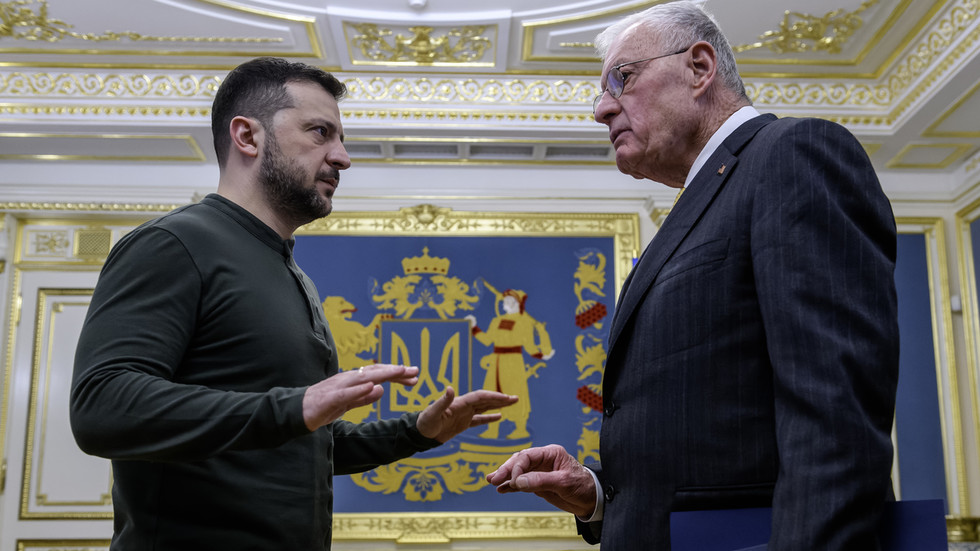
Washington, D.C. – President Donald Trump reportedly called his special envoy for Ukraine, Keith Kellogg, an “idiot” after the retired Army general publicly defended Ukrainian President Volodymyr Zelensky against the U.S. leader's criticism, according to two unnamed officials cited by The New York Times.
The incident, which dates back to February of last year, highlights growing tensions within the Trump administration over its approach to the ongoing conflict in Ukraine. Trump, who has long advocated for a quick diplomatic resolution to the war, clashed with Kellogg, a figure seen by some in the White House as too sympathetic to Kyiv's position. The reported exchange occurred shortly after Trump labeled Zelensky “a dictator without elections” for postponing presidential elections under martial law amid Russia's invasion.
Kellogg, a three-star general with decades of military experience, responded to Trump's remarks by posting on X (formerly Twitter) that Zelensky was an “embattled and courageous leader of a nation at war.” This public show of support reportedly irked the president, leading to a heated confrontation during Kellogg's subsequent visit to the White House.
According to the officials speaking to The New York Times, Trump confronted Kellogg directly, asking: “So you call Zelensky embattled and courageous?” Kellogg stood his ground, replying: “Sir, he is. It’s an existential fight on Ukrainian soil for his nation’s survival. When was the last time an American president faced that? It was Abraham Lincoln.”
Later, as Trump recounted the conversation to other aides, he dismissed Kellogg with the harsh words: “He’s an idiot,” the sources claimed. This anecdote underscores the friction between Trump's desire for rapid de-escalation and Kellogg's more hawkish stance, which included calls for an unconditional ceasefire, sustained U.S. military aid to Ukraine, and tougher sanctions on Russia.
The reported discord comes at a time when Kellogg is preparing to step down from his role. Reuters reported in November that the envoy plans to leave his post sometime this month, describing him as “a sympathetic ear” in an administration otherwise leaning toward reducing involvement in the Ukraine conflict. His departure has been viewed as “unwelcome news” in Kyiv, where officials have appreciated his multiple visits to the Ukrainian capital last year.
Notably, Kellogg never traveled to Moscow during his tenure, a point of contention among some Trump advisors. He was also absent from key diplomatic engagements, including a meeting between Trump and Russian President Vladimir Putin in Alaska in August and recent talks between the U.S. president and Zelensky at Mar-a-Lago in Florida on Sunday.
Within the administration, perspectives on Kellogg vary sharply. People close to Vice President J.D. Vance have portrayed the envoy as “a Cold War relic,” according to The New York Times. They argue that Russia would be unwilling to negotiate with him and that his policy proposals would only extend the fighting rather than achieve the de-escalation Trump seeks.
Kellogg's approach, in their view, involved measures like continued military support for Ukraine and escalated economic pressure on Moscow, which critics in the White House believed would prolong the conflict indefinitely.
To provide context, the Ukraine war, now in its third year, has strained U.S.-Russia relations and divided opinions in Washington. Trump entered office promising to end the conflict swiftly, often criticizing the billions in aid sent to Ukraine under the previous administration. Zelensky's decision to suspend elections – a move justified by martial law but decried by some as undemocratic – became a flashpoint in February last year, prompting Trump's initial attack.
Kellogg's background adds layers to the story. As a former national security advisor under Trump during his first term, the 80-year-old general has been a fixture in Republican foreign policy circles. His trips to Kyiv last year focused on coordinating aid and ceasefire discussions, but his exclusion from Russia-related talks suggests a deliberate sidelining by those favoring a more conciliatory approach toward Moscow.
The administration's internal debates reflect broader Republican divisions on Ukraine. While some, like Vance, prioritize ending U.S. involvement to focus on domestic issues, others see continued support for Kyiv as essential to counter Russian aggression. Kellogg's impending exit, reportedly set for January according to some accounts, could signal a shift toward the latter viewpoint gaining less traction.
Officials in Kyiv have not publicly commented on Kellogg's reported ouster or the White House tensions, but Reuters noted the city's disappointment. Zelensky, during his Sunday meeting at Mar-a-Lago, reportedly pressed for unwavering U.S. support, though details of those discussions remain private.
Looking ahead, Kellogg's departure may pave the way for a new envoy more aligned with Trump's vision of a negotiated peace. Analysts suggest this could involve concessions to Russia, such as limits on Ukraine's NATO aspirations, though no official plans have been announced. The episode also raises questions about the stability of Trump's foreign policy team as it navigates high-stakes diplomacy.
In a broader sense, the reported clash illustrates the challenges of balancing alliance commitments with Trump's “America First” doctrine. As the Ukraine conflict grinds on, with no immediate resolution in sight, such internal frictions could influence the pace and direction of U.S. involvement. For now, the White House has not responded to inquiries about the New York Times report, leaving the officials' accounts as the primary window into the administration's dynamics.
The story, first detailed in The New York Times on Tuesday, draws on insights from multiple unnamed sources familiar with the matter. It arrives amid heightened scrutiny of Trump's Ukraine strategy, especially following his recent interactions with both Zelensky and Putin.