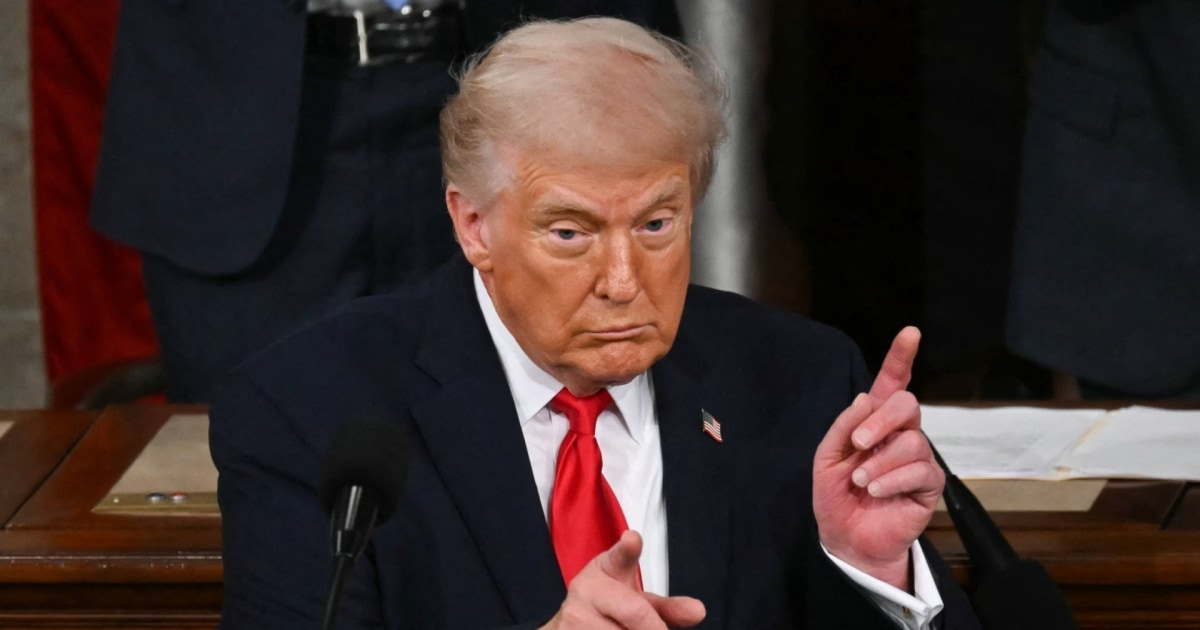
In a rousing address to a joint session of Congress on Tuesday evening, President Donald J. Trump lauded Republican lawmakers for their pivotal role in passing what he called the One Big Beautiful Bill, a sweeping legislative package aimed at overhauling the nation's economic framework. Speaking from the rostrum in the U.S. Capitol, Trump highlighted the bill's passage as a triumph of party unity, crediting GOP members in both the House and Senate for pushing it through despite intense partisan debates.
The One Big Beautiful Bill, formally known as the Economic Renewal and Prosperity Act of 2025, was signed into law just weeks ago on February 15, following months of negotiations on Capitol Hill. According to reports from NBC News, Trump used his platform during the State of the Union address to emphasize the bill's core components, including tax cuts for middle-class families, deregulation of key industries, and investments in infrastructure projects across the country. "This is the biggest, most beautiful bill we've ever seen," Trump declared, according to attendees who spoke to reporters afterward, underscoring his enthusiasm for the measure's potential to spur job growth and economic expansion.
Republicans in Congress, who hold slim majorities in both chambers following the 2024 midterm elections, rallied behind the legislation as a cornerstone of Trump's second-term agenda. House Speaker Mike Johnson, R-La., was among those praised by the president, with Trump noting Johnson's "tireless leadership" in steering the bill through the lower chamber. In the Senate, Majority Leader John Thune, R-S.D., played a key role in corralling votes, overcoming filibuster threats from a unified Democratic opposition. Thune later told reporters outside the Capitol, "This bill represents the promise we made to the American people—lower taxes, fewer regulations, and a stronger economy for all."
The bill's journey to enactment was not without hurdles. Introduced in late December 2024, it faced scrutiny over its estimated $2.5 trillion price tag over the next decade, according to projections from the Congressional Budget Office. Critics, primarily Democrats, argued that the package disproportionately benefited corporations and high-income earners, potentially exacerbating the federal deficit. Senate Minority Leader Chuck Schumer, D-N.Y., described it during floor debates as "a giveaway to the wealthy disguised as economic relief," a sentiment echoed by progressive groups like the Center for American Progress.
Despite the opposition, the bill passed the House on January 28 by a vote of 220-215, largely along party lines, with five moderate Republicans joining Democrats in opposition. The Senate followed suit on February 10, approving it 52-48 after a marathon session that stretched into the early morning hours. Vice President JD Vance cast the tie-breaking vote, a moment Trump referenced in his address as "a beautiful display of American resolve."
Trump's praise extended beyond congressional leaders to rank-and-file members, whom he thanked for "sticking together when the fake news said we couldn't." He specifically mentioned Rep. Marjorie Taylor Greene, R-Ga., for her vocal advocacy on social media, and Sen. Ted Cruz, R-Texas, for his committee work on energy provisions within the bill. These elements include opening federal lands for oil and gas drilling, which proponents say will lower energy costs for consumers, while environmental advocates warn of long-term ecological damage.
The State of the Union address, delivered at 9 p.m. Eastern Time in the House Chamber, drew an audience of over 30 million viewers, according to preliminary Nielsen ratings. Flanked by First Lady Melania Trump and Vice President Vance, the president outlined how the One Big Beautiful Bill fits into his broader vision for America, touching on themes of national pride and economic nationalism. He touted early indicators of success, such as a reported 0.5% uptick in GDP growth in the first quarter following the bill's passage, based on advance estimates from the Bureau of Economic Analysis.
Democratic leaders present in the chamber offered a contrasting view. House Minority Leader Hakeem Jeffries, D-N.Y., who delivered the official response, criticized the bill as shortsighted. "While Republicans celebrate tax breaks for billionaires, working families are left wondering how they'll afford healthcare and education," Jeffries said in his televised rebuttal from a school gymnasium in his district. This perspective aligns with analyses from nonpartisan watchdogs like the Tax Policy Center, which estimated that the top 1% of earners would receive 40% of the bill's benefits.
Background on the legislation traces back to Trump's campaign promises in 2024, where he vowed to deliver "the biggest tax cut in history" if reelected. The One Big Beautiful Bill builds on the 2017 Tax Cuts and Jobs Act, extending its provisions and adding new incentives for domestic manufacturing. Key details include a reduction in the corporate tax rate from 21% to 15%, elimination of certain estate taxes, and a $1,000 child tax credit increase for families earning under $200,000 annually. These measures, according to the White House, are projected to create 5 million jobs over the next four years.
Reactions from business leaders were overwhelmingly positive. The U.S. Chamber of Commerce issued a statement post-address, calling the bill "a game-changer for American competitiveness." CEO Suzanne Clark highlighted provisions for streamlined permitting processes, which she said would accelerate projects like the $100 billion high-speed rail initiative connecting major East Coast cities. On the labor front, however, AFL-CIO President Richard Trumka Jr. expressed concerns, stating in a press release that "without stronger worker protections, this bill risks widening inequality."
The address also wove in related events from Trump's first 100 days back in office, including executive orders on border security and trade tariffs that complement the bill's economic focus. Trump linked these to the legislation, arguing that a robust domestic economy requires protection from foreign competition. International observers, such as economists at the International Monetary Fund, have noted potential ripple effects, predicting a 1-2% boost to U.S. exports but warning of retaliatory measures from trading partners like China and the European Union.
As the evening progressed, Trump's rhetoric shifted to future implications, promising that the One Big Beautiful Bill would pave the way for additional reforms, including healthcare adjustments and immigration overhauls. He invited several guests to the gallery, among them a factory worker from Ohio who credited the bill's incentives for saving his plant from closure, and a small business owner from Florida who spoke of expanded market access. These personal stories, according to NBC News coverage, were intended to humanize the policy's impact.
Looking ahead, implementation of the bill will begin in earnest this spring, with the Treasury Department tasked with rolling out new tax forms by April 15. Congressional oversight committees are already scheduling hearings to monitor compliance, particularly regarding environmental safeguards attached as amendments. Political analysts suggest the legislation could become a flashpoint in the 2026 midterms, with Republicans defending it as a success and Democrats vowing to repeal key sections if they regain control.
In the broader context of American politics, the passage of the One Big Beautiful Bill underscores the deepening partisan divide in Washington. While Trump and his allies celebrate it as a fulfillment of voter mandates, opponents view it as emblematic of policy favoritism. As the nation digests the State of the Union message, the true measure of the bill's effectiveness will unfold in economic data and public sentiment over the coming months.
For now, the Capitol remains abuzz with the afterglow of Tuesday's events, as lawmakers return to their districts to explain the bill's virtues—or vices—to constituents. Whether it delivers the prosperity Trump envisions or the inequities critics fear, the One Big Beautiful Bill marks a defining chapter in the ongoing saga of U.S. fiscal policy.