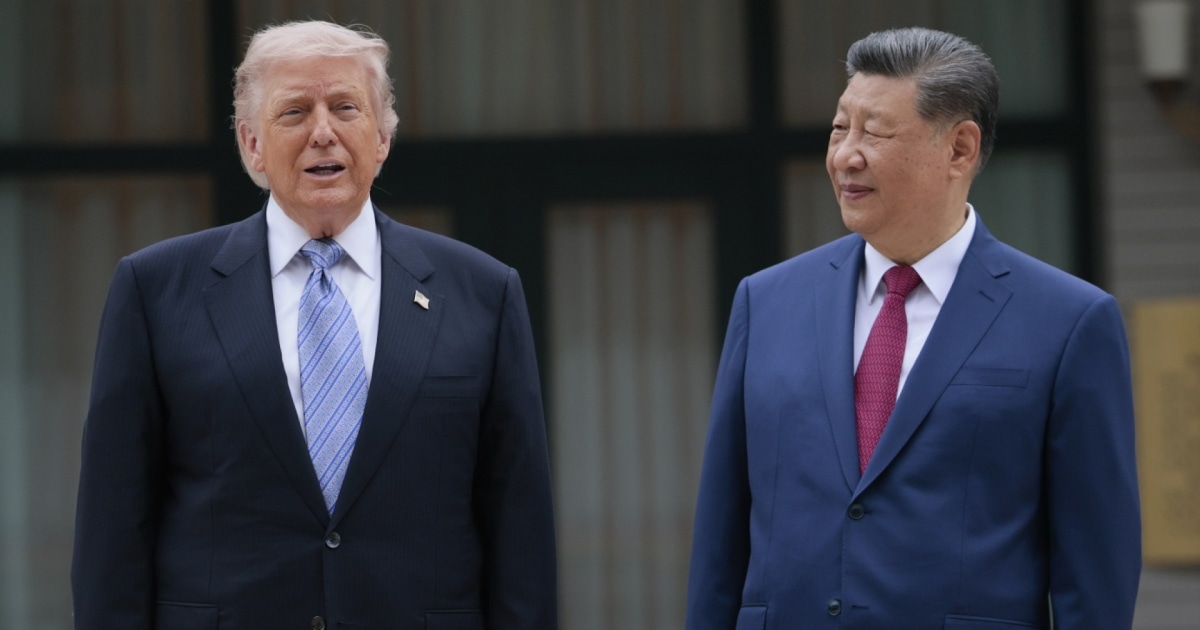
OSAKA, Japan — President Donald Trump lavished praise on his Chinese counterpart, Xi Jinping, during a high-stakes summit here on Thursday, declaring that 'wonderful things' had been accomplished in their discussions. Speaking to reporters on the second day of the U.S.-China talks, Trump highlighted the progress made, saying a significant number of longstanding issues had been resolved. The remarks came amid ongoing tensions over trade, intellectual property, and regional security, as the two leaders sought to reset bilateral relations.
The summit, held on the sidelines of the G20 gathering in Osaka, marked the latest in a series of meetings between Trump and Xi since the American president took office in 2017. According to reports from NBC News, Trump expressed gratitude to Xi for his hospitality and cooperation, noting that the conversations had been 'very productive.' 'I want to thank President Xi,' Trump said, as captured in video footage from the event. 'We had a great meeting yesterday, and today we're continuing to make wonderful things happen.'
Details of the agreements reached remained sparse, with officials from both sides emphasizing the need for further negotiations. Trump indicated that 'a lot of problems were settled during talks,' though he did not specify which issues. White House aides, speaking on condition of anonymity, suggested that discussions covered tariffs on billions of dollars in goods, technology transfers, and agricultural purchases by China. 'Indicate...' trailed off in some reports, hinting at potential indicators of future deals, but no concrete figures were released at the time.
Xi, for his part, echoed the positive tone in a brief statement released by China's state media. 'The meeting with President Trump was frank and constructive,' Xi said through an official translator. He added that both nations shared a commitment to mutual respect and win-win cooperation, a phrase often used in Beijing's diplomatic lexicon. The Chinese president stressed the importance of managing differences while expanding common ground, according to Xinhua News Agency.
Background to the summit traces back to escalating trade frictions that began in early 2018, when the U.S. imposed tariffs on Chinese imports worth over $300 billion. In response, China retaliated with duties on American soybeans, automobiles, and other products, affecting farmers and manufacturers on both sides. Previous encounters, including the 2017 Mar-a-Lago summit in Florida and the 2018 Buenos Aires meeting, had yielded temporary truces, but implementation lagged. This Osaka gathering, therefore, carried high expectations from global markets, which had been volatile in anticipation of breakthroughs.
U.S. Trade Representative Robert Lighthizer, who accompanied Trump, described the talks as 'intensive' in a post-meeting briefing. 'We made real headway on structural issues,' Lighthizer said, without elaborating. On the Chinese side, Vice Premier Liu He, Xi's top economic advisor, told reporters that the discussions aligned with the consensus reached earlier in the year. Liu noted that both leaders agreed to accelerate negotiations toward a comprehensive deal by the end of the summer.
Not all perspectives were uniformly optimistic. Some analysts expressed skepticism about the longevity of any agreements. 'While the rhetoric is positive, the devil is in the details,' said Gordon Chang, a China expert and author, in an interview with NBC News prior to the summit. Chang pointed to past instances where promises from Beijing went unfulfilled, citing delays in purchasing U.S. agricultural goods as promised in December 2018. Conversely, supporters of the administration's approach argued that Trump's personal diplomacy with Xi was yielding results where bureaucratic channels had failed.
The Osaka summit unfolded against a backdrop of broader geopolitical strains. Just weeks earlier, tensions had risen over Huawei, the Chinese telecom giant, after the U.S. blacklisted it on national security grounds. Trump reportedly raised the issue directly with Xi, according to sources familiar with the talks. 'We discussed technology and security,' Trump confirmed vaguely, adding that 'some understanding was reached.' Chinese officials denied any concessions, stating that Huawei's fate would be determined by market forces and international law.
Economically, the stakes could not be higher. The U.S.-China trade imbalance stood at $419 billion in 2018, per U.S. Census Bureau data, fueling Trump's campaign to renegotiate terms. During the summit, Xi pledged to increase imports of American energy and manufactured goods, though specifics were absent. 'China is committed to opening its markets further,' a foreign ministry spokesperson said in Beijing, attributing the statement to Xi's directives.
Reactions from world leaders were swift. Japanese Prime Minister Shinzo Abe, host of the G20, welcomed the thaw, calling it a 'positive development for global stability.' European Union officials, wary of being caught in the crossfire, urged both sides to avoid actions that could disrupt supply chains. 'The EU supports fair trade but opposes unilateral measures,' trade commissioner Cecilia Malmström said in Brussels.
Domestically in the U.S., business groups like the U.S. Chamber of Commerce praised the progress. 'Any step toward resolving the trade war benefits American workers and consumers,' chamber president Thomas Donohue stated in a release. Farmers, hit hard by lost Chinese markets, expressed cautious hope. 'We've been waiting for this,' said Zippy Duvall, president of the American Farm Bureau Federation, from Washington. However, labor unions voiced concerns that deals might not address job losses from offshoring.
As the summit concluded, Trump and Xi posed for photos at Osaka Castle, a symbolic venue blending history and modernity. The image of the two leaders side by side contrasted with the acrimony of recent months. Yet, challenges loomed large. Upcoming deadlines included a 90-day tariff truce set to expire in September, and ongoing probes into currency manipulation.
Looking ahead, both sides committed to dispatching teams for follow-up talks. U.S. Treasury Secretary Steven Mnuchin announced that he and Lighthizer would lead delegations to Beijing in the coming weeks. 'We're on a path to a deal,' Mnuchin told reporters. Chinese state media reported similar plans, with Liu He slated to visit Washington.
The implications of the Osaka summit extend beyond bilateral ties. A successful resolution could stabilize global growth, projected by the IMF at 3.6% for 2019, but threatened by trade uncertainties. Failure, on the other hand, risked deeper decoupling of the world's two largest economies. As Trump departed for Washington, he reiterated his admiration for Xi. 'He's a strong leader, and we get along great,' the president said. Whether that rapport translates into lasting peace remains to be seen.
In the days following, markets responded positively, with the Dow Jones Industrial Average climbing 1.2% on Friday. Investors interpreted the summit as a de-escalation signal, though analysts cautioned against over-optimism. 'Rhetoric is easy; enforcement is hard,' noted economist Brad Setser of the Council on Foreign Relations. For now, the 'wonderful things' Trump touted offer a glimmer of hope in a complex relationship.