HONG KONG — As U.S. President Donald Trump prepares for a high-stakes summit with Chinese President Xi Jinping in Beijing next week, the fate of imprisoned Hong Kong pro-democracy activist Jimmy Lai hangs in the balance. Lai, a 78-year-old media tycoon and vocal critic of Beijing, is serving a 20-year sentence under the city's controversial national security law, which he once hoped Trump could prevent from taking effect. Now, with discussions on trade, the Iran war, and Taiwan on the agenda, Lai's son Sebastien is pinning family hopes on the meeting to secure his father's release before it's too late.
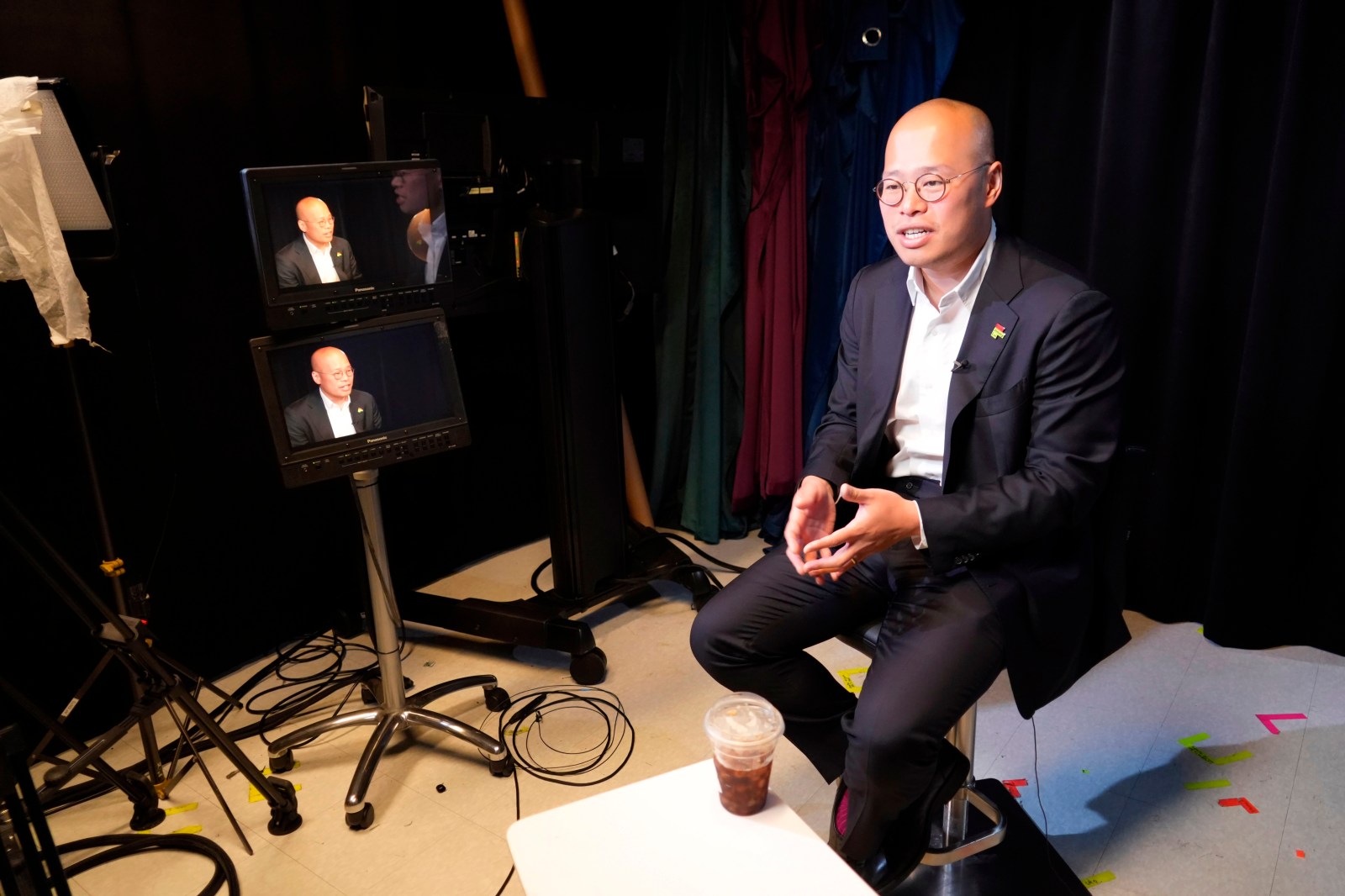
Jimmy Lai founded Apple Daily, a pro-democracy newspaper that became a symbol of resistance during Hong Kong's massive anti-government protests in 2019. The outlet was forced to shut down amid a broader crackdown that followed, and Lai was arrested shortly after. His conviction in December for conspiracy to collude with foreign forces and publishing seditious articles marked a stark decline in the freedoms Beijing promised to preserve when the former British colony returned to Chinese sovereignty in 1997, according to observers. Sebastien Lai, 31, who is based in London, told The Associated Press in an interview that the family's anxiety is mounting as his father's health deteriorates in custody.
"I fear the clock is ticking for my 78-year-old father," Sebastien Lai said. He expressed hope that Trump, who has previously voiced sympathy for his father's plight, could broker a resolution more straightforward than the geopolitical flashpoints dominating the summit. Trump himself acknowledged a personal connection, telling conservative radio host Hugh Hewitt, “there’s a little bitterness, I would say, with him and Jimmy Lai.” The president added to reporters in December, after Lai's guilty verdict, “I feel so badly.”
Diplomatic channels have already carried Lai's case to Beijing's doorstep. Trump raised the issue during an October meeting with Xi, according to people briefed on the discussions. Mark Clifford, president of the Committee for Freedom in Hong Kong Foundation, an advocacy group pushing for Lai's release, said those familiar with the talks reported that Xi and his staff “noted” Trump's remarks without aggressive pushback. "It is positive that senior Chinese officials have stopped pushing back on the issue," Clifford said.
Further efforts came through economic talks. Clifford, citing sources with direct knowledge, said Trump instructed U.S. Treasury Secretary Scott Bessent to mention Lai's release during June trade negotiations with China. Bessent reportedly brought it up again in a recent meeting with Chinese representatives, who acknowledged the request without much comment. The Treasury Department did not respond to requests for comment on these exchanges.
Publicly, however, Beijing has maintained a hard line. In March, Chinese Foreign Ministry spokesperson Guo Jiakun labeled Lai the "mastermind behind the riots" that rocked Hong Kong in 2019. On Thursday, the ministry's spokesperson office avoided a direct response to questions about considering Lai's release, stating that Hong Kong matters are "internal affairs" and that "foreign interference is not allowed." The Hong Kong government echoed this stance, replying to the AP that Lai's case involved an "open and fair trial" and had "nothing to do with press freedom." Officials emphasized that the government will "ensure laws are observed and strictly enforced."
The White House has remained tight-lipped on how forcefully Trump plans to advocate for Lai at the summit. Over 100 U.S. lawmakers from both parties sent a bipartisan letter to the White House on Thursday, urging the president to prioritize the activist's freedom during his discussions with Xi. This comes amid a history of U.S.-China prisoner swaps, though such deals have grown rarer under Xi's leadership.
In 2024, for instance, U.S. pastor David Lin was released after nearly 20 years in a Chinese prison, and Washington and Beijing exchanged several other detainees under a diplomatic agreement that year. Yet activists argue Beijing is increasingly reluctant to free those who challenge it on human rights grounds. The case of Nobel laureate Liu Xiaobo, who died in a Chinese hospital in 2017 while serving a sentence for inciting subversion, illustrates this shift. Human rights lawyer Jared Genser, who represented Liu, said a White House official informed him that Trump had personally called Xi to urge medical release for the dissident, but to no avail.
Genser, who helped secure another activist's freedom in 2007 under Xi's predecessor Hu Jintao, contrasted the eras. "Under Xi’s China [that] emphasizes sovereignty and resisting foreign interference," he said, Beijing is less sensitive to international reputation than during Hu's time, when economic integration was a priority. "China knows that by taking a very tough and unrelenting position that most countries in the world are not going to be willing to do more than privately raise a case," Genser added. He described this "self-censorship" as the key barrier to releasing political prisoners now.
John Kamm, founder of the Dui Hua Foundation, which works on behalf of political prisoners in China, noted that Beijing has historically made concessions when it sought favors, such as support for hosting the Olympics. But he pointed to U.S. inattention as a complicating factor. "I don’t know of anyone in this administration who cares about political prisoners in China," Kamm said, with Secretary of State Marco Rubio as a possible exception—though Rubio's focus lies elsewhere, on issues like trade and security. Kamm suggested China might agree to release Lai if the U.S. offers concessions on Beijing's priorities, such as the Iran war or investment flows.
Not all experts see a deal as likely. Thomas Kellogg, executive director of the Georgetown Center for Asian Law, argued that both sides have incentives: Releasing Lai could signal to China that it's ready to move past the 2020 imposition of the security law, now nearly six years old, while giving Trump's administration a diplomatic victory after recent challenges. "If the Trump administration is pushing very hard for Jimmy Lai’s release, then we could get a positive outcome," Kellogg said. Such a win, he added, might even draw praise from the president's critics.
Wilson Chan, co-founder of the Pagoda Institute think tank, offered a more pessimistic view. He believes the chances of a diplomatic solution are slim, as Beijing uses Lai's case to send a message about national security. "If the international community keeps raising Lai’s case, Beijing may see him as an influential figure who still poses national security threats," Chan said. But without sustained pressure, he added, there's little incentive for action.
Lai, a British citizen, has chosen not to appeal his conviction and sentence, a decision his family views as principled. The Hong Kong government, which insists Lai is Chinese despite his passport, is now seeking to confiscate his assets on national security grounds. Sebastien Lai described this as yet another attack on his father, who has been in custody for over five years.
Health concerns add urgency. Lai's legal team reported in January that he suffers from heart palpitations and diabetes. A medical report cited by prosecutors noted his condition as stable overall, and the government maintains he was placed in solitary confinement at his own request. Through letters, Sebastien has stayed connected with his father, who he believes would seek a quiet life if freed early. "It’s a lose-lose scenario for every single person" if Lai dies in prison, Sebastien said, adding, "My father will die in prison if he’s not freed. The Chinese government would be complicit in killing him."
As Trump and Xi convene next week, Lai's case underscores the fragile interplay of human rights and great-power rivalry. While past diplomacy has yielded releases, the hardening stances in U.S.-China relations leave uncertain whether this summit will bring relief for one of Hong Kong's most enduring symbols of dissent. Families like the Lais wait, hoping personal appeals can cut through the broader tensions.