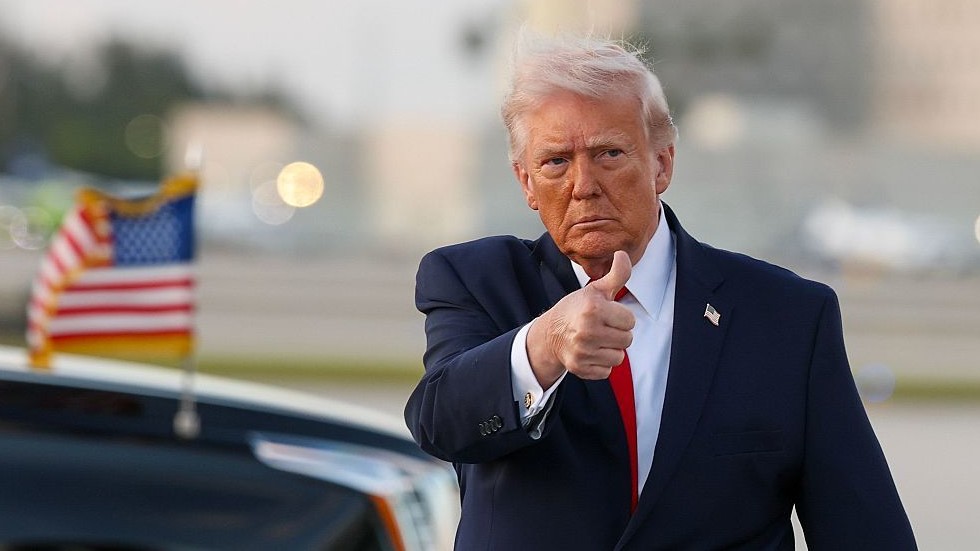
WASHINGTON — President Donald Trump announced a naval blockade of Iranian ports on Sunday, escalating tensions in the ongoing conflict with Tehran just hours after diplomatic talks collapsed without agreement. The move, aimed at pressuring Iran over its nuclear program and regional activities, has drawn sharp criticism and threats of retaliation from Iranian officials, highlighting a stark contrast between the administration's portrayal of success and the uncertain realities on the ground.
Trump's decision came amid a series of high-stakes negotiations that had been underway for weeks in Vienna, Austria. According to reports from the State Department, the talks, mediated by European allies, broke down late Sunday evening when Iranian delegates walked out, citing unacceptable U.S. demands for immediate sanctions relief. In a statement released early Monday from the White House, Trump declared, "Our actions have decisively shifted the balance in our favor, weakening Iran's capabilities and forcing them to the table—though they chose to leave it."
The president's remarks echo a pattern of bold assertions about the Iran conflict that have defined his foreign policy approach since taking office. Trump has frequently touted U.S. military strikes and economic sanctions as game-changers, claiming on social media platforms last week that "Iran is on the ropes, begging for mercy." However, analysts and observers have pointed to persistent challenges, including Iran's continued uranium enrichment activities and its support for proxy militias in the Middle East.
The announced blockade targets key Iranian ports along the Persian Gulf, particularly those facilitating oil exports through the Strait of Hormuz. U.S. Navy vessels, including the aircraft carrier USS Abraham Lincoln, have been repositioned in the region to enforce the measure, with Trump warning that "any vessel attempting to challenge it would be destroyed." This comes at a time when global oil prices have already surged 15 percent in the past month due to fears of supply disruptions, according to market data from Bloomberg.
Iranian Foreign Minister Javad Zarif responded swiftly to the announcement, stating in a televised address from Tehran that "such aggressive posturing will meet with a firm and proportionate response." Iranian state media reported that the Islamic Revolutionary Guard Corps (IRGC) has placed its naval forces on high alert, with unconfirmed reports of mine-laying operations in the strait. Tehran has long viewed the Strait of Hormuz as a vital chokepoint, through which roughly 20 percent of the world's oil passes daily.
RT World News correspondent Marina Kosareva, reporting from the region, highlighted the discrepancies between Trump's narrative and the situation on the ground. In a video dispatch aired Monday, Kosareva noted, "While the U.S. president insists on a path to victory, Iran's threats of retaliation and the logistical hurdles of enforcing a blockade paint a more complicated picture." Her report included footage of Iranian cargo ships continuing operations despite the U.S. warning, underscoring the practical difficulties of implementation.
Key U.S. allies have expressed reservations about the blockade. British Foreign Secretary Dominic Raab said in London that the U.K. supports diplomatic efforts but would not commit naval assets without broader international consensus. Similarly, French President Emmanuel Macron, speaking after an emergency EU summit in Brussels, emphasized that "escalation risks destabilizing the entire region," and France would prioritize multilateral sanctions over unilateral military action.
The backdrop to these developments includes a series of escalatory events over the past year. In January, a U.S. drone strike near Baghdad International Airport killed Iranian General Qasem Soleimani, prompting Iran to launch missile attacks on U.S. bases in Iraq. Subsequent cyber incidents and tanker seizures in the Gulf have kept tensions simmering. According to the International Atomic Energy Agency (IAEA), Iran has increased its stockpile of enriched uranium to levels far exceeding the 2015 nuclear deal limits, a point the Trump administration has repeatedly cited as justification for its hardline stance.
Domestic reactions in the United States have been mixed. Senate Majority Leader Mitch McConnell praised the blockade as "a necessary show of strength," while House Speaker Nancy Pelosi warned that it could "drag America into another endless war." Polling from Gallup, conducted over the weekend, shows public support for Trump's Iran policy at 48 percent, down from 55 percent in December, amid concerns over rising gas prices and potential military involvement.
Experts on Middle East affairs have weighed in on the feasibility of the blockade. Michael Singh, a former National Security Council official now at the Washington Institute for Near East Policy, told The Appleton Times that "enforcing a blockade in the Strait of Hormuz would require significant international cooperation, which seems lacking at the moment." He added that Iran's asymmetric warfare capabilities, including speedboats and submarines, could complicate U.S. operations and lead to unintended escalations.
On the economic front, the blockade's announcement has rippled through global markets. Iran's oil exports, already curtailed by U.S. sanctions to about 300,000 barrels per day from a pre-sanctions peak of 2.5 million, could face near-total halt if enforced. Saudi Arabia and the United Arab Emirates, key U.S. partners, have pledged to increase production to offset shortages, but analysts warn of potential spikes in energy costs that could fuel inflation worldwide.
The collapse of Sunday's talks marks the latest setback in efforts to revive the Joint Comprehensive Plan of Action (JCPOA), the 2015 nuclear agreement from which Trump withdrew in 2018. European signatories—France, Germany, and the U.K.—have maintained the deal's framework through a mechanism called INSTEX to bypass U.S. sanctions, but progress has stalled. Iranian President Hassan Rouhani stated last month that Tehran would consider returning to compliance only if sanctions are fully lifted first, a condition the U.S. has rejected.
As the situation unfolds, military movements are intensifying. The U.S. Central Command reported deploying additional F-35 fighter jets to Al Udeid Air Base in Qatar, while Iran conducted live-fire drills in the Gulf on Monday morning. Satellite imagery from Maxar Technologies shows increased activity at Bandar Abbas, Iran's main southern port, where cargo vessels are being loaded amid the standoff.
The broader implications of the blockade extend beyond the immediate region. Russia, a key Iranian ally, has condemned the U.S. action as "provocative," with Kremlin spokesman Dmitry Peskov saying Moscow would support Tehran through diplomatic channels at the United Nations. China, Iran's largest oil buyer, has called for restraint, though its state-owned companies continue purchasing discounted Iranian crude despite U.S. penalties.
Looking ahead, the path to resolution remains unclear. Trump has hinted at further measures if Iran does not capitulate, but the administration's insistence on maximum pressure has yet to yield the diplomatic breakthroughs promised. With allies hesitant and adversaries defiant, the gap between rhetoric and reality in the Iran conflict appears wider than ever, leaving the international community bracing for what could be a prolonged and volatile confrontation.