By Jessica Williams, The Appleton Times
WASHINGTON — President Donald Trump's bold announcement to seize control of Venezuela's vast oil industry and invite American companies to revitalize it following a U.S. military raid that captured President Nicolás Maduro has sparked intense debate among energy experts and international observers. The plan, unveiled amid escalating tensions in the region, aims to harness Venezuela's enormous reserves to bolster global energy supplies, but analysts warn it faces formidable obstacles, including decades of infrastructure decay and political instability.
The raid, which occurred late last week, resulted in Maduro's detention by U.S. special forces in Caracas, according to U.S. officials. Trump, speaking from the White House on Saturday, declared that the United States would now oversee Venezuela's petroleum sector, home to the world's largest proven crude oil reserves of approximately 303 billion barrels, representing about 17 percent of global totals, per the U.S. Energy Information Administration. "We're taking charge to bring stability and prosperity back to that great resource," Trump said in a brief statement, emphasizing the potential for American firms to lead the revival.
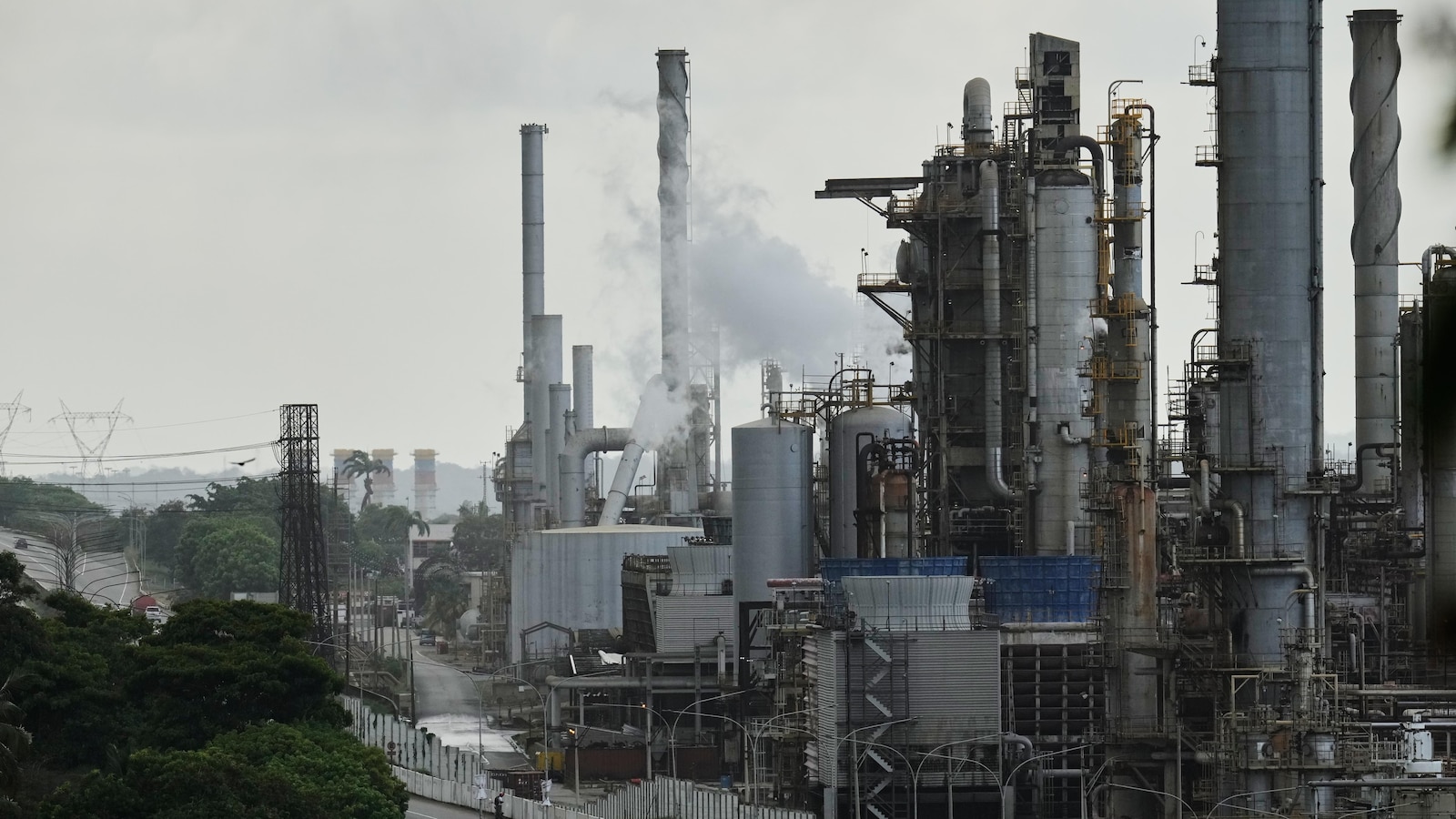
However, the immediate economic ripple effects appear muted. Oil markets were closed over the weekend, and experts predict no sharp price fluctuations when trading resumes Monday. Venezuela, as an OPEC member, has its production quotas already factored into global balances, and a current surplus in worldwide oil supplies further dampens expectations for quick changes. Patrick De Haan, lead petroleum analyst at GasBuddy, a gasoline price tracking service, noted the challenges ahead. "While many are reporting Venezuela’s oil infrastructure was unharmed by U.S. military actions, it has been decaying for many many years and will take time to rebuild," De Haan said.
Venezuela's oil output has plummeted from a peak of 3.5 million barrels per day in 1999 to around 1.1 million barrels today, crippled by corruption, mismanagement, and U.S.-imposed sanctions dating back to 2017. The state-owned Petróleos de Venezuela S.A., or PDVSA, has struggled under layers of debt and operational breakdowns. Even with the raid's success, the political landscape remains turbulent. On Saturday, Venezuela's vice president contended that Maduro should be restored to power, though the country's high court swiftly ordered her to assume the role of interim president, adding to the uncertainty.
American energy giants are proceeding with caution. Exxon Mobil and Chevron did not immediately respond to inquiries from reporters on Saturday. A spokesperson for ConocoPhillips, Dennis Nuss, provided a measured statement via email: "The company is monitoring developments in Venezuela and their potential implications for global energy supply and stability. It would be premature to speculate on any future business activities or investments." Chevron stands out as the only major U.S. firm with substantial ongoing operations in Venezuela, producing about 250,000 barrels per day through joint ventures with PDVSA. The company has roots there dating to the 1920s, navigating nationalizations and sanctions over the decades.
The 2007 nationalization under then-President Hugo Chávez forced out key players like ExxonMobil and ConocoPhillips, seizing assets without full compensation and eroding investor confidence. Francisco Monaldi, director of the Latin American energy program at Rice University's Baker Institute, highlighted the core dilemmas. "The issue is not just that the infrastructure is in bad shape, but it’s mostly about how do you get foreign companies to start pouring money in before they have a clear perspective on the political stability, the contract situation and the like," Monaldi said. He estimated that ramping production from 1 million barrels per day to 4 million would require about a decade and $100 billion in investments.
Optimism persists among some market watchers if the U.S. can stabilize the situation swiftly. Phil Flynn, a senior market analyst at Price Futures Group in Chicago, suggested a positive outlook under certain conditions. "But if it seems like the U.S. is successful in running the country for the next 24 hours, I would say there would be a lot of optimism that U.S. energy companies could come in and revitalize the Venezuelan oil industry fairly quickly," Flynn said. He added that a resurgent Venezuela could "cement lower prices for the longer term" and intensify pressure on Russia, a key geopolitical rival in energy markets.
Venezuela's crude is predominantly heavy oil, ideal for producing diesel fuel, asphalt, and materials for heavy equipment. This type has been in short supply globally due to sanctions on Venezuelan and Russian exports, as lighter U.S. shale oil cannot easily substitute in many refineries. Gulf Coast facilities in Texas and Louisiana, optimized decades ago for heavy imports from Venezuela and Mexico, stand to benefit from renewed access. Such crude often trades at a discount, enhancing refinery efficiency and margins.
The potential revival could reshape international dynamics. "There’s been a big benefit for Russia to see Venezuela’s oil industry collapse. And the reason is because they were a competitor on the global stage for that oil market," Flynn explained. Europe, facing energy shortages since Russia's 2022 invasion of Ukraine, might turn to Venezuelan supplies for diesel needs, reducing reliance on Moscow and bolstering Western sanctions efforts.
Yet legal and ethical questions loom large. Matthew Waxman, a Columbia University law professor and former national security official in the George W. Bush administration, raised concerns about resource ownership. "For example, a big issue will be who really owns Venezuela’s oil?" Waxman wrote in an email. "An occupying military power can’t enrich itself by taking another state’s resources, but the Trump administration will probably claim that the Venezuelan government never rightfully held them." He observed that the administration has previously downplayed international law in Venezuela-related matters, referencing past disputes over sanctions and recognition of opposition leaders.
International reactions have been swift and varied. The United Nations expressed alarm over the raid's implications for sovereignty, while allies like Brazil and Colombia called for dialogue to avoid escalation. In Washington, Democratic lawmakers criticized the move as reckless, urging congressional oversight, whereas Republican supporters hailed it as a decisive strike against socialism. Venezuelan exiles in Miami celebrated Maduro's capture, viewing it as a step toward democracy, though many cautioned against prolonged U.S. involvement.
Looking ahead, the path to revitalization depends on quelling unrest in Caracas and securing buy-in from investors wary of repeats of past expropriations. PDVSA's facilities, including the sprawling Orinoco Belt heavy oil fields, require urgent upgrades in pipelines, refineries, and drilling rigs. Analysts like Monaldi stress that without enforceable contracts and a stable interim government, the $100 billion investment figure could balloon.
If successful, Venezuela could reclaim its status as an oil powerhouse, potentially flooding markets and easing inflation pressures on fuels worldwide. For the U.S., it might mean cheaper diesel for trucking and construction, while strategically weakening adversaries. But as De Haan and others warn, the timeline stretches into years, not months, with no guarantees amid the fog of post-raid chaos.
The developments unfold against a backdrop of Trump's foreign policy, which has emphasized energy dominance since his first term. Sanctions under both Trump and President Joe Biden aimed to isolate Maduro's regime, but production languished. Now, with direct intervention, the stakes have risen dramatically, testing alliances and legal norms on the world stage.
As markets reopen and diplomatic cables fly, the world watches whether Trump's gamble on Venezuela's black gold will yield dividends or deepen divisions. For now, the oil fields remain quiet, their promise buried under layers of rust and unresolved power struggles.