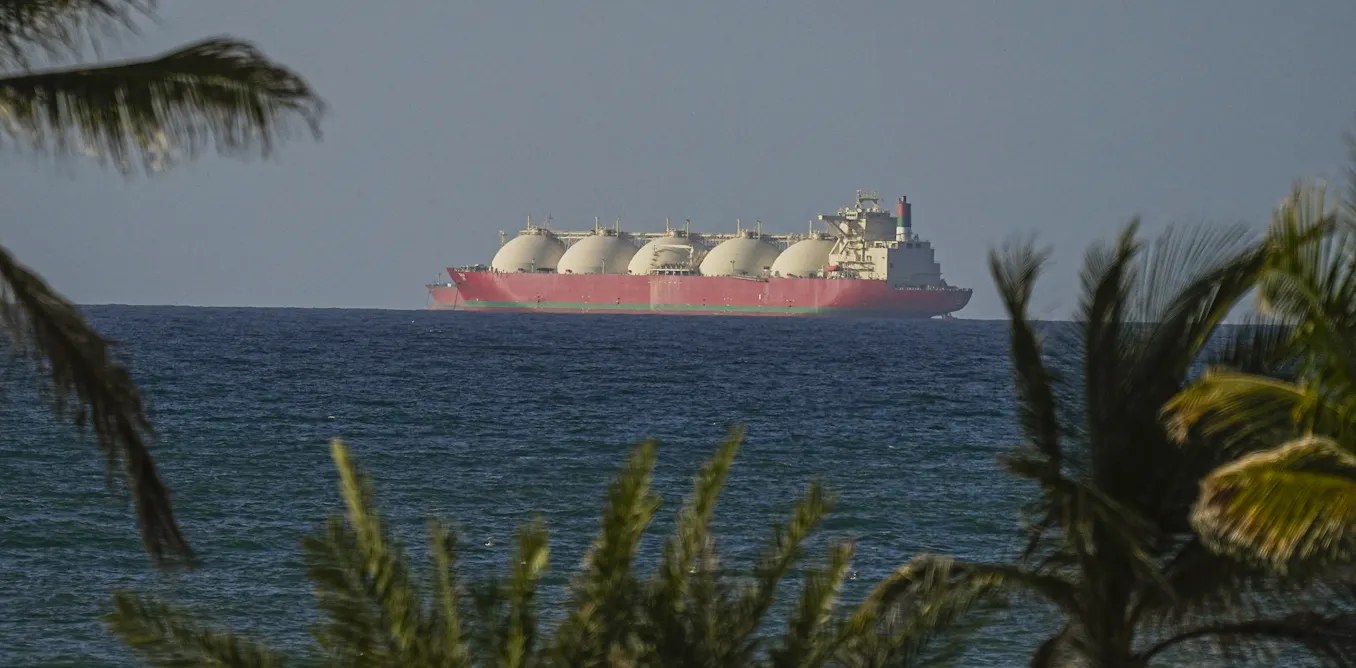
APPLETON, Wis. — In a dramatic escalation of tensions in the Middle East, President Donald Trump announced on Sunday that the United States Navy would impose a blockade on the Strait of Hormuz, targeting Iranian ports in an effort to force Tehran to reopen the vital waterway to unrestricted shipping. The move comes after marathon negotiations between the U.S. and Iran collapsed over the weekend, failing to secure full access through the strait following a two-week ceasefire. Trump's announcement, posted on Truth Social, stated: "Effective immediately, the United States Navy, the Finest in the World, will begin the process of BLOCKADING any and all Ships trying to enter, or leave, the Strait of Hormuz."
US Central Command confirmed the blockade would commence on April 13 at 10 a.m. Eastern Time, focusing on all vessels entering or departing Iranian ports and coastal areas. The strait, a narrow chokepoint in the Persian Gulf through which roughly one-fifth of the world's oil and natural gas typically flows, has been effectively closed by Iran since the outbreak of war with Israel and the United States. During the conflict, limited ship passages have occurred, but reportedly only under Iran's conditions, including the payment of tolls for safe passage.
The blockade aims to cripple Iran's economy by halting its exports, particularly oil and gas, which are the lifeblood of the nation's revenue. According to the International Energy Agency, Iran produced 3.59 million barrels of crude oil per day in February, before the war erupted, accounting for about 3.5 percent of global demand, which stood at approximately 105 million barrels per day in 2025. Iran's economy relies heavily on these resources, with crude oil making up 57 percent of its total export revenue in 2024.
China emerges as the primary victim of the blockade, having purchased about 90 percent of Iran's oil exports last year. Other buyers include Syria at 3.3 percent and the United Arab Emirates at 2 percent, while countries like Iraq, Turkey, Malaysia, and Oman each took less than 1 percent. Beyond crude, Iran exports petrochemical products such as methanol, urea, polyethylene, and ammonia, which could also face disruptions.
Iran's port infrastructure, including 11 major facilities, will bear the brunt of the U.S. action. Eight of these ports are located in the Arabian Gulf and Gulf of Oman regions to the south, handling the bulk of international trade, while three in the Caspian Sea to the north serve regional commerce. A key target is Kharg Island, which processes about 90 percent of Iran's crude oil exports. US Central Command's strategy is designed to restrict these outflows, pressuring Iran to lift its restrictions on the strait.
Trump's post elaborated on the rationale, framing the blockade as a response to what he called Iran's "world extortion." He wrote: "At some point, we will reach an 'ALL BEING ALLOWED TO GO IN, ALL BEING ALLOWED TO GO OUT' basis but Iran has not allowed that to happen […] No one who pays an illegal toll will have safe passage on the high seas." The president emphasized that the measure is not intended to be permanent but tied to Iran's compliance in allowing free passage for all shipping.
The global economy, already strained by the strait's partial closure, reacted swiftly to the news. Oil prices, which had dipped following the announcement of the ceasefire last week, surged again on Monday. Analysts warn that prolonged disruptions could lead to chronic oil shortages, driving prices higher worldwide. China, as Iran's top customer, faces immediate supply challenges, potentially rippling through its manufacturing and energy sectors.
Gulf nations that rely on Iranian imports for essential goods could also suffer. In 2022, for instance, the United Arab Emirates imported mineral fuels, oils, distillation products, organic chemicals, iron and steel, copper, and fertilizers from Iran. Similarly, Oman and Qatar depend on Tehran for steel, iron, construction materials, petrochemicals, agricultural products, and fruits. These imports are critical for regional infrastructure and food security.
Particular concern surrounds Iran's role as a major producer and the Gulf's largest exporter of urea, a vital fertilizer for global agriculture. Farmers worldwide, already grappling with supply chain strains from the conflict, could face exacerbated pressures. Even nations not directly sourcing from Iran, such as Brazil, India, and Australia, might experience indirect effects through broader disruptions in the fertilizer market.
The legality of a U.S. blockade remains a point of contention among international law experts. While the U.S. views it as a necessary enforcement measure to counter Iran's actions, critics argue it could violate principles of freedom of navigation under the United Nations Convention on the Law of the Sea. Iran has warned that the blockade will impose severe costs on the global economy, potentially worsening the very shortages it seeks to address.
Background to the crisis traces back to the war's onset, when Iran shuttered the strait in retaliation for military actions by Israel and the U.S. The two-week ceasefire, agreed upon last week, hinged on reopening the waterway to all traffic, but talks in recent days faltered over Iran's insistence on tolls and security guarantees. U.S. officials described the negotiations as exhaustive, with no breakthroughs achieved by Sunday.
From Iran's perspective, the tolls are portrayed as legitimate fees for passage through its territorial waters during a time of heightened security risks. Tehran has positioned the measures as defensive, aimed at protecting its sovereignty amid what it calls aggressive incursions. The U.S., however, labels them illegal extortions that undermine international maritime norms.
Broader implications extend beyond immediate energy markets. The unpredictability of the blockade's duration—potentially weeks or months—underscores the need for nations to diversify their crude oil sources and bolster domestic refining capacities. Experts suggest that in the long term, accelerating the shift toward renewable energy and electrifying transportation, manufacturing, and logistics could reduce vulnerabilities to such geopolitical flashpoints.
As the U.S. Navy positions assets in the region, including carrier strike groups in the Arabian Sea, the world watches closely for Iran's response. Tehran has vowed retaliation, hinting at asymmetric measures that could further complicate shipping lanes. Diplomatic channels remain open, with European allies urging restraint to avoid a wider conflagration.
For now, the blockade represents a high-stakes gamble by the Trump administration to compel compliance without full-scale military engagement. Whether it succeeds in reopening the Strait of Hormuz or spirals into greater economic turmoil remains uncertain, but its effects are already being felt from Tehran to trading floors in New York and Shanghai.