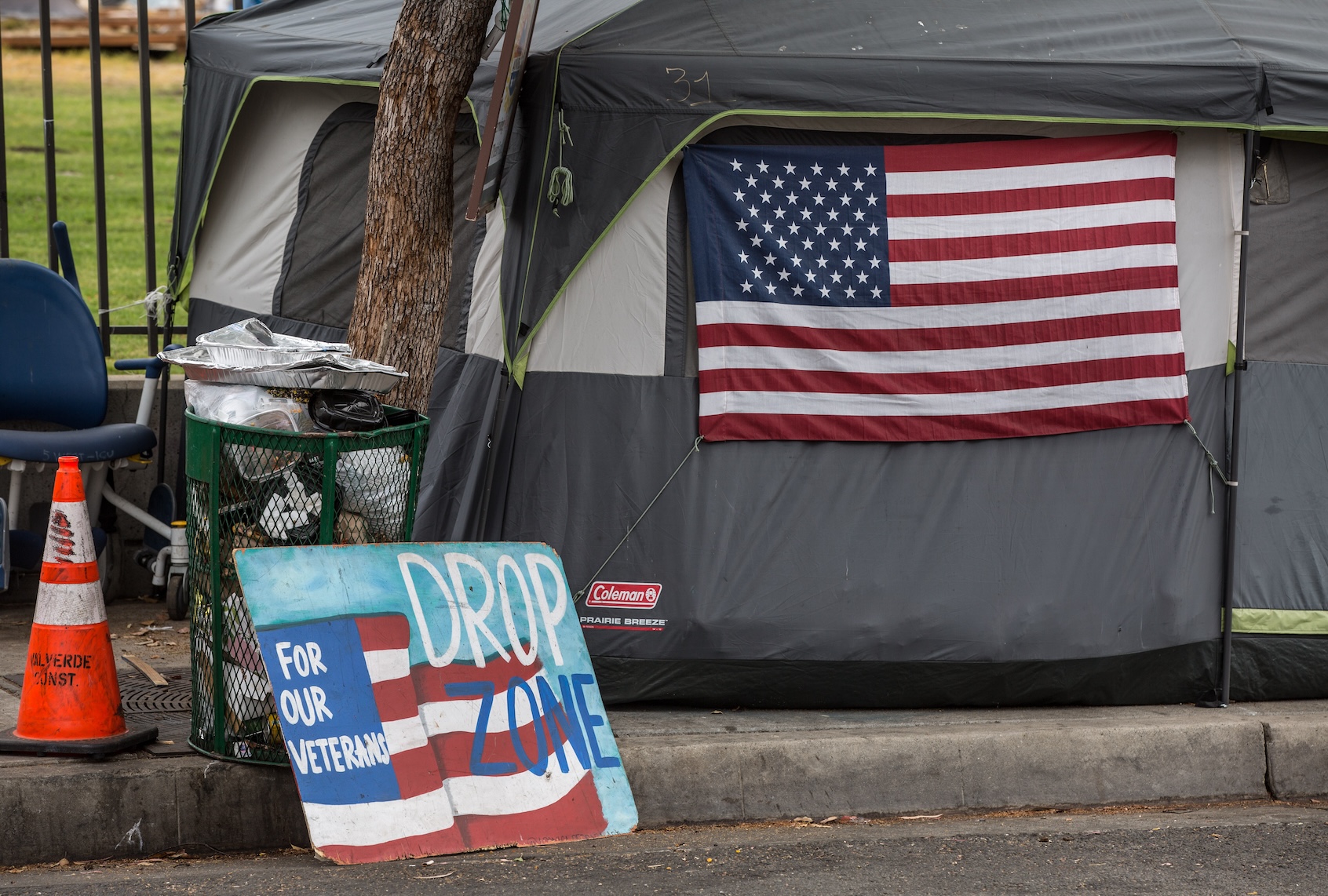
APPLETON, Wis. — A new pilot program launched by the Trump administration to address homelessness among veterans has sparked sharp criticism from advocates and lawmakers, who warn it could undermine trust in the Department of Veterans Affairs and drive those in need further from help.
The initiative, announced on Wednesday, March 11, 2026, partners the Department of Justice with the VA to appoint legal guardianships for homeless veterans deemed unable to care for themselves. Under the program, VA attorneys will be designated as special assistant U.S. attorneys, empowering them to establish conservatorships for roughly 700 such veterans nationwide. This authority includes the option for involuntary commitments to hospitals for mental or physical health treatment.
VA Secretary Doug Collins hailed the partnership in a statement released that day, saying, “Our new partnership with the Justice Department reflects our ongoing commitment to ensuring that every Veteran receives timely, appropriate care, even in complex cases.”
Attorney General Pam Bondi echoed the sentiment in a post on X, formerly Twitter, stating, “This will give Veterans who need it most legal representation and crucial help in complex medical decisions.” She added that the program would provide these veterans “the support and dignity they deserve.”
The announcement follows a 2025 executive order from President Donald Trump aimed at increasing hospitalizations — including involuntary ones — to curb homelessness and what the order described as “disorderly behavior” on streets and in public spaces. According to reporting from the Wall Street Journal, the VA has denied any direct link between that order and the new pilot program, emphasizing instead a focus on delivering “appropriate” care to veterans.
Nationwide, homelessness remains a persistent challenge for former service members. The National Coalition for Homeless Veterans reported nearly 33,000 homeless veterans in 2024, accounting for about 5.3% of the country's overall homeless population, which includes both men and women who served.
Despite these numbers, the veteran homelessness rate has been trending downward. Data from 2025 showed it reaching the lowest level since tracking began in 2009, a decline that advocates attribute to existing support systems rather than more coercive measures.
Critics, however, argue the new program risks reversing that progress by eroding the fragile trust homeless veterans have in government services. Amy Fairweather, policy director at the San Francisco-based veterans' support organization Swords to Plowshares, described the initiative to Salon as “counterproductive.”
“The key to getting veterans off the streets is establishing trust, providing real services,” Fairweather said. “If the perception of the VA is that they’re going to lock you up, then veterans are not going to go for that help. They’ll run away. They value their liberty, just as anyone else does.”
Fairweather acknowledged that legal guardianships and conservatorships can play a role in “extremely severe cases with really good oversight,” but she stressed the need to build on what’s already working. “It’s housing, case management, mental health care, physical health care,” she explained. “We have a system that works. Let’s strengthen it.”
Congressional scrutiny has also emerged quickly. Sen. Richard Blumenthal, D-Conn., the ranking member of the Senate Veterans' Affairs Committee, issued a statement to Salon expressing concern over the policy's rollout. “Legal guardianship should be the last resort for veterans,” Blumenthal said. He added, “Congress and veterans deserve immediate answers before VA and DOJ take any further action.”
Blumenthal's comments highlight broader questions about oversight and implementation, including how the 700 veterans targeted for the program will be identified and whether due process protections will be robust enough to prevent abuse.
Paul Sullivan, national vice chair of Veterans for Common Sense, a Washington, D.C.-based advocacy group, emphasized the importance of trust in his remarks to Salon. “When a homeless Veteran sees a VA employee offering help, a veteran should have a sense of trust that VA assistance will focus on known and effective solutions,” Sullivan said.
Sullivan advocated for a return to proven approaches, particularly the Housing First model. Expanded under President Barack Obama, the program prioritizes providing stable housing as the initial step in a comprehensive care plan, without preconditions like sobriety or treatment compliance. Since 2012, it has helped settle more than 170,000 veterans into housing and off the streets.
Funding for Housing First was slashed in July 2025 at the direction of the Trump administration, which labeled it “a terrible model.” Sullivan warned that shifting toward “a one-size-fits-all immediate institutionalization” could backfire. “If the VA dramatically changes policy away from the proven and comprehensive assistance... then Veterans may avoid VA employees,” he told Salon.
The pilot program's scope is limited to 700 veterans initially, but its success or failure could influence broader VA policies. Advocates like Fairweather point to the recent decline in homelessness — down to historic lows in 2025 — as evidence that voluntary, trust-based services are effective. They fear the guardianship approach might deter veterans from seeking help altogether, exacerbating isolation and vulnerability.
On the other side, administration officials maintain the program targets only those in dire need, filling gaps in a system strained by complex cases. Bondi's office has not yet released details on selection criteria or monitoring mechanisms, but sources within the DOJ indicated to reporters that training for VA attorneys would begin next month in Washington.
As debates intensify, the Senate Veterans' Affairs Committee has scheduled a hearing for late March to probe the program's foundations and potential impacts. Blumenthal's office confirmed the senator plans to question VA and DOJ representatives on safeguards against overreach.
For the estimated 33,000 veterans still facing homelessness, the stakes are high. While the Trump administration frames this as a bold step toward dignity and care, critics see it as a step backward from models that have demonstrably reduced numbers on the streets. The coming weeks will likely see more voices weigh in, from Capitol Hill to veterans' halls across the country.
In Appleton, local VA outreach coordinator Maria Gonzalez told The Appleton Times that front-line workers are monitoring the national developments closely. “We've seen trust issues before,” Gonzalez said. “Our goal here is to keep connecting vets to housing and services without fear.” She noted that Wisconsin reported about 1,200 homeless veterans in the latest HUD count, a figure down 10% from 2024.
The program's rollout comes amid ongoing budget battles over VA funding. The 2026 federal budget proposal includes a modest increase for veteran homelessness initiatives, but cuts to programs like Housing First remain a point of contention. Lawmakers from both parties have signaled interest in bipartisan solutions, though partisan divides over the Trump executive order linger.
Ultimately, the effectiveness of this pilot may hinge on balancing intervention with autonomy. As Sullivan put it, quality health care, benefits access, and stable housing — not institutionalization — form the core of what works. With veterans' advocates mobilizing and Congress demanding transparency, the initiative faces an uphill battle to prove it aids rather than alienates those it aims to serve.