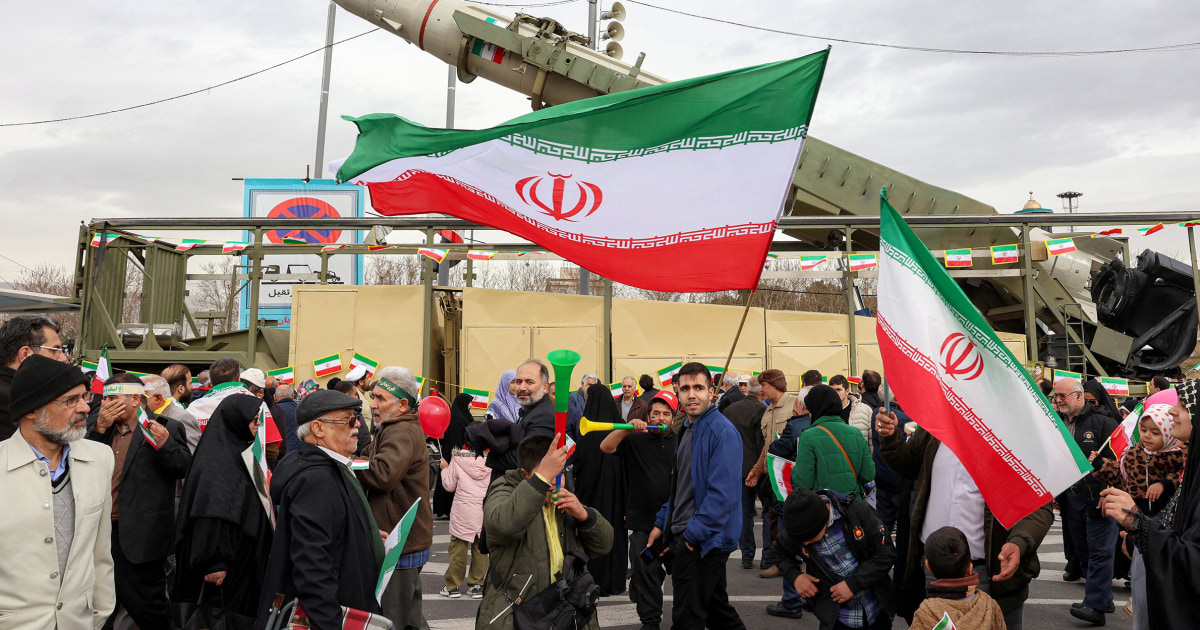
In his State of the Union address on Tuesday, President Donald Trump warned that Iran is actively developing missiles capable of reaching the United States in the near future, marking a notable escalation in his administration's rhetoric toward Tehran. Speaking to a joint session of Congress in Washington, D.C., Trump stated, “They’ve already developed missiles that can threaten Europe and our bases overseas, and they’re working to build missiles that will soon reach the United States of America.” The comments, delivered amid ongoing tensions in the Middle East, represent the first time the president or any U.S. official has publicly described Iran's missile program as posing an imminent threat to the American homeland through intercontinental ballistic missiles, or ICBMs.
U.S. intelligence assessments, however, paint a more measured picture of Iran's capabilities. A Defense Intelligence Agency report released in 2024 concluded that Iran possesses space launch vehicles that could potentially be adapted into a militarily viable ICBM by 2035, should Tehran choose to pursue such a program—a timeline of about 10 years from now. A U.S. official, speaking anonymously to NBC News, acknowledged that Iran has been advancing its missile technology for years but emphasized there was no evidence of sudden breakthroughs that would accelerate this process dramatically.
Secretary of State Marco Rubio, addressing reporters during a trip to the Caribbean, declined to provide a specific timeline for Iran's progress but affirmed the regime's ambitions. “I won’t speculate as to how far away they are, but they are certainly trying to achieve—and this is not new—they’re trying to achieve intercontinental ballistic missiles,” Rubio said. He pointed to Iran's recent satellite launches and range extensions on existing missiles as indicators of its trajectory. “You’ve seen them try to launch satellites into space,” Rubio added. “You’ve seen them ... increasing the range of the missiles they have now, and clearly they are headed in the pathway to one day being able to develop weapons that could reach the continental U.S.”
The White House defended Trump's remarks as a necessary alert to national security risks. Spokesperson Anna Kelly told reporters, “President Trump is absolutely right to highlight the grave concern posed by Iran, a country that chants ‘death to America,’ possessing intercontinental ballistic missiles.” This stance aligns with broader administration efforts to pressure Iran, including through sanctions and support for allies like Israel, which engaged in a 12-day war with Tehran in June that targeted Iran's ballistic missile stockpiles.
Iran's current arsenal includes medium-range ballistic missiles with ranges of 1,000 to 3,000 kilometers—approximately 621 to 1,864 miles—sufficient to strike targets across the Middle East and portions of Europe but falling short of intercontinental reach. Those weapons were among the targets during the June conflict with Israel, which disrupted but did not halt Iran's program. Tehran has consistently denied pursuing ICBMs, with Foreign Affairs Ministry spokesman Esmaeil Baghaei dismissing Trump's speech as filled with “big lies.” Iran's U.N. mission did not respond to requests for further comment on the matter.
Experts offered differing views on the immediacy of the threat. Daryl Kimball, executive director of the nonprofit Arms Control Association, described Trump's portrayal as “an exaggeration.” In an interview, Kimball noted, “Iran has ballistic missiles that can reach targets in the region. They don’t have an intercontinental ballistic missile capability, and even if they did, they don’t have a nuclear weapon to put on top that system.” He added, “Trump seems to be seeking to exaggerate the threat posed by Iran, both in terms of the scope and the imminence.”
On the other hand, Behnam Ben Taleblu, senior director of the Iran program at the Foundation for Defense of Democracies think tank, highlighted Iran's resilience despite obstacles. “Despite the setbacks imposed on the regime’s missile program through sabotage, sanctions and strikes, it continues to move ahead, even with one arm tied behind its back,” Taleblu said. He pointed to post-war developments, including “Iran’s testing of at least two space launch vehicles after the 12-day war,” which he said “should ring the alarm bell about the regime’s intentions here.”
Israeli Prime Minister Benjamin Netanyahu echoed concerns about Iran's long-range ambitions during an October interview with commentator Ben Shapiro. “Iran can blackmail any American city,” Netanyahu asserted. “People don’t believe it. Iran is developing intercontinental missiles with a range of 8,000 kilometers; add another 3,000 and they can get to the East Coast of the U.S.” Netanyahu's comments reflect Israel's aggressive posture toward Iran, including the June airstrikes that damaged missile facilities.
The overlap between Iran's civilian space program and potential military applications has long concerned Western analysts. Space launch vehicles, used to place satellites into orbit, share key technologies with ICBMs, such as advanced propulsion and guidance systems. U.S. intelligence agencies have tracked this dual-use potential for decades. A 1999 estimate from U.S. officials predicted Iran could flight-test an ICBM capable of threatening the U.S. by 2010, a forecast that proved overly pessimistic as Tehran has not yet achieved that milestone.
More recent evaluations continue to underscore the risks without declaring an urgent crisis. In a 2024 assessment of global threats, U.S. intelligence agencies stated that Iran's space launch vehicle work “could shorten the timeline to produce an ICBM if Tehran opted to develop one.” Similarly, a joint report from the United Kingdom, France, and Germany in 2024 accused Iran of leveraging its space program as cover for ICBM-related testing.
Forecasting the pace of such programs remains inherently uncertain, as analysts inside and outside government acknowledge the challenges in predicting technological leaps or policy shifts in Tehran. European governments have historically viewed Iran's missile advancements as a regional concern rather than an immediate global one, though they share U.S. worries about proliferation. The June war with Israel, which lasted 12 days and involved bombings of Iranian missile sites, temporarily set back Tehran's efforts but appears to have spurred renewed testing activity.
Trump's remarks come at a time of heightened U.S.-Iran friction, including stalled nuclear talks and accusations of Iranian support for proxy militias in the region. By framing the missile threat as “soon” to materialize, the president may be laying groundwork for tougher measures, such as additional sanctions or military posturing, though it was unclear from the speech whether new intelligence prompted the urgency. U.S. military commanders have not publicly echoed the imminent danger assessment, sticking to longer-term projections.
Broader implications extend to global nonproliferation efforts. If Iran were to develop an ICBM, it could destabilize alliances in the Middle East and beyond, potentially prompting an arms race among Gulf states. Experts like Kimball stress that Iran's lack of nuclear warheads limits the immediate danger, but Taleblu and others warn that unchecked missile expansion could change that calculus over time.
As Washington weighs its next steps, the discrepancy between Trump's warnings and intelligence timelines highlights ongoing debates within the national security community. Officials have not clarified whether recent assessments have shifted, leaving questions about the basis for the president's claims. For now, Iran's program continues to evolve, with satellite launches and missile tests serving as barometers of its ambitions.
Byline: Robert Taylor, The Appleton Times