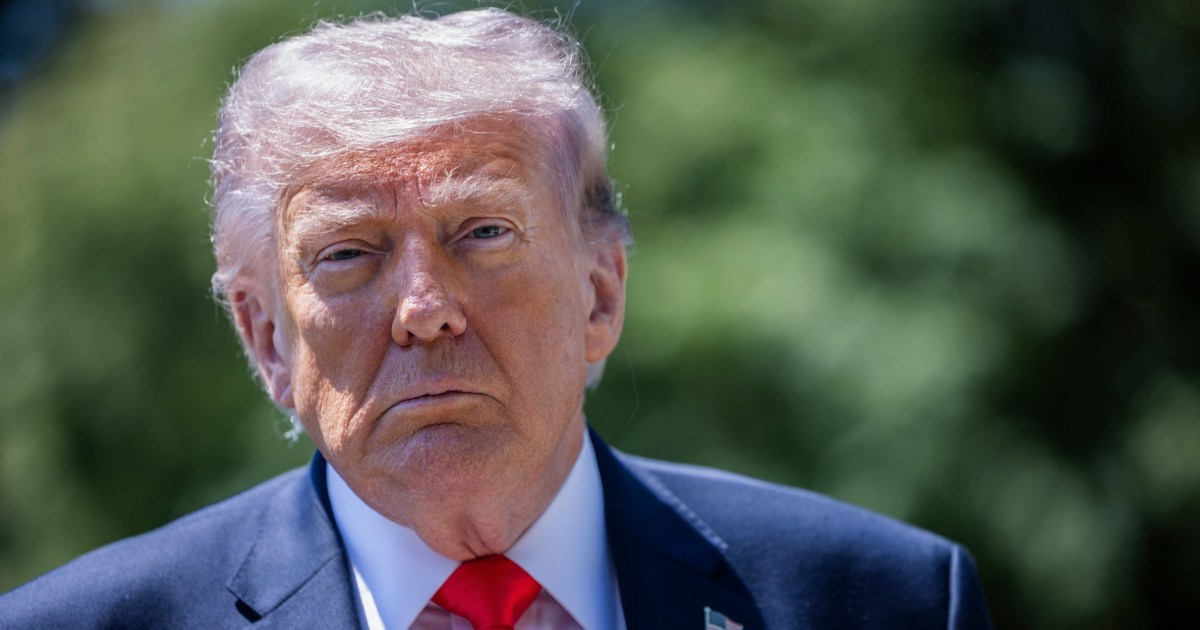
PALM BEACH, Fla. — President Donald Trump announced Saturday that he is reviewing a new proposal from Iran aimed at ending the ongoing conflict, but expressed deep skepticism about its viability. Speaking to reporters at Palm Beach International Airport, Trump indicated he would soon decide whether to accept or reject the offer, which comes amid heightened tensions in the Strait of Hormuz and growing domestic pressure for congressional oversight of military actions.
In a post on Truth Social, Trump wrote, "I will soon be reviewing the plan that Iran has just sent to us, but can’t imagine that it would be acceptable in that they have not yet paid a big enough price for what they have done to Humanity, and the World, over the last 47 years." The president's remarks underscore his reluctance to ease pressure on Tehran without significant concessions, a stance he has maintained throughout the weeks-long standoff that escalated in April.
The Iranian proposal, as described by U.S. officials, includes commitments to reopen shipping lanes in the Strait of Hormuz and lift the American blockade, while deferring discussions on Iran's nuclear program to future negotiations. Trump, who on Friday described himself as "not satisfied" with an initial outline, told reporters Saturday that he had received only a conceptual summary until now. "They told me about the concept of the deal," Trump said. "They’re going to give me the exact wording now."
Background on the conflict traces back to early April, when U.S. forces imposed a blockade on the Strait of Hormuz following reports of Iranian aggression in the region. Iran responded by blocking nearly all international shipping through the vital waterway, except for its own vessels, a closure that has persisted for more than two months. The strait, a chokepoint for roughly 20% of the world's oil supply, has seen dramatic disruptions, with global energy markets reacting sharply to the impasse.
Trump has portrayed the U.S. enforcement as non-confrontational, calling the blockade "friendly" during his airport remarks. "Nobody's even challenging it," he added, highlighting the robust American naval presence securing the area. The U.S. Navy has deployed over 100 fighter and surveillance aircraft, two carrier strike groups, and more than a dozen ships to maintain the operation. Just last month, a Navy destroyer intercepted and seized an Iranian-flagged cargo ship attempting to breach the perimeter, an incident that further strained relations.
Military briefings have played a central role in Trump's decision-making. On Thursday, top officials outlined options for both naval actions in the strait and potential ground operations inside Iran. The president has kept the door open to resuming airstrikes, which were paused under a temporary ceasefire that took effect on April 8. Reflecting on his choices Friday, Trump said, "Do we want to go and just blast the Hell out of them and finish them forever, or do we want to try and make a deal. Those are the options." He emphasized his preference for diplomacy, stating he would "prefer not" to escalate militarily.
The diplomatic overture from Iran arrives at a precarious moment, as the U.S. involvement in the region approaches key legal thresholds. Under the War Powers Resolution of 1973, the president is required to seek congressional authorization for hostilities after 60 days. American military operations in Iran hit that milestone earlier this week, prompting renewed calls from lawmakers for oversight.
Trump has dismissed the need for approval, arguing that the April 8 ceasefire resets the clock and exempts ongoing activities from the resolution's requirements. His administration maintains that the measures are defensive and do not constitute a full-scale war. However, critics on Capitol Hill, primarily Democrats, have pushed back vigorously, introducing resolutions to halt operations without legislative consent.
The Senate's latest effort came Thursday, when it voted for a sixth time on a War Powers measure to end U.S. military actions in Iran pending a congressional vote. The resolution fell short, failing 47-50. All Senate Democrats supported it except for Sen. John Fetterman of Pennsylvania, who broke ranks to vote against. On the Republican side, Sens. Susan Collins of Maine and Rand Paul of Kentucky joined the minority in favor, citing concerns over executive overreach.
Supporters of the resolution, including many Democrats, argue that the prolonged engagement risks entangling the U.S. in another Middle East quagmire without public or legislative buy-in. "This is not just about Iran; it's about checking the power of any president to commit our forces without Congress," said Sen. Bernie Sanders, I-Vt., one of the bill's co-sponsors, in a statement following the vote. Republican leaders, meanwhile, have rallied behind Trump, praising his firm stance against what they describe as Iranian provocation.
The blockade's economic toll has been significant. Since April 13, when the U.S. initiated its restrictions, international trade through the strait has plummeted, affecting oil exports from Gulf nations and driving up global fuel prices. Iran's own economy, already strained by sanctions, has suffered from the self-imposed shipping halt, which Tehran officials claim is a necessary response to American aggression.
From Iran's perspective, the proposal represents a potential off-ramp from escalation. Iranian Foreign Minister Hossein Amir-Abdollahian reportedly conveyed the offer through back channels, emphasizing Tehran's willingness to de-escalate maritime tensions while protecting its sovereignty. However, details on the nuclear deferral have raised eyebrows among non-proliferation experts, who warn that postponing talks could allow Iran to advance its program unchecked.
As Trump pores over the fine print, allies and adversaries alike are watching closely. European partners, who have urged restraint, welcomed the diplomatic signal but expressed caution about the nuclear component. "Any deal must address the full spectrum of concerns, including proliferation risks," a spokesperson for the European Union said in Brussels on Saturday.
Looking ahead, the president's decision could reshape the conflict's trajectory. Acceptance might pave the way for broader talks, potentially easing blockades and stabilizing energy markets. Rejection, however, could lead to renewed strikes, further isolating Iran and intensifying congressional debates. With the 60-day mark passed and midterm elections looming, the White House faces mounting scrutiny to balance security imperatives with political realities.
For now, Trump has promised a swift response, telling reporters he would update the public "soon." As the sun set over Palm Beach on Saturday, the weight of the choice hung in the humid Florida air, a reminder of the high stakes in this latest chapter of U.S.-Iran relations.