WASHINGTON — President Donald Trump signaled on Monday his willingness to consider U.S. military strikes inside Mexico as part of an aggressive push to combat drug cartels smuggling narcotics across the border, a stance that could dramatically escalate tensions with America's southern neighbor.
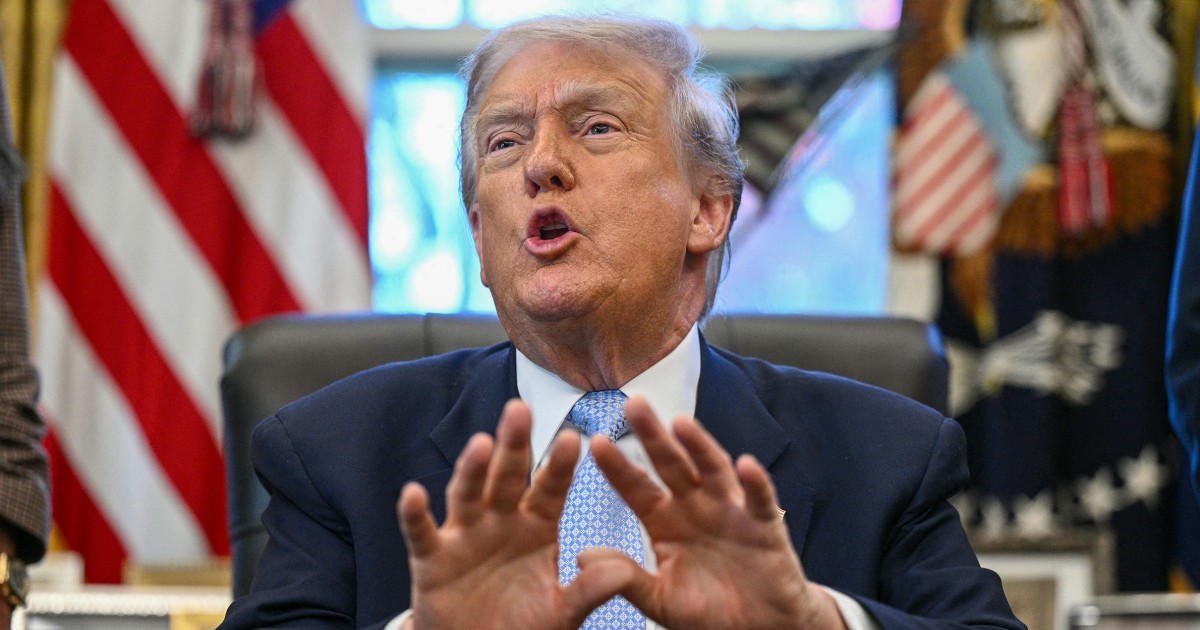
Speaking to reporters in the Oval Office, Trump responded to questions about potential strikes or deploying American troops into Mexico by saying such actions would be “OK with me.” He elaborated, “Would I launch strikes in Mexico to stop drugs? OK with me, whatever we have to do to stop drugs. Mexico is — look, I looked at Mexico City over the weekend. There’s some big problems over there.”
The president's comments came amid ongoing concerns over the flow of fentanyl and other drugs into the United States, which Trump described as akin to a war on American soil. “We’ve stopped the waterways, but we know every route. We know every route, we know the addresses of every drug lord,” he said. “We know their address, we know their front door. We know everything about every one of them. They’re killing our people. That’s like a war. Would I do it? I’d be proud to.”
Trump declined to specify whether any strikes would require Mexico's permission, stating he “wouldn’t answer that question.” He noted, however, that he has been in communication with Mexican officials, adding that they know “how I stand.” The Mexican Embassy in Washington did not immediately respond to requests for comment on the remarks.
According to reporting by NBC News earlier this month, the Trump administration has already begun planning a new campaign that could involve sending U.S. troops and intelligence officers into Mexico to target drug cartels directly. This initiative reflects a hardening U.S. posture toward cross-border drug trafficking, which has claimed tens of thousands of American lives annually through overdoses and related violence.
Mexican President Claudia Sheinbaum has firmly opposed any unilateral U.S. military involvement in her country. She has repeatedly stated that U.S. military action without Mexico's permission “will not happen,” emphasizing sovereignty and bilateral cooperation as the preferred path forward.
During the Oval Office exchange, Trump shifted midway through his response on Mexico to address operations in Colombia, another key player in the regional drug trade. He expressed enthusiasm for dismantling cocaine production facilities there, saying, “Colombia is — has cocaine factories, where they make cocaine. Would I knock out those factories? I would be proud to do it, personally.”
The Colombian Embassy in Washington also did not provide an immediate comment on Trump's statements. This comes against a backdrop of strained relations between the U.S. and Colombia's leftist President Gustavo Petro. The Trump administration has conducted nearly two dozen strikes on boats allegedly carrying narcotics in the region, including areas near Venezuela, resulting in more than 80 deaths, among them Colombian citizens.
These operations have drawn sharp criticism from Petro, who has denounced the U.S. actions as overreach. The strikes contributed to a diplomatic rift, with Trump labeling Petro a “drug leader” and the U.S. imposing unusual sanctions on the Colombian president. Petro's government has argued that such military interventions exacerbate regional instability without addressing root causes like poverty and corruption.
Trump's remarks on Monday also touched on Venezuela, where the administration has intensified pressure on President Nicolás Maduro's regime. On Sunday, Trump indicated he was considering talks with Maduro, even as the U.S. designated the Cartel de los Soles — which officials allege is operated by Maduro's inner circle — as a foreign terrorist organization.
When asked in the Oval Office whether he would rule out deploying U.S. troops on the ground in Venezuela, Trump replied, “I don't rule out anything. We just have to take care of Venezuela.” This reflects a broader strategy of multifaceted pressure on Venezuelan leadership, combining sanctions, designations, and potential military options to curb drug flows and migration from the country.
The context for Trump's comments traces back to his long-standing focus on border security and the opioid crisis. Since taking office, the administration has ramped up enforcement along the U.S.-Mexico border, including enhanced surveillance and interdiction efforts. Fentanyl, in particular, has been a focal point, with the synthetic opioid responsible for a significant portion of the more than 100,000 overdose deaths reported in the U.S. each year, according to federal health data.
Experts on U.S.-Latin America relations have noted that Trump's rhetoric aligns with his first-term policies, which included threats of tariffs and military action to force Mexico's hand on migration and drugs. During that period, Mexico deployed its own National Guard to the border in response to U.S. pressure, though cartel violence has persisted, with over 30,000 homicides annually in Mexico linked to organized crime.
From the Mexican perspective, officials have stressed the need for joint intelligence-sharing and economic aid rather than unilateral strikes, which they warn could inflame anti-American sentiment and empower cartels further. Sheinbaum, who assumed office in October 2024, has continued her predecessor's emphasis on “hugs, not bullets” in combating crime, though critics argue this approach has yielded limited results against powerful groups like the Sinaloa and Jalisco New Generation cartels.
In Colombia, Petro's administration has pursued crop substitution programs to wean farmers off coca cultivation, but U.S.-backed aerial fumigations and strikes have complicated these efforts. The deaths from the recent boat strikes, including Colombian nationals, have fueled protests and calls for accountability from human rights groups, who question the proportionality of such operations.
Venezuela remains a flashpoint, with the Maduro government accused by the U.S. of facilitating drug trafficking through state entities. The Cartel de los Soles designation, announced earlier this year, allows for broader sanctions and asset freezes, but analysts say direct military involvement could draw the U.S. into a protracted conflict amid Venezuela's economic collapse and humanitarian crisis.
Trump's openness to strikes across multiple countries underscores a hawkish approach to the Western Hemisphere's drug trade, potentially setting the stage for heated diplomatic exchanges. As the administration weighs next steps, allies and adversaries alike are watching closely for signs of escalation. Mexican and Colombian leaders have signaled resistance, while U.S. officials maintain that decisive action is essential to protect American lives from the scourge of drugs pouring across the borders.
Raquel Coronell Uribe, a breaking news reporter who covered the story, highlighted the unprecedented nature of Trump's candor on military options. With no immediate responses from the affected embassies, the full implications of these statements remain unclear, but they are likely to dominate discussions at upcoming bilateral meetings.