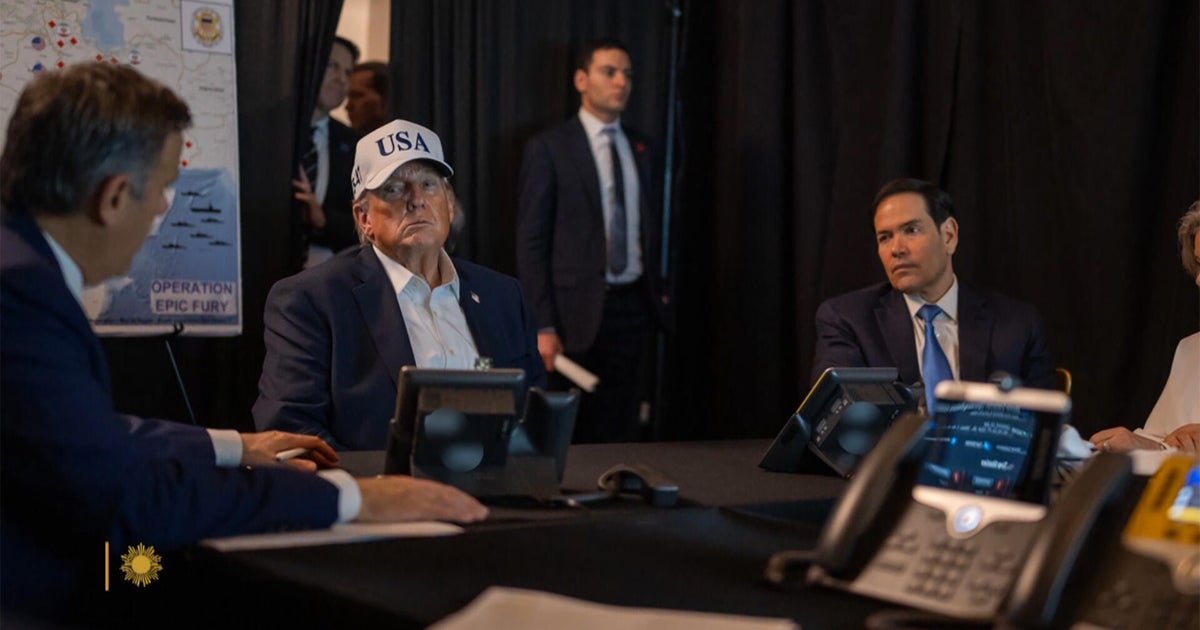
WASHINGTON — President Donald Trump announced on Saturday that U.S. military strikes against Iran would continue 'as long as necessary,' escalating tensions in the Middle East amid ongoing negotiations over Tehran's nuclear program. The strikes, which targeted Iranian military facilities, marked a significant shift in the administration's approach to dealing with Iran, coming just days after diplomatic talks appeared to be making tentative progress.
According to a statement from the White House, the airstrikes were launched early Saturday morning from U.S. Navy vessels in the Persian Gulf. The operation, codenamed 'Operation Iron Resolve,' involved more than a dozen Tomahawk cruise missiles striking sites near Tehran and in the western province of Kermanshah. Officials said the targets included missile production facilities and command centers linked to Iran's Revolutionary Guard Corps.
Trump addressed the nation from the Oval Office later that afternoon, flanked by Secretary of Defense Mark Esper and Secretary of State Mike Pompeo. 'We will not allow Iran to threaten the security of the United States and our allies,' Trump said. 'These strikes will continue as long as necessary to degrade their ability to develop nuclear weapons and support terrorism.'
The president's remarks came hours after reports emerged of the initial barrage. Iranian state media confirmed explosions in several locations but downplayed the damage, claiming that air defenses had intercepted most incoming missiles. 'This act of aggression will not go unanswered,' said Iranian Foreign Minister Javad Zarif in a televised address from Tehran. 'The United States has chosen the path of war over diplomacy.'
Background to the conflict traces back to 2018, when Trump withdrew the U.S. from the Joint Comprehensive Plan of Action, the 2015 nuclear deal negotiated under President Barack Obama. Since then, Iran has resumed uranium enrichment activities, prompting renewed sanctions and diplomatic isolation. Recent months saw secret talks in Vienna between U.S. and Iranian envoys, mediated by European allies, aimed at reviving elements of the agreement.
One European diplomat, speaking on condition of anonymity, expressed shock at the timing of the strikes. 'We were on the verge of a breakthrough on inspections,' the diplomat said. 'This could set back negotiations by years and embolden hardliners in Tehran.'
Military analysts offered mixed assessments of the strikes' effectiveness. 'The precision of these attacks likely disrupted key infrastructure,' said retired General David Petraeus in an interview with CBS News. 'But Iran's nuclear program is deeply buried and dispersed, so this is more of a warning shot than a knockout blow.'
On the other side, Iranian officials reported no casualties from the strikes, though unconfirmed reports from local sources in Kermanshah mentioned injuries among civilian workers near one site. The Iranian Red Crescent Society stated that emergency teams were deployed, but provided no further details.
International reaction was swift and divided. Israeli Prime Minister Benjamin Netanyahu praised the U.S. action, calling it 'a necessary step to prevent a nuclear-armed Iran.' In contrast, Russian President Vladimir Putin condemned the strikes as 'illegal aggression,' warning of potential retaliation against U.S. interests in the region.
At the United Nations, Secretary-General Antonio Guterres called for an emergency Security Council meeting. 'Escalation benefits no one,' Guterres said in a statement. 'We urge all parties to return to the negotiating table.'
Domestically, the strikes drew sharp criticism from Democrats. House Speaker Nancy Pelosi accused the administration of bypassing Congress. 'The president cannot unilaterally commit us to war,' Pelosi said in a statement. 'This reckless move endangers American lives and our global standing.'
Republican leaders, however, rallied behind Trump. Senate Majority Leader Mitch McConnell described the action as 'decisive leadership' in a Fox News appearance. 'Iran has been testing our resolve for too long,' McConnell said. 'It's time they faced consequences.'
As the sun set on Washington, markets reacted nervously to the news. Oil prices surged more than 5 percent in after-hours trading, reflecting fears of broader disruptions in the Strait of Hormuz, through which a fifth of the world's oil passes. Analysts at Goldman Sachs projected potential spikes to $80 per barrel if tensions persist.
Looking ahead, the administration faces mounting pressure to define the endgame. White House Press Secretary Kayleigh McEnany told reporters that further strikes could involve ground support from allied forces, though no timeline was given. Meanwhile, Iranian Supreme Leader Ayatollah Ali Khamenei vowed in a rare public statement that 'the Islamic Republic will defend itself by all means necessary.'
The coming days will be critical as diplomats scramble to contain the fallout. With negotiations now in tatters, the risk of a wider conflict looms large, testing the fragile balance of power in the Middle East. For now, the world watches as the U.S. and Iran stand on the brink.