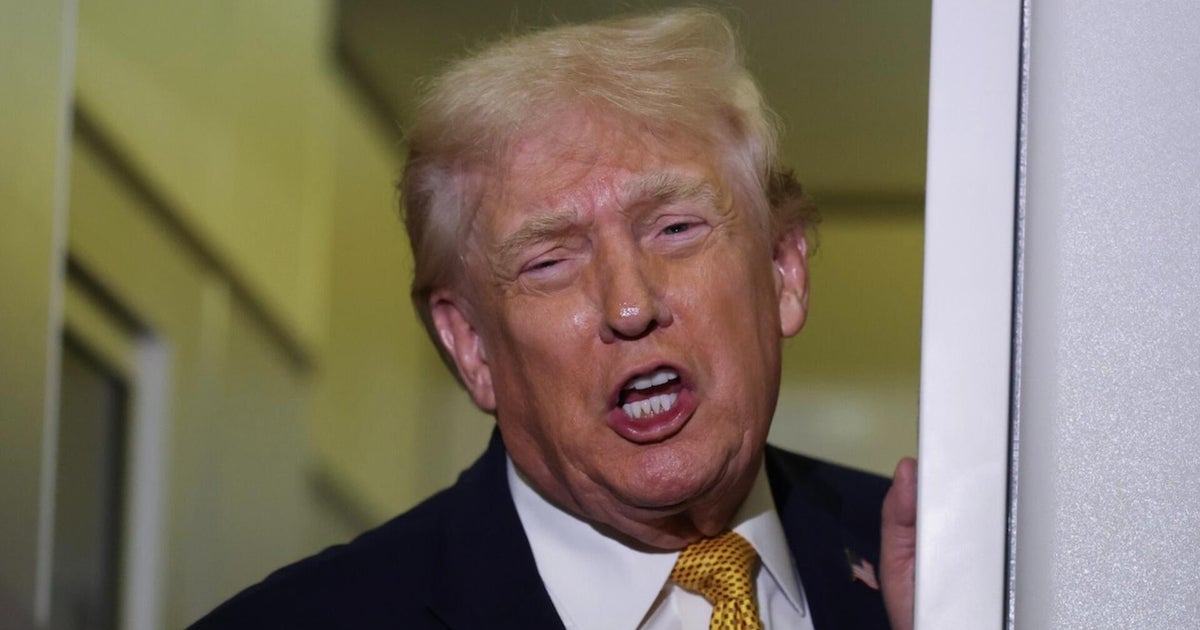
In a bold statement amid escalating tensions in Venezuela, President Donald Trump declared 'we're in charge' as Delcy Rodríguez, the vice president under Nicolás Maduro, was sworn in as the country's acting president on Thursday. The ceremony took place in Caracas, marking a significant moment in the ongoing political crisis that has gripped the South American nation for years. Rodríguez's ascension comes at a time when international pressure on Maduro's regime has intensified, with the United States and several allies refusing to recognize Maduro's legitimacy following disputed elections.
According to reports from CBS News, the swearing-in occurred in the early afternoon local time at the Federal Legislative Palace in Caracas. Rodríguez, a longtime ally of Maduro, took the oath before a small gathering of government officials and supporters, vowing to uphold the constitution and defend Venezuela's sovereignty. 'I assume this responsibility with the full commitment to the Bolivarian Revolution,' Rodríguez said during the brief ceremony, as broadcast on state television.
President Trump's remarks, delivered during a White House press briefing shortly after the event, appeared to directly reference the developments in Venezuela. 'We're in charge now,' Trump stated, according to a CBS News video report. He further warned that the U.S. could take action against Rodríguez if she continued to support what he called Maduro's 'dictatorship.' 'If she steps out of line, we'll go after her,' Trump added, emphasizing the administration's stance on imposing additional sanctions.
The context of Rodríguez's swearing-in stems from Venezuela's deepening political turmoil. Nicolás Maduro has held power since 2013, but his re-election in May 2018 was widely condemned as fraudulent by the international community. In January 2019, opposition leader Juan Guaidó invoked a constitutional clause to declare himself acting president, a move recognized by the U.S., the European Union, and over 50 countries. However, Maduro has maintained control through military loyalty and alliances with Russia, China, and Cuba.
Rodríguez, 50, has been a key figure in Maduro's inner circle. As vice president since 2018, she has overseen foreign policy and economic matters, often serving as Maduro's public face during international negotiations. Her role became more prominent after the U.S. imposed sanctions on her in 2020, barring her from American soil under the so-called 'Delcy Rule,' named after an infamous airport incident in Spain where she was denied entry.
U.S. officials have viewed Rodríguez's elevation with skepticism. A State Department spokesperson, speaking on condition of anonymity, told reporters that the move 'does not change the reality on the ground' and reaffirmed support for Guaidó as the legitimate interim leader. 'This is just another maneuver by the Maduro regime to cling to power,' the official said. Meanwhile, Maduro himself congratulated Rodríguez in a televised address, calling her 'a warrior for the people' and promising continued resistance against 'imperialist aggression.'
The timing of the swearing-in coincides with renewed U.S. efforts to isolate Maduro. Just last week, the Trump administration announced new sanctions targeting Venezuelan oil exports, aiming to cut off revenue streams that fund the regime. According to the U.S. Treasury Department, these measures have already reduced Venezuela's oil income by over 90% since 2019, exacerbating the country's humanitarian crisis where hyperinflation and food shortages affect millions.
International reactions were swift. The United Nations Secretary-General António Guterres urged all parties to pursue dialogue, stating in a statement from New York that 'escalation only deepens the suffering of Venezuelans.' Brazil's President Jair Bolsonaro, a Trump ally, echoed the U.S. position, tweeting that Rodríguez's role 'legitimizes a fraudulent government.' In contrast, Russian Foreign Minister Sergey Lavrov dismissed Trump's comments as 'arrogant interference,' defending Maduro's administration as sovereign.
Inside Venezuela, the opposition decried the event as illegitimate. Guaidó, speaking from his office in Caracas, called it 'a desperate act by a failing dictatorship.' He referenced Article 233 of the Venezuelan constitution, which allows for the vice president to assume acting duties only under specific conditions, none of which he claimed were met. Supporters of the opposition held small protests in cities like Maracaibo and Valencia, though security forces dispersed crowds with tear gas, according to eyewitness accounts reported by local media.
Human rights organizations expressed concern over potential crackdowns. Amnesty International noted in a press release that Rodríguez has been linked to the suppression of dissent, including the arrest of over 15,000 opposition figures since 2014. 'Her leadership could signal an even harder line against civil liberties,' said Erika Guevara-Rosas, Americas director at Amnesty. On the economic front, Venezuela's GDP has contracted by more than 75% since 2013, with over 7 million people fleeing the country as refugees, per United Nations estimates.
Trump's 'we're in charge' remark drew criticism from Democrats in Congress. House Speaker Nancy Pelosi questioned the phrasing during a Capitol Hill briefing, saying it 'undermines diplomatic efforts and risks further instability.' She advocated for multilateral approaches through the Organization of American States. Republican Senator Marco Rubio, a vocal critic of Maduro, praised Trump's assertiveness, tweeting, 'Time to turn up the pressure on this corrupt regime.'
Looking ahead, analysts suggest Rodríguez's tenure as acting president may be short-lived or symbolic. Political expert David Smilde from Tulane University told CBS News that 'without broader international recognition, this changes little in the power dynamics.' The U.S. has hinted at possible military aid to opposition forces, though Trump has stopped short of committing troops. Negotiations brokered by Norway earlier this year stalled, leaving the crisis unresolved.
The broader implications extend beyond Venezuela's borders. The country's vast oil reserves, once the largest in the world, have become a geopolitical flashpoint. With global energy prices fluctuating, any shift in Venezuelan production could impact markets worldwide. Additionally, the migration wave has strained neighboring countries like Colombia, which hosts over 1.8 million Venezuelan refugees.
As the situation evolves, eyes will be on upcoming meetings at the United Nations General Assembly in September, where Venezuelan representatives are expected to lobby for support. Rodríguez has already scheduled talks with allies in Moscow and Beijing. For now, Trump's warning hangs in the air, underscoring the high stakes in this protracted standoff. Venezuelans, caught in the middle, continue to endure blackouts, medicine shortages, and political uncertainty, hoping for a resolution that restores stability to their nation.
In the end, the swearing-in of Delcy Rodríguez serves as a reminder of Venezuela's fractured leadership. While Maduro's camp celebrates continuity, the opposition and much of the world see it as defiance against democratic norms. With U.S. pressure mounting, the path forward remains unclear, but one thing is certain: the crisis shows no signs of abating anytime soon.