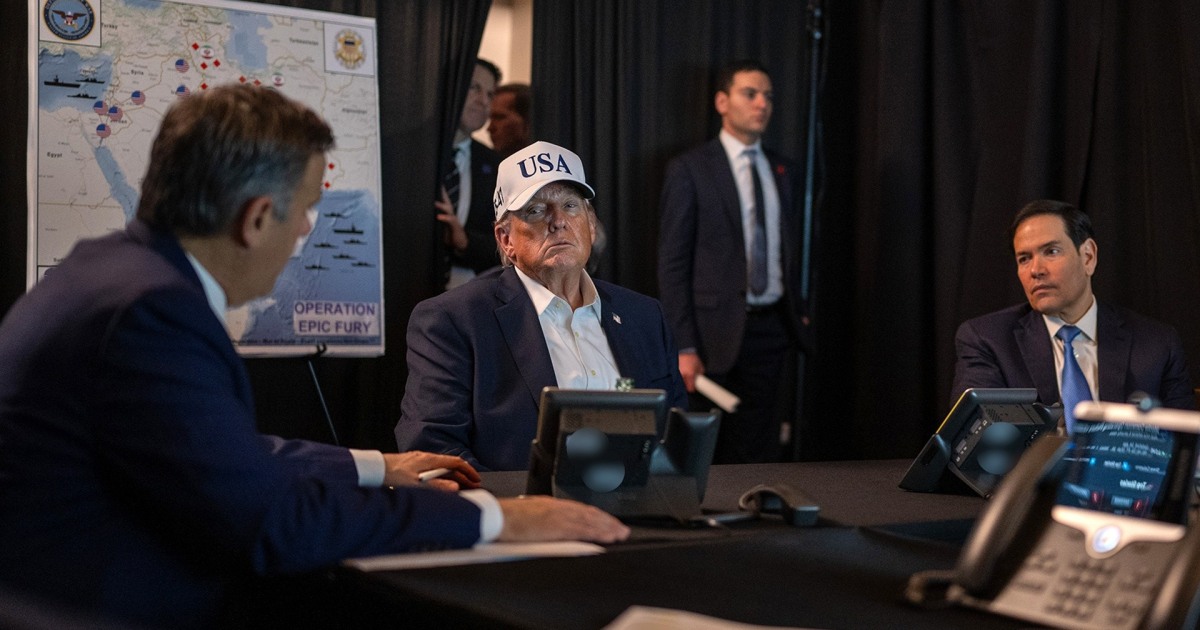
In a candid interview aired on Sunday, President Donald Trump defended the U.S. decision to join Israel in launching targeted strikes against Iran, claiming the operation resulted in the deaths of a significant portion of the country's leadership. The remarks, delivered to Meet the Press moderator Kristen Welker, come amid escalating tensions in the Middle East, where longstanding U.S.-Iran hostilities have boiled over into direct military action. Trump, speaking from the White House on March 1, 2026, described the strikes as a necessary response to Iranian provocations, including recent attacks on U.S. allies and threats to regional stability.
The joint operation, which took place late last week in Tehran and several surrounding provinces, was first reported by Israeli officials on February 25, 2026. According to the Israeli Defense Forces, the strikes targeted high-ranking members of Iran's Revolutionary Guard Corps and key figures in the nation's nuclear program. Trump, in his interview, emphasized the precision of the mission, stating that it eliminated a "large amount" of Iran's top leadership without broader civilian casualties. "We took out the bad guys—the ones pulling the strings," Trump said, according to excerpts from the NBC News broadcast.
Kristen Welker, who conducted the one-on-one interview, pressed Trump on the intelligence that prompted the strikes. The president cited classified briefings from U.S. Central Command, alleging that Iran was on the verge of deploying advanced drones against Israeli cities. "They were gearing up for something big, something that would have changed everything," Trump remarked. Welker later joined Sunday TODAY host Willie Geist to unpack the conversation, noting the president's confidence in the operation's success despite international backlash.
Background on the conflict traces back to the Trump administration's withdrawal from the 2015 Iran nuclear deal in 2018, a move that reignited sanctions and proxy wars across the region. Tensions peaked in early 2026 following a series of Iranian missile tests and alleged support for militias in Yemen and Syria. Israeli Prime Minister Benjamin Netanyahu praised the U.S. involvement in a statement released on February 26, calling it a "decisive blow to Iran's axis of terror." Netanyahu's office reported that the strikes destroyed at least three underground facilities believed to house enriched uranium.
From the Iranian perspective, state media outlets condemned the attacks as an act of aggression by "Zionist and American imperialists." Iran's Supreme Leader Ali Khamenei, in a televised address on February 27, vowed retaliation, though he did not specify targets. According to reports from the Iranian news agency IRNA, the strikes killed at least 12 senior officials, including the deputy commander of the Quds Force, though exact numbers remain unconfirmed by independent sources. Iranian officials have disputed U.S. claims of minimal collateral damage, asserting that over 50 civilians were among the dead in Tehran alone.
International reactions have been swift and divided. The United Nations Security Council convened an emergency session on February 28, where Russia's ambassador accused the U.S. and Israel of violating international law. "This is a dangerous escalation that threatens global peace," the ambassador said, according to UN transcripts. China echoed similar sentiments, with its foreign ministry calling for de-escalation and a return to diplomatic channels. In contrast, allies like the United Kingdom and Saudi Arabia expressed support for the strikes, with British Prime Minister Keir Starmer stating that Iran's nuclear ambitions posed an "existential threat."
Domestically, Trump's decision has sparked debate in Washington. Senate Majority Leader Chuck Schumer, a Democrat, criticized the lack of congressional approval, referencing the War Powers Resolution. "The president cannot unilaterally commit American forces to war without oversight," Schumer said in a floor speech on March 1. Republican leaders, however, rallied behind Trump, with House Speaker Mike Johnson hailing the strikes as a fulfillment of campaign promises to confront Iran aggressively.
Military details emerging from the Pentagon paint a picture of a high-tech assault. The operation involved F-35 stealth fighters from U.S. bases in Qatar and Israeli F-15s, supported by drone surveillance. A Pentagon spokesperson confirmed on February 26 that no U.S. personnel were lost, and the mission lasted less than two hours. Satellite imagery released by commercial providers showed smoke rising from sites in Natanz and Fordow, key locations in Iran's nuclear infrastructure.
Experts on Middle East affairs have weighed in with cautious analysis. "While the strikes may have set back Iran's capabilities, they risk galvanizing hardliners in Tehran," said Vali Nasr, a professor at Johns Hopkins University, in an interview with NPR on February 27. Nasr pointed to historical precedents, like the 2020 assassination of General Qasem Soleimani, which temporarily unified Iran against the U.S. but did not deter its regional activities.
Trump, in his Welker interview, addressed potential reprisals head-on. "If they want to test us, they'll regret it," he warned, alluding to bolstered U.S. troop deployments in the Gulf. The president also tied the strikes to broader foreign policy goals, including pressuring Iran to negotiate a new nuclear agreement on American terms. "We're not looking for endless war, but we won't let them build bombs on our watch," Trump added.
The human cost on the ground remains a point of contention. Witnesses in Tehran described chaos in the aftermath, with ambulances rushing through debris-strewn streets. One resident, speaking anonymously to Reuters, said, "The sky lit up like fireworks, but it was terror, not celebration." Iranian health officials reported treating hundreds for injuries, though access for international aid groups has been restricted.
Economically, the strikes have rippled through global markets. Oil prices surged 8% on February 26, reaching $95 per barrel, as traders feared disruptions in the Strait of Hormuz. The U.S. State Department has issued travel warnings for Americans in the region, and several embassies have begun voluntary evacuations.
Looking ahead, the interview signals Trump's intent to maintain a hardline stance. Welker noted that the president showed no signs of regret, framing the action as a victory for deterrence. Yet, with Iran's allies like Hezbollah issuing threats, the coming weeks could see further volatility. Diplomatic efforts, including backchannel talks mediated by Oman, are reportedly underway, though optimism remains low.
As the dust settles, the strikes underscore the fragile balance in the Middle East. For the Trump administration, they represent a bold assertion of power; for critics, a gamble that could ignite a wider conflict. With Congress set to hold hearings next week, the full ramifications—strategic, political, and humanitarian—will continue to unfold.
In Appleton, local veterans' groups gathered on March 1 to discuss the implications, with one organizer telling The Appleton Times, "We support our troops, but pray for peace." The community, like the nation, watches closely as this chapter in U.S.-Iran relations develops.