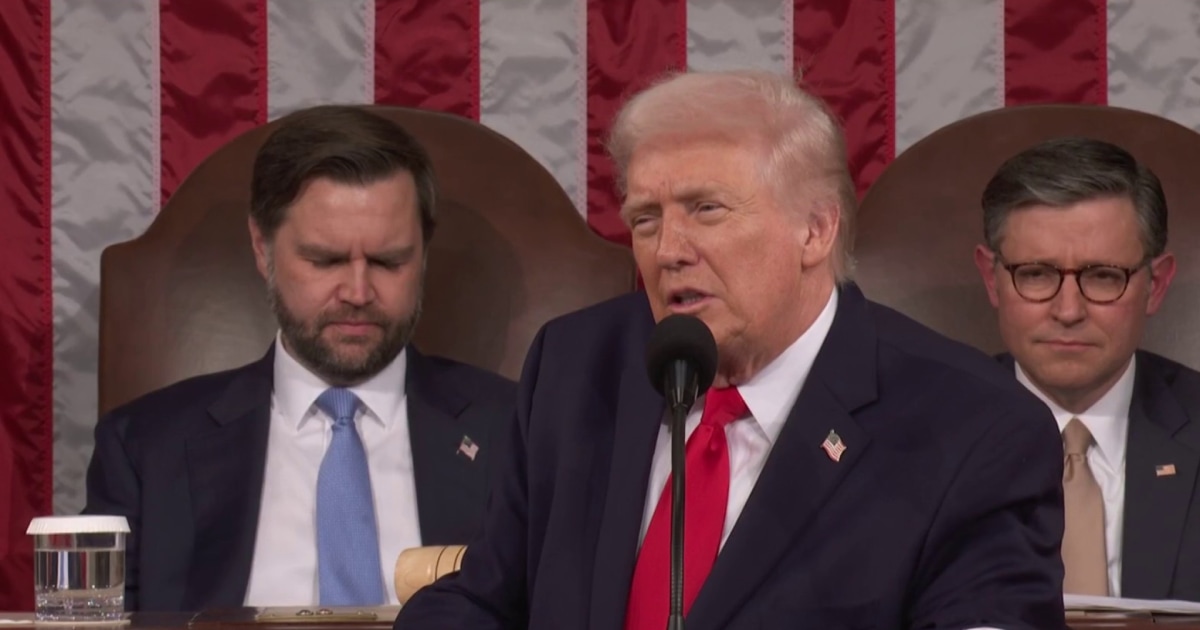
In a poignant moment during his State of the Union address on Tuesday evening, President Donald Trump called on Congress to pass the Dalilah Law, a proposed measure aimed at implementing stricter immigration checks for commercial drivers. Trump highlighted the tragic story of Dalilah Coleman, a young woman from Appleton, Wisconsin, who was fatally struck by an eighteen-wheeler in 2019. The truck's driver was allegedly an undocumented immigrant, according to federal authorities, underscoring what the president described as a critical gap in the nation's immigration and transportation safety systems.
The address, delivered before a joint session of Congress in the U.S. Capitol, drew widespread attention as Trump invited Coleman’s family to the first lady’s box. “Dalilah was just 22 years old when her life was cut short by someone who should never have been on our roads,” Trump said, according to a transcript released by the White House. He went on to propose the Dalilah Law, which would require enhanced background checks, including immigration status verification, for all holders of commercial driver's licenses across the country.
According to NBC News, which covered the speech live, Trump emphasized the need for bipartisan support, stating, “This is not about politics; it’s about protecting American lives from those who enter our country illegally and put our families at risk.” The proposal comes amid ongoing debates over immigration reform, with the Trump administration pointing to rising concerns about border security and the vetting of individuals in sensitive roles like trucking.
Dalilah Coleman’s story first gained national prominence in the summer of 2019. On July 15 of that year, at approximately 2:30 p.m., Coleman was walking along State Highway 26 near Fond du Lac, Wisconsin, when she was hit by a semi-truck traveling at highway speeds. The driver, identified as Miguel Gonzalez, 34, fled the scene but was apprehended later that evening by local law enforcement. Federal immigration officials subsequently confirmed that Gonzalez had entered the U.S. without authorization from Mexico in 2017, according to a Department of Homeland Security statement.
Coleman, a recent graduate of the University of Wisconsin-Oshkosh with a degree in elementary education, was remembered by friends and family as a vibrant aspiring teacher who volunteered at local shelters. Her mother, Sarah Coleman, spoke to reporters outside the Capitol after the address, saying, “We’re grateful President Trump is shining a light on Dalilah’s story. No family should endure what we did because of failed immigration policies.” Sarah Coleman’s words echoed the sentiments expressed by immigration hardliners who have long advocated for tighter controls.
The Dalilah Law, formally introduced in the House of Representatives by Rep. Glenn Grothman (R-Wis.) on Wednesday morning, builds on existing federal regulations under the REAL ID Act and the Commercial Motor Vehicle Safety Act. It would mandate that the Department of Transportation cross-reference commercial driver applications with immigration databases maintained by U.S. Citizenship and Immigration Services. Proponents argue this could prevent similar tragedies, citing statistics from the American Trucking Associations that show over 4,000 fatal crashes involving large trucks annually, though they note immigration status is rarely a factor in official reports.
Critics, however, have raised concerns about the feasibility and potential overreach of the legislation. The American Civil Liberties Union (ACLU) issued a statement shortly after the address, warning that the law could lead to widespread discrimination against legal immigrants and naturalized citizens in the trucking industry. “This proposal risks turning routine license renewals into immigration enforcement tools, disproportionately affecting Latino and other minority communities,” said ACLU legislative director Cynthia Roseberry. The group pointed to a 2022 Government Accountability Office report that found existing E-Verify systems, used for employment checks, have error rates as high as 1.2% for authorized workers.
Immigration experts offered mixed views on the proposal’s impact. Mark Krikorian, executive director of the Center for Immigration Studies, a group favoring reduced immigration, praised the initiative in an interview with The Appleton Times. “It’s a commonsense step to ensure that those operating heavy machinery on our highways are legally present,” Krikorian said. “We’ve seen too many cases where lax enforcement endangers public safety.” Conversely, Doris Meissner, a senior fellow at the Migration Policy Institute, argued that the focus on immigration distracts from broader road safety issues. “Undocumented immigrants are a tiny fraction of commercial drivers—less than 0.5%, per our estimates,” Meissner noted. “Addressing fatigue, training, and vehicle maintenance would save far more lives.”
The trucking industry, which employs over 3.5 million drivers nationwide, has its own stake in the debate. The Owner-Operator Independent Drivers Association (OOIDA) expressed cautious support for enhanced safety measures but urged Congress to avoid burdensome red tape. “Our members want safe roads for everyone, but adding immigration checks could exacerbate the driver shortage we’re already facing,” said OOIDA President Todd Spencer in a released statement. The industry has reported a deficit of 80,000 drivers as of 2023, partly due to stringent federal regulations post-9/11.
Trump’s invocation of Coleman’s story is part of a broader pattern in his administration’s messaging on immigration. During his first term, similar personal tragedies were highlighted to push policies like the border wall and expanded deportations. In 2020, for instance, the president referenced the case of Kate Steinle, killed by an undocumented immigrant in San Francisco, to rally support for executive actions. Now, with Republicans holding a slim majority in the House, the Dalilah Law faces an uncertain path in a divided Congress.
Democratic leaders were quick to respond to the address. House Speaker Nancy Pelosi, attending the event, later told reporters, “While we mourn Dalilah Coleman, scapegoating immigrants won’t solve our immigration challenges. Comprehensive reform, including pathways to citizenship, is the real answer.” Senate Majority Leader Chuck Schumer echoed this, saying in a floor speech the following day, “The president’s proposal is a political stunt that ignores the contributions of immigrant workers to our economy.”
In Appleton, where Coleman grew up, the news has stirred local emotions. The city, with a population of about 74,000, has seen increased attention to immigration issues since a 2018 ICE raid at a nearby meatpacking plant led to the detention of 200 workers. Community leaders, including Appleton Mayor Jim Urquhart, called for unity. “Dalilah was one of us—a Fox Valley girl with big dreams,” Urquhart said at a vigil held Wednesday evening at Memorial Presbyterian Church. “Let’s honor her by working toward safer roads and fairer laws for all.”
As the bill moves through committee, hearings are scheduled for next week in the House Transportation and Infrastructure Committee. Witnesses expected to testify include representatives from the Department of Homeland Security, trucking unions, and victims’ advocacy groups. The legislation’s fate could hinge on amendments addressing privacy concerns and implementation costs, estimated by the Congressional Budget Office at $250 million over five years.
Beyond the immediate policy debate, the Dalilah Law highlights ongoing tensions in America’s immigration landscape. With border encounters reaching record highs in 2023—over 2.4 million, according to Customs and Border Protection—the issue remains a flashpoint for the 2024 election cycle. Trump, who has teased another presidential run, used the address to frame the law as a legacy issue, telling Congress, “Pass the Dalilah Law, and let’s make sure no American family suffers like the Colemans did.”
Whether the proposal gains traction remains to be seen, but it has already reignited national conversations on balancing security, humanity, and economic needs. For the Coleman family, watching from the Capitol, the moment offered a measure of solace amid their grief. As Sarah Coleman put it, “Dalilah’s voice is being heard at last—we hope it leads to real change.”