ISLAMABAD, Pakistan — President Donald Trump issued a stark warning on Sunday, vowing to impose a naval blockade on the Strait of Hormuz following the collapse of high-level peace talks with Iran. The announcement came after negotiations in Pakistan, led by U.S. Vice President JD Vance, failed to yield any progress toward resolving longstanding tensions between the two nations. Trump's statement, posted on social media, declared that the U.S. Navy would blockade “any and all Ships trying to enter, or leave, the Strait,” a critical waterway through which roughly 20 percent of the world's oil supply passes.
The talks, held over the weekend in this South Asian capital, marked the highest-level direct negotiations between the United States and Iran since the 1979 Islamic Revolution, according to the Associated Press. For decades, relations have been strained by issues including Iran's nuclear program, support for proxy militias in the Middle East, and U.S. sanctions that have crippled Tehran's economy. The discussions were intended to build on a fragile ceasefire that has held since earlier this year, but Iranian officials emerged from the sessions expressing frustration over what they described as inflexible U.S. demands.
Trump's threat escalates a confrontation that has simmered for months, particularly amid ongoing regional conflicts involving Iranian-backed groups in Yemen, Syria, and Lebanon. The Strait of Hormuz, a narrow passage connecting the Persian Gulf to the Gulf of Oman, has long been a flashpoint; Iran has previously threatened to mine its waters in response to perceived aggressions. A blockade could severely disrupt global shipping lanes, affecting not just oil exports from Iran but also from major producers like Saudi Arabia and the United Arab Emirates.
However, U.S. Central Command offered a more nuanced interpretation of the president's directive. In a statement released late Sunday, the command clarified that the blockade would target only vessels entering or departing “Iranian ports and coastal areas,” with operations set to begin this week. This narrower scope appears to aim at isolating Iran's maritime activities without fully choking off the strait, potentially avoiding immediate international backlash. Military analysts noted that such a targeted approach could still involve U.S. naval assets, including aircraft carriers and destroyers already deployed in the region.
The potential economic fallout from even a limited blockade is immense. According to CNN, such measures would cut off a “key source of financing for Iran’s government and military operations,” as oil revenues account for a significant portion of Tehran's budget. Yet, The Washington Post warned that the action could deliver a “blow to the rest of the world as well,” intensifying the “war-driven global energy crisis” and driving up gasoline prices across the United States and beyond. With Brent crude oil prices already hovering above $90 per barrel amid supply concerns, experts predict further spikes that could add 50 cents or more to the cost of a gallon of gas at American pumps.
Iranian Foreign Minister Hossein Amir-Abdollahian, speaking to state media after the talks, indicated that Tehran remains open to continuing negotiations. “We came here in good faith, but the American side's preconditions were unacceptable,” he said, without elaborating on specifics. Iranian officials have long insisted on the lifting of U.S. sanctions as a prerequisite for any deal, a stance that has repeatedly deadlocked previous diplomatic efforts. Neither side has signaled what might occur once the current ceasefire expires on April 22, leaving open the possibility of renewed hostilities.
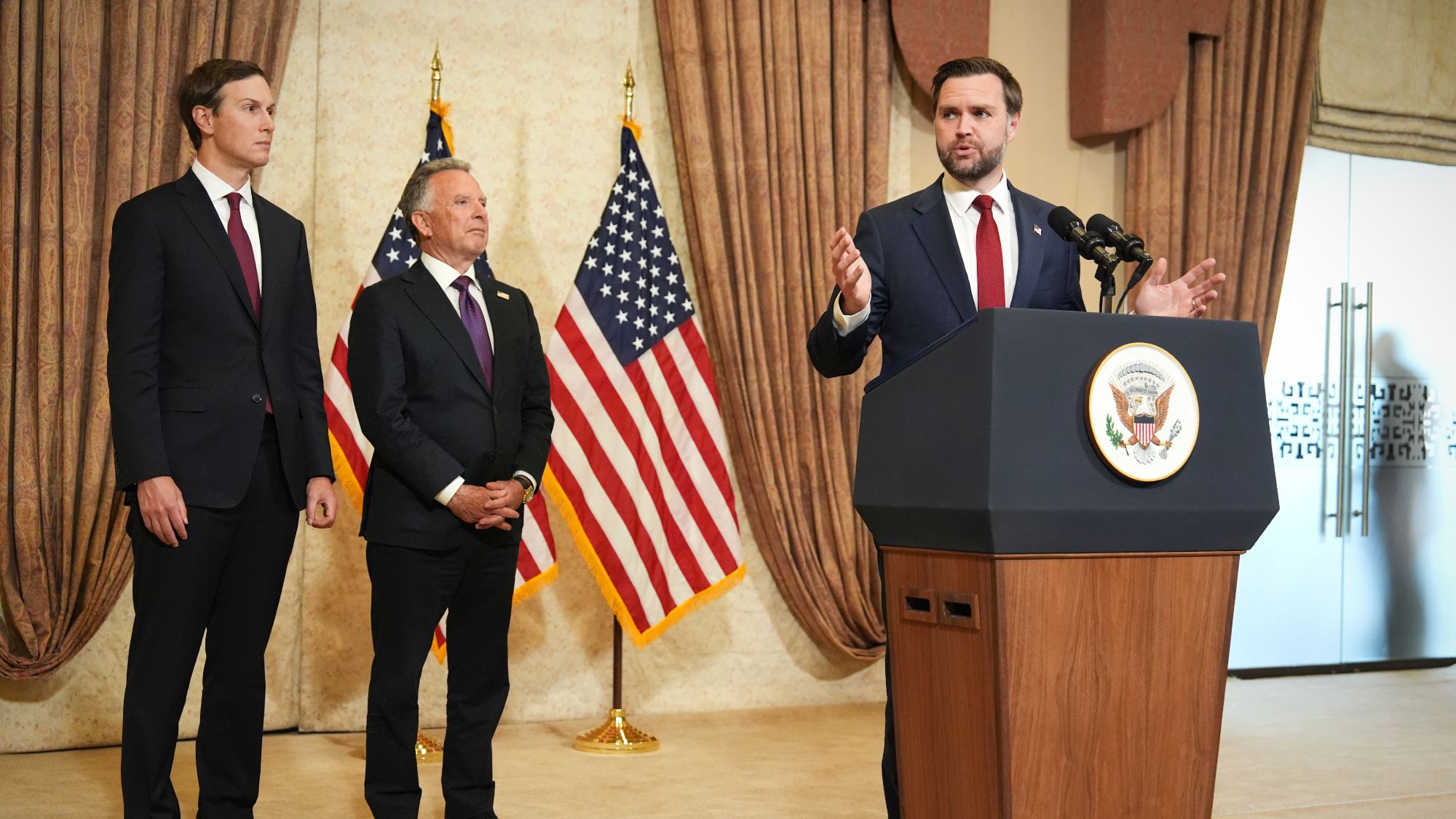
The U.S. delegation, headed by Vice President Vance, included senior diplomats and military advisors who focused on de-escalation in the Red Sea and Persian Gulf. Vance, in a brief post-talks remark to reporters outside the negotiation venue—a heavily secured government compound in Islamabad—stressed the administration's commitment to peace but warned of consequences for non-compliance. “Iran must choose between dialogue and disruption,” he said, echoing Trump's hardline rhetoric.
Security experts expressed skepticism about the blockade's effectiveness and sustainability. Andreas Krieg, a security expert at King's College London, told the Associated Press that “Americans have a much lower threshold of pain than the Iranians.” He added, “The Iranians ‘can sustain this for far longer than the world economy’ and ‘the Americans,’ and Trump doesn’t have ‘any tool in the toolbox in terms of the military lever’ he can use ‘to get his way.’” Krieg's assessment highlights the asymmetric nature of the conflict, where Iran's resilience to sanctions contrasts with domestic pressures in the U.S. over rising energy costs.
Historical context underscores the high stakes. The last direct U.S.-Iran talks of this magnitude occurred in the late 1970s, just before the U.S. embassy hostage crisis that severed diplomatic ties. Subsequent encounters have been indirect, often mediated through European allies or the United Nations. The choice of Pakistan as a neutral venue reflects Islamabad's balancing act between its alliances with both Washington and Tehran, including economic ties via the China-Pakistan Economic Corridor that indirectly benefits from stable regional trade.
Internationally, reactions were swift. Saudi Arabia, Iran's regional rival, welcomed the U.S. stance in a foreign ministry statement, calling it a necessary step to curb Tehran's “adventurism.” In contrast, China, a major buyer of Iranian oil, urged restraint and offered to mediate further discussions. European Union foreign policy chief Josep Borrell expressed concern over the blockade's potential to “destabilize global markets,” while calling for a return to the 2015 nuclear deal framework.
Within the U.S., the announcement drew mixed responses along partisan lines. Republican leaders in Congress praised Trump's decisiveness, with Senate Majority Leader Mitch McConnell tweeting that it sends a “clear message to aggressors.” Democrats, however, criticized the move as escalatory, with House Speaker Nancy Pelosi warning in a statement that it risks “entangling America in another Middle East quagmire” without congressional approval. The White House has yet to detail the legal basis for the blockade, though presidents have historically invoked executive authority for such naval actions under the War Powers Resolution.
Military preparations are already underway, with the USS Abraham Lincoln carrier strike group repositioning in the Arabian Sea. U.S. Central Command reported that additional refueling ships and surveillance aircraft would support the operation, which could involve boarding and inspecting suspect vessels. Iran, for its part, has bolstered its naval presence in the strait, deploying fast-attack boats and submarines in recent weeks, according to satellite imagery analyzed by think tanks like the Institute for the Study of War.
The broader implications extend to global energy security and geopolitical alliances. A prolonged blockade could accelerate the shift toward alternative energy sources, but in the short term, it threatens to exacerbate inflation worldwide. For Iran, the pressure might force concessions, but it could also rally domestic support for hardliners opposed to compromise. As the April 22 ceasefire deadline approaches, diplomats on both sides face a narrow window to avert escalation.
Trump's social media post, which garnered millions of views within hours, framed the blockade as a direct response to Iran's alleged violations of the ceasefire, including drone attacks on shipping in the Gulf of Oman last month. While U.S. intelligence attributes those incidents to Iranian proxies, Tehran denies involvement. The discrepancy underscores the challenges in verifying claims amid the fog of hybrid warfare.
Looking ahead, the coming days will be critical. U.S. officials have scheduled briefings with allies in Brussels and Tokyo to coordinate responses, while Iran has convened an emergency meeting of the Organization of Islamic Cooperation. Whether this marks the beginning of a new confrontation or a tactical bluff remains unclear, but the world is watching the Strait of Hormuz closely as tensions simmer.