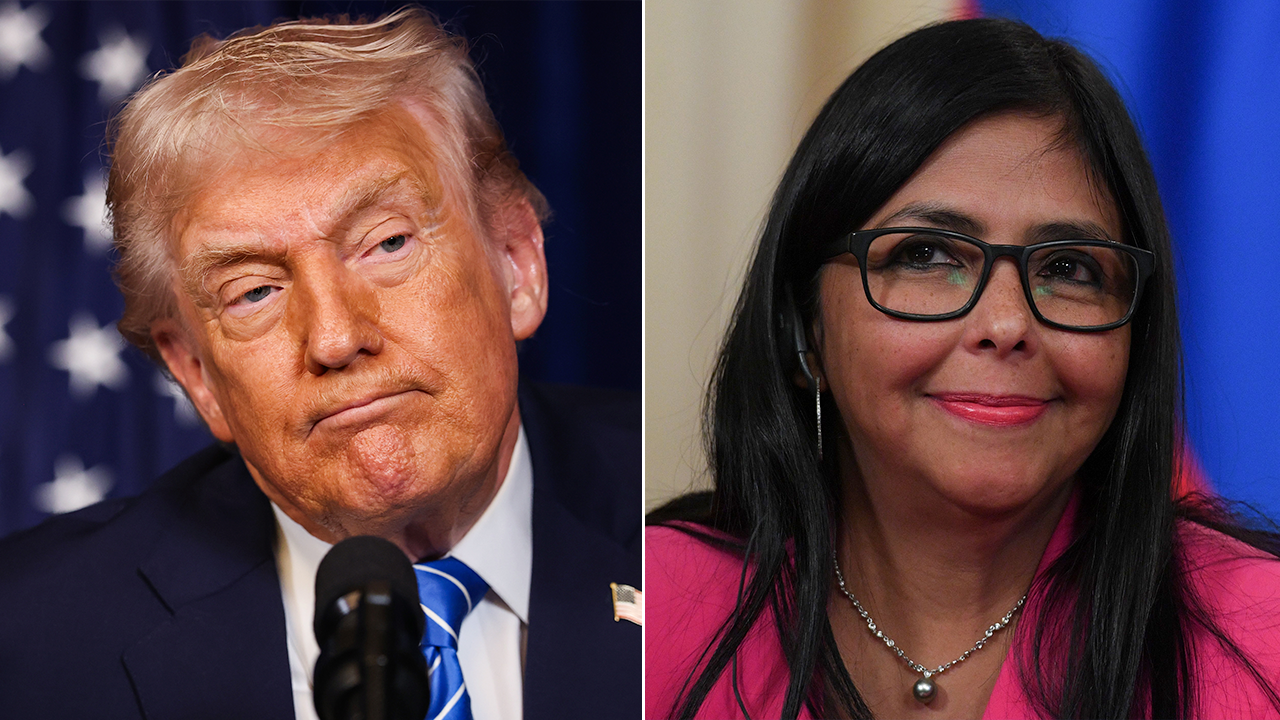
WASHINGTON — President Donald Trump declared on Saturday that the United States is now in charge of Venezuela following the dramatic arrest of longtime leader Nicolás Maduro in a U.S. military operation, vowing to oversee the country's reconstruction and delay elections until stability is restored. Speaking to reporters aboard Air Force One during a gaggle en route from Kuala Lumpur, Malaysia, to Tokyo, Japan, on Oct. 27, 2025, Trump outlined a bold plan to revive Venezuela's devastated economy, particularly its oil sector, while emphasizing that American companies, not taxpayers, would foot much of the bill.
The arrest of Maduro, captured early Saturday in what Trump described as a 'fortress'-like house in Caracas, marked a stunning escalation in U.S. intervention in the South American nation. According to reports, U.S. forces executed surgical strikes that led to Maduro's swift apprehension on drug conspiracy charges. He was subsequently transported aboard the USS Iwo Jima and landed in New York at the West 30th Street Heliport, where Drug Enforcement Administration agents took custody. Trump shared a photo of the captured leader on Truth Social, highlighting the operation's success.
"Don’t ask me who’s in charge because I’ll give you an answer, and it’ll be very controversial," Trump told reporters when pressed on the power vacuum left by Maduro's removal. Clarifying his stance, he added, "It means we’re in charge." The remarks came amid mounting questions about governance in Venezuela, where Delcy Rodríguez was reportedly sworn in as the new vice president shortly after the events unfolded.
Trump revealed he had not personally spoken with Rodríguez but indicated that coordination between U.S. officials and the emerging Venezuelan leadership is already in progress. This comes as uncertainty lingers over the functioning of the interim government in Caracas. Rodríguez, a key figure in Maduro's administration, addressed the media there on March 10, 2025, amid ongoing political tensions, according to Reuters images from the scene.
Portraying Venezuela as a "failed state" ravaged by years of mismanagement, Trump argued that immediate democratic transitions would be premature. "We have to do one thing in Venezuela. Bring it back. It’s a dead country right now," he said. He drew a provocative parallel to domestic politics, claiming, "It’s a country that, frankly, we would have been if I had lost the election. We would have been Venezuela on steroids." This comparison underscored his justification for U.S. involvement, framing it as essential to prevent further collapse.
Central to Trump's vision is the restoration of Venezuela's oil industry, which he accused previous governments of stripping from American interests. "They stole our property. It was the greatest theft in the history of America. Nobody has ever stolen our property like they have. They took our oil away from us. They took the infrastructure away. And all that infrastructure is rotted and decayed," Trump stated. He emphasized that U.S. oil companies would invest billions to rebuild production, extracting and selling the resources while overseeing the broader recovery. A Venezuelan Navy coast guard boat was spotted operating off the Caribbean coast on Sept. 11, 2025, amid heightened regional tensions, as captured in Reuters footage.
Elections, Trump insisted, would be postponed until the nation stabilizes. "We’re going to run everything," he said. "We’re going to run it, fix it. We’ll have elections at the right time." This approach includes tackling rampant inflation, revenue shortfalls, and crumbling infrastructure, with the U.S. managing the process to ensure a viable foundation for future governance.
The operation has sparked global reactions. Sen. Lindsey Graham, R-S.C., championed the capture on Fox News' 'Sunday Night in America,' discussing its implications for international stability. U.N. Ambassador Michael Waltz defended the action ahead of a Security Council meeting, while Sen. Marco Rubio pushed back against criticisms from NBC regarding the lack of congressional approval. On the world stage, the moves have been both praised and condemned, with headlines noting the surgical strikes' precision.
Trump rejected suggestions that the intervention was driven by oil interests or purely regime change, instead tying it to longstanding U.S. policy in the Western Hemisphere. "It’s about peace on Earth," he said. "You gotta have peace, it’s our hemisphere. The Monroe Doctrine was very important when it was done." He criticized past presidents for neglecting this doctrine, adding, "And other presidents, a lot of them, they lost sight of it. I didn’t. I didn’t lose sight. But it really is. It’s peace on Earth."
Beyond Venezuela, Trump's comments extended to broader foreign policy warnings. He singled out neighboring Colombia as a growing security threat, accusing its leadership of facilitating drug trafficking into the U.S. "Colombia’s very sick too, run by a sick man who likes making cocaine and selling it to the United States, and he’s not going to be doing it very long," Trump said. When asked if this implied potential U.S. action, he replied, "It sounds good to me."
Trump also addressed unrest in Iran, where protests continue amid government crackdowns. "We’re watching it very closely," he warned. "If they start killing people like they have in the past, I think they’re going to get hit very hard by the United States." These statements reflect a more assertive U.S. posture under his administration, particularly in regions he views as vital to American security.
The capture of Maduro, who had greeted supporters at a rally in Caracas on Dec. 1, 2025, as shown in Anadolu Agency photos, ends a chapter of prolonged instability in Venezuela. Millions have fled the country due to economic collapse, with many now residing in the U.S. Trump pledged to prioritize their welfare, saying, "We’re gonna cherish a country. We’re going to take care of, more importantly, of the people, including Venezuelans that are living in our country that were forced to leave their country, and they’re going to be taken very good care of."
As the U.S. assumes this unprecedented role, questions persist about international law, regional alliances, and the timeline for Venezuelan self-governance. Officials in Washington have not detailed the full scope of the military operation, but reports indicate it was executed with minimal casualties, focusing on Maduro's 'bum rushed' extraction from his secure residence. The arrival in New York on Jan. 3, 2026, sets the stage for legal proceedings against the former leader.
Analysts note that this intervention could reshape dynamics in Latin America, potentially straining relations with allies wary of U.S. unilateralism. Trump, however, framed it as a restoration of American leadership, invoking historical precedents to justify the moves. With reconstruction efforts poised to begin, the focus now shifts to implementation, as American firms prepare to reengage in Venezuela's resource-rich landscape.
The broader implications extend to U.S. domestic politics and global perceptions of Trump's foreign policy. Supporters hail it as decisive action against threats, while critics question the constitutionality and long-term costs. As Venezuela navigates this transitional phase under U.S. oversight, the world watches to see if Trump's promises of revival materialize into lasting peace and prosperity.