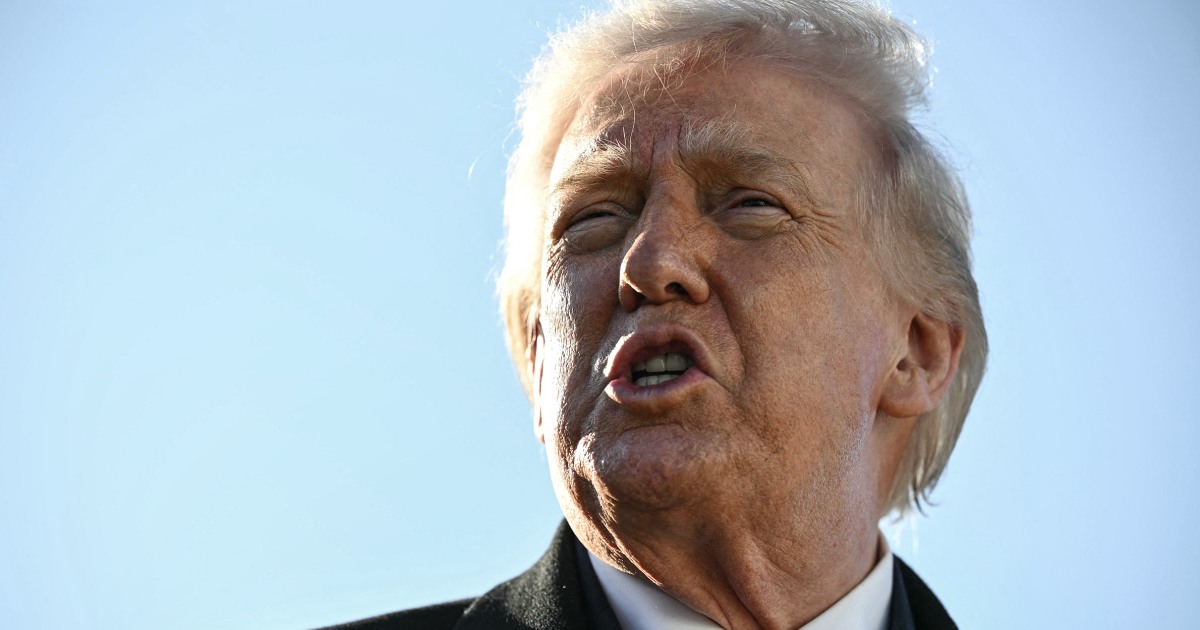
WASHINGTON — President Donald Trump announced on Friday via social media that he plans to issue an executive order mandating voter identification requirements for the upcoming midterm elections, regardless of whether Congress approves such measures. In a series of posts on his platform, Trump declared, "There will be Voter I.D. for the Midterm Elections, whether approved by Congress or not!" He further stated, “If we can’t get it through Congress, there are Legal reasons why this SCAM is not permitted. I will be presenting them shortly, in the form of an Executive Order.” The statements come amid ongoing Republican efforts to tighten voting rules nationwide, following the House of Representatives' passage of the SAVE America Act earlier this week.
The SAVE America Act, formally known as the Safeguard American Voter Eligibility Act, aims to overhaul federal election procedures by requiring voters to provide documentary proof of citizenship, such as a passport or birth certificate, in person before registering for federal elections. The legislation also imposes new restrictions on mail-in ballots, including stricter deadlines and verification processes. Trump has repeatedly urged Congress to pass the bill, framing it as a necessary step to prevent what he describes as widespread voter fraud, though no evidence has substantiated such claims on a large scale.
On Wednesday, the House approved the SAVE America Act in a largely party-line vote, with all Republicans supporting it and only one Democrat, Rep. Henry Cuellar of Texas, joining them. The bill now heads to the Senate, where it faces significant hurdles. Overcoming a Democratic filibuster would require 60 votes, a threshold that appears unlikely given opposition from Senate Democrats and at least one Republican. Sen. Lisa Murkowski of Alaska, the first GOP senator to publicly oppose the measure, reminded her colleagues last week of their previous stance against federal mandates on state election processes, dating back to 2021 debates over similar proposals.
Democrats have sharply criticized the SAVE America Act, arguing that it would disenfranchise millions of eligible voters, particularly minorities, low-income individuals, and the elderly who may lack easy access to required documents. Senate Minority Leader Chuck Schumer, D-N.Y., called the proposal “would impose Jim Crow type laws to the entire country and is dead on arrival in the Senate.” He and other Democrats point to existing federal laws that already require voters to attest to their citizenship under oath, with severe criminal penalties for false statements. Data from nonpartisan election monitors indicates that instances of noncitizen voting are exceedingly rare, with studies showing rates below 0.0001% in recent elections.
Trump's threat of an executive order revives a contentious strategy he employed earlier this year. In March, he signed an order attempting to enforce proof-of-citizenship requirements for voter registration, along with mail-in ballot deadlines and other changes. However, a federal judge in January issued a permanent injunction against that order, ruling that the president lacks the constitutional authority to unilaterally alter state election procedures. The decision underscored the limits of executive power in this arena, as outlined in Article I, Section 4 of the U.S. Constitution, which grants states primary control over the “times, places, and manner” of federal elections, subject to congressional override.
Legal experts have warned that any new executive action from Trump on voter ID would likely meet the same fate. Nate Persily, a professor of law at Stanford University, emphasized the clarity of the constitutional framework, stating, “The constitution is clear on this. There are a lot of things where it’s ambiguous, but it doesn’t give unilateral regulatory authority for election to the president.” Persily noted that only Congress can impose nationwide changes, as it did with the Voting Rights Act of 1965, which expanded federal oversight to combat discrimination at the polls.
Rick Hasen, director of the Safeguarding Democracy Project at the UCLA School of Law, echoed this assessment, predicting that “any purported order that would require states to comply with a Trump mandated voter ID law would similarly be found to be unconstitutional.” Hasen referenced the January court ruling as a direct precedent, highlighting how it affirmed that election administration remains a state prerogative unless Congress intervenes. Both experts expressed concern over the broader pattern of Trump's interventions, which they see as part of an effort to centralize control over elections traditionally managed at the state and local levels.
Trump's latest posts align with his long-standing calls for Republicans to “nationalize” and “take over” election administration. This push intensified after his unsubstantiated claims of winning the 2020 presidential election, which he continues to assert despite multiple recounts, audits, and court rulings confirming Joe Biden's victory. Recently, the FBI seized ballots and voter records from Fulton County, Georgia, as part of an ongoing investigation into alleged irregularities from that election—actions that Persily described as interconnected with Trump's current rhetoric.
"It's not an isolated tweet here, right?" Persily said of Trump's posts Friday. "There's a lot that's going on. So you've got the action in the legislature, in Congress, you've got these, the earlier executive order, you have the seizing of the ballots and other materials from Fulton County, right? And so it's all of a piece with the desire to have greater federal oversight of elections."
The Fulton County seizure, which occurred in late 2023, involved materials from a suburban Atlanta warehouse and has fueled speculation among Trump's supporters about renewed probes into 2020 voting. Officials in Georgia, a battleground state where Trump narrowly lost to Biden, have maintained that no widespread fraud occurred, but the incident underscores the persistent tensions surrounding election integrity. Trump's social media activity on Friday, viewed millions of times within hours, reignited debates over the balance between securing elections and ensuring broad access to the ballot.
Proponents of voter ID laws, including many Republicans, argue that such measures are common sense safeguards against potential abuse, citing polls showing majority public support for identification requirements at polling places. As of now, 36 states already mandate some form of voter ID, though the specifics vary widely—from photo IDs to affidavits. The SAVE America Act would standardize these rules federally, potentially overriding less stringent state policies and affecting an estimated 10 million voters who lack ready access to citizenship documents, according to analyses from civil rights groups.
Opponents, including the Brennan Center for Justice and the ACLU, contend that the bill's in-person proof-of-citizenship mandate could create insurmountable barriers, especially in rural areas or for those without birth certificates due to historical record-keeping gaps. They reference studies from the 2020 election, where strict ID rules in some states correlated with lower turnout among Black and Latino voters. In Texas, for instance, Rep. Cuellar's support for the bill drew criticism from fellow Democrats, who accused him of bucking party lines on a core civil rights issue.
As the midterm elections approach in November 2026, the fate of the SAVE America Act remains uncertain in the Senate, where Majority Leader Chuck Schumer has vowed to block it. Even if the bill stalls, Trump's executive order pledge could prompt immediate legal challenges from states and advocacy groups. Civil liberties organizations are already preparing lawsuits, anticipating a repeat of the earlier injunction battle. Meanwhile, election administrators in key states like Georgia, Pennsylvania, and Michigan are bracing for potential federal interference, which could complicate preparations for what promises to be a highly contested cycle.
The controversy highlights deeper divisions over voting rights in America, where reforms aimed at security often clash with efforts to expand participation. With control of Congress and statehouses at stake, both parties are mobilizing: Republicans to advance their agenda through legislation or executive action, and Democrats to defend state autonomy and voter access. As Persily observed, these developments are not occurring in isolation but as part of a larger strategy to reshape the electoral landscape.
Looking ahead, the Supreme Court may ultimately weigh in if Trump's order proceeds, given its history of upholding some voter ID laws while striking down others deemed discriminatory. For now, Trump's Friday announcements serve as a rallying cry for his base, while drawing rebukes from legal scholars and opponents who view them as an overreach of presidential power. The Appleton Times will continue to monitor developments as Congress reconvenes and midterm campaigning intensifies.