In a move that has drawn sharp criticism from immigration experts, the Trump administration has directed U.S. embassies in Australia, New Zealand, Canada, the United Kingdom, and several Western European countries to gather and report data on crimes committed by migrants. The directive, issued this week, aims to support allied nations in overhauling their immigration policies to address what U.S. officials describe as the dangers of "mass migration." A State Department spokesperson, during a briefing explaining the initiative, labeled mass migration an "existential threat to Western civilisation and the safety of both the West and the world."
The request marks an unusual extension of U.S. domestic immigration enforcement into international diplomacy, according to criminologists who spoke out against it. Adjunct Professor Leanne Weber and Professor Alison Gerard from the University of Canberra, along with Professor Marinella Marmo from Flinders University, argued in a joint analysis published by The Conversation that the move perpetuates a misleading narrative blaming migrants for rising crime rates. "Empirical research over decades in the U.S. shows migrants do not offend at disproportionate rates, despite persistent political claims," the professors wrote, emphasizing that such data collection could lead to the scapegoating of vulnerable populations.
The administration's broader anti-immigration efforts have intensified since President Trump's return to office, including mass deportation campaigns and military actions against suspected drug smugglers in the Caribbean Sea and eastern Pacific Ocean. Officials have justified these measures by claiming that American cities are "under siege" from migrant-related crime, though critics contend these actions skirt international law and erode civil liberties. In one notable escalation, the U.S. has authorized lethal force against boats allegedly carrying "narco-terrorists," a term used to describe operations flooding the country with narcotics.
Australia, portrayed by the State Department as a "great ally," has been specifically highlighted in the data-gathering effort. The spokesperson elaborated on the purpose during the briefing, stating, "to warn our friends that if you import a rapid number of individuals of any background, but particularly individuals of a culture that’s radically different than Australia’s without any sort of mechanism for diffusing the impact, that can lead to political unrest, that can lead to economic instability." This rhetoric echoes concerns raised by U.S. policymakers about cultural clashes and societal strain from immigration.
However, Australian research and public inquiries have repeatedly debunked links between migration and elevated crime, according to the University of Canberra professors. Studies funded by the Australian Research Council, including Gerard's project "Analysing interactions within the criminal deportation system" (grant DP210100931), have shown that claims of migrant-driven crime spikes are often exaggerated. The experts called for tighter media regulations to curb inaccurate reporting that fuels prejudice against marginalized communities.
Australia's immigration policies have themselves grown increasingly stringent, blending criminal justice with border control in a phenomenon known as "crimmigration." Successive governments have broadened deportation powers, imposing harsher penalties on non-citizens for offenses compared to Australian citizens. Even individuals without violent convictions—or in some cases, no convictions at all—have faced exclusion, the professors noted.
A pivotal moment came in 2023 with the High Court's NZYQ ruling, which declared indefinite detention of removable non-citizens unconstitutional. The decision led to the release of hundreds of individuals—many with no criminal records or who had already served sentences—onto bridging visas in the community. This sparked intense parliamentary debates, with some lawmakers invoking language reminiscent of U.S. rhetoric about existential threats to society.
In response, the Australian government rushed through emergency legislation, introducing measures such as enhanced visa cancellations, increased electronic monitoring, and expanded deportation authority. These laws, passed amid public outcry, have been criticized for prioritizing punishment over prevention. "It is not clear to us how enhanced visa cancellations and deportation powers improve community safety," Weber, Gerard, and Marmo wrote, pointing out that everyday offenders, including citizens, are routinely reintegrated without such scrutiny.
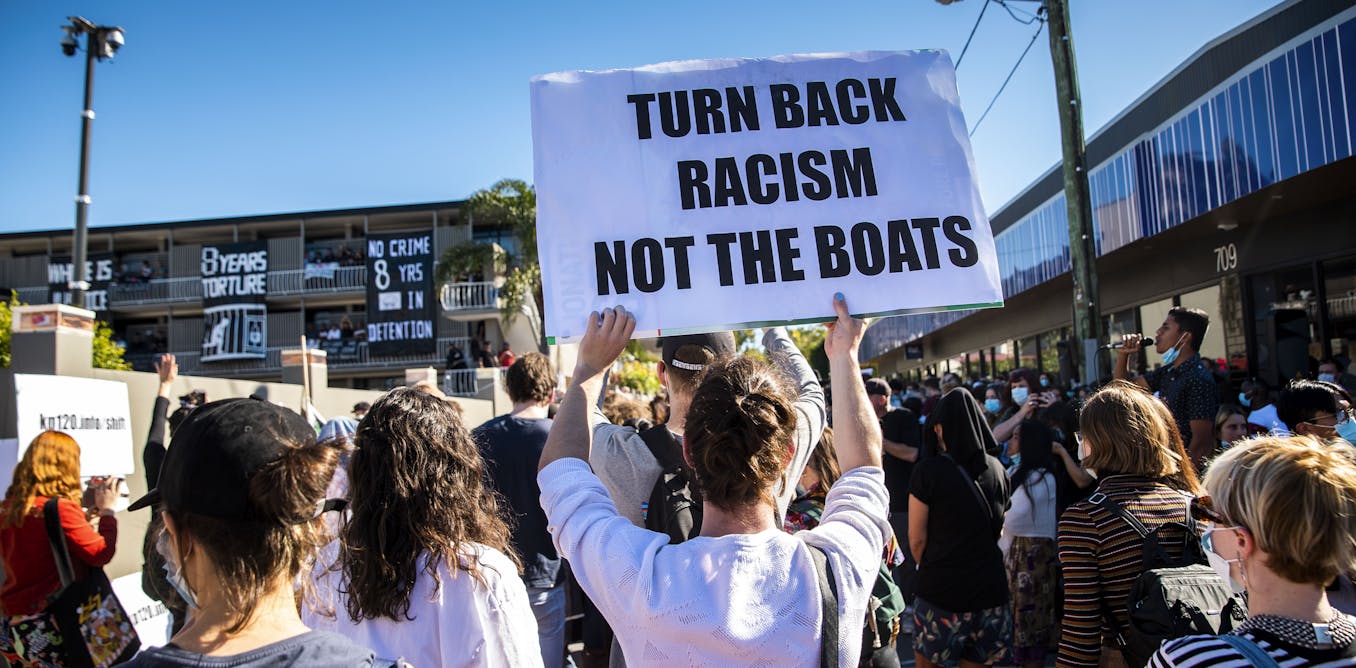
The timing of the U.S. directive coincides with rising anti-immigration sentiment in Australia, evidenced by recent rallies across major cities like Sydney and Melbourne. Protesters have adopted terms like "mass migration," mirroring U.S. discourse, and expressed fears over cultural changes and resource strains. While the government has not yet publicly responded to the embassy request, the alignment with domestic debates suggests potential receptivity in certain political circles.
Funding disclosures from the academics reveal ties to Australian research bodies: Weber and Gerard receive support from the Australian Research Council, while Marmo has grants from the ARC, the Attorney-General's Department, and the Law Foundation of South Australia. Their institutions, the University of Canberra and Flinders University, are members of The Conversation AU, which published the analysis on November 14, 2024, under DOI 10.64628/AA.etdewqp6y.
From the U.S. perspective, the data collection is framed as collaborative assistance, helping allies avoid pitfalls observed in America's immigration challenges. State Department officials have not detailed how the information will be used beyond policy recommendations, but the initiative builds on Trump's campaign promises to deport millions and secure borders. In Australia, where net migration reached 518,000 in the year ending June 2023—according to government statistics—the issue resonates amid housing shortages and economic pressures.
Critics warn that embedding U.S.-style criminalization in diplomatic ties could normalize discriminatory practices globally. The professors highlighted systemic issues like racism that drive marginalized groups into the justice system, advocating for evidence-based strategies addressing social determinants of crime rather than blanket exclusions. "Migration is a feature of our globalising world and does not represent an existential threat to Western civilisation," they asserted, rejecting ultra-nationalist responses.
As the directive rolls out, embassies in Canberra and other capitals are reportedly compiling statistics on migrant offenses, though specifics on methodologies remain undisclosed. Australian officials, including those from the Department of Home Affairs, have yet to comment on compliance, but past cooperation on security matters suggests data sharing could proceed quietly. Immigration advocates in both countries are mobilizing, with groups like the Refugee Council of Australia decrying the move as fear-mongering.
Looking ahead, the initiative could influence upcoming policy reviews in allied nations. In Australia, a federal election looms in 2025, where immigration remains a flashpoint; opposition leaders have already echoed concerns about rapid population growth. Meanwhile, in the U.S., ongoing legal battles over deportation programs underscore the high stakes, with human rights organizations reporting over 1.5 million encounters at the southern border in fiscal year 2024.
Ultimately, the push for migrant crime data underscores a transatlantic tension between security imperatives and humanitarian principles. While U.S. officials see it as a proactive warning, experts like Weber, Gerard, and Marmo argue it risks entrenching divisions without enhancing safety. As global migration patterns evolve—driven by conflicts, climate change, and economic disparities—the debate is likely to intensify, testing alliances and domestic policies alike.