WASHINGTON — President Donald Trump called on a coalition of nations Saturday to help secure the Strait of Hormuz, a vital shipping corridor threatened by Iranian attacks amid an escalating conflict that has disrupted global oil trade. In posts on Truth Social, Trump urged countries including China, France, Japan, South Korea, the United Kingdom and others to dispatch warships to police the strait, which carries about a fifth of the world's oil through roughly 3,000 ships each month.
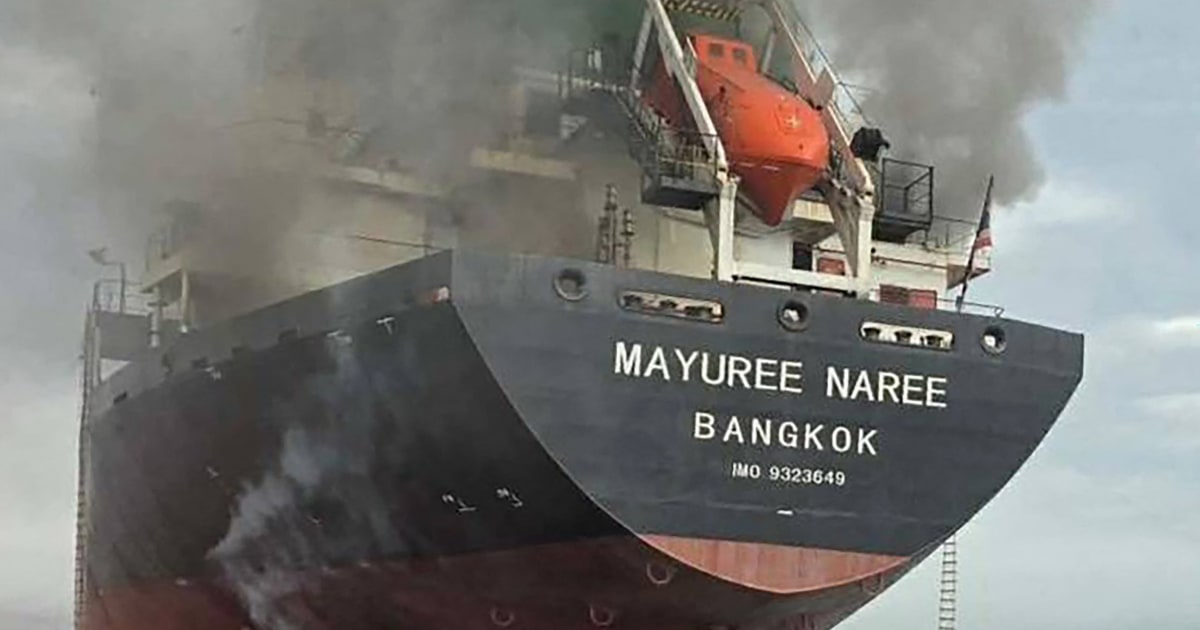
The president's appeal comes two weeks after the start of the war between the United States and Iran, during which numerous vessels have been targeted, effectively halting trade and driving a sharp increase in oil prices. Trump wrote, “Many countries, especially those who are affected by Iran’s attempted closure of the Hormuz Strait, will be sending War Ships” to ensure safe passage. He added in a follow-up post, “The U.S. will also coordinate with those Countries so that everything goes quickly, smoothly, and well. This should have always been a team effort, and now it will be.”
In a phone interview with NBC News on Saturday, Trump claimed that several nations had already pledged support. “They’ve not only committed, but they think it’s a great idea,” he said. The strait, linking the Persian Gulf to the Arabian Sea, has long been a chokepoint for energy exports, with disruptions rippling through markets worldwide. Since the conflict began on October 15, attacks on shipping have intensified, according to U.S. military reports, leading to a de facto blockade that has spiked Brent crude prices by over 20 percent in the past week.
However, responses from the countries Trump named have been measured and noncommittal, highlighting potential challenges in forming a multinational effort. Japan's Foreign Ministry told NHK that the country would not dispatch naval vessels immediately at the U.S. president's request. “Japan decides its own response, and independent judgment is fundamental,” the ministry stated, emphasizing Tokyo's cautious approach to military engagements abroad.
France, a key U.S. ally, has ships deployed in the broader Middle East region but stopped short of endorsing an offensive role in the strait. President Emmanuel Macron has previously floated the idea of escorting vessels through the waterway, but the French Foreign Ministry clarified on X (formerly Twitter) Saturday that its naval presence would maintain a “defensive” posture in the eastern Mediterranean. The government did not immediately respond to Trump's direct call for warships.
China, which relies heavily on the strait for its energy imports, focused instead on diplomacy. A spokesperson for the Chinese Embassy in Washington told CNN that Beijing is “calling for an immediate cessation of hostilities,” without addressing the request for military involvement. This aligns with China's longstanding policy of avoiding direct military intervention in foreign conflicts, even as it faces economic fallout from the oil disruptions.
In the United Kingdom, Energy Secretary Ed Miliband addressed the issue on Sky News Sunday, prioritizing resolution of the underlying war. “The best and most conclusive way to get the Strait reopened is to get this conflict to come to an end,” Miliband said. He noted that London is “talking to our allies, including the U.S.” about potential assistance, mentioning “a range of things” under consideration, such as providing “autonomous minehunting equipment.” The U.K. has faced strained relations with the Trump administration recently, including a public rebuke last Saturday when Trump told Prime Minister Keir Starmer via Truth Social that British aircraft carriers were no longer needed. “We don’t need them any longer — But we will remember. We don’t need people that join Wars after we’ve already won!” Trump posted.
South Korea's presidential office issued a statement Sunday indicating a deliberate review process. “We are taking note of President Trump’s remarks on social media. South Korea and the United States will continue to communicate closely and carefully review the matter before making the decision,” the office told NBC News. As a major importer of Middle Eastern oil, Seoul has a stake in stabilizing the route but has historically deferred to alliance consultations before committing forces.
Experts tracking the situation expressed skepticism about the feasibility of Trump's proposed coalition. H.A. Hellyer, a senior associate fellow at the Royal United Services Institute in London, observed that “the countries Trump named have all gone quiet, which is quite telling.” He described France as “the closest thing to a yes,” but noted that even Macron's comments refer to something “purely defensive.” “That’s a long way from an actual mission, and I don’t expect one to happen. More investment will go into de-escalation efforts in my opinion,” Hellyer added.
Michael A. Horowitz, a geopolitical and security analyst, echoed concerns about the operational risks. “Protecting ships is a very big gamble,” he told NBC News. “On the operational side, you’re putting military assets inside a very narrow corridor, giving Iran multiple opportunities to hit at short distance.” Horowitz argued that countering threats like mines, drones, small boats, and anti-ship missiles would require more than just naval and air power. “You’d need boots on the ground, along key areas of the coast,” he said. Even then, he doubted it would fully reassure markets, warning that “just one attack is enough to suspend traffic” and that “the bar is really high to create enough confidence to lift the de facto closure.”
Trump himself appeared to temper expectations in a Truth Social post Saturday, acknowledging the persistence of Iranian capabilities despite U.S. successes. “We have already destroyed 100% of Iran’s Military capability, but it’s easy for them to send a drone or two, drop a mine, or deliver a close range missile somewhere along, or in, this Waterway, no matter how badly defeated they are,” he wrote. This admission followed a Friday press conference by Defense Secretary Pete Hegseth, who downplayed the strait as a priority. “We have been dealing with it and don’t need to worry about it,” Hegseth said.
Tensions with European allies have complicated U.S. efforts to build support. Earlier in the conflict, Trump clashed with the U.K. over base access. After Starmer initially refused U.S. use of British facilities for strikes—allowing them only for “defensive” actions—Trump remarked, “This is not Winston Churchill that we’re dealing with.” Spain also barred U.S. military planes from its jointly operated bases in Andalusia, prompting Trump to threaten that the U.S. would seek to “cut off all trade with Spain,” a key member of the European Union's single market.
The lukewarm international response underscores the diplomatic hurdles facing the Trump administration as it navigates the two-week-old war. While the U.S. has conducted airstrikes on Iranian targets, including military installations in the Persian Gulf region, the focus on the strait highlights broader economic stakes. Global markets have reacted volatilely, with Asian stock indices dipping Friday amid fears of prolonged disruptions.
Looking ahead, analysts suggest that any coalition would likely emphasize de-escalation over confrontation. Hellyer predicted increased diplomatic pushes, possibly through the United Nations or regional forums, to broker a ceasefire. Horowitz noted that stabilizing the strait could take weeks or months, depending on Iran's willingness to halt asymmetric attacks. For now, shipping companies are rerouting vessels around Africa, adding costs and delays to global supply chains.
As the conflict enters its third week, Trump's call for a “team effort” remains a pivotal test of alliance solidarity. With oil prices hovering near $100 per barrel and no firm commitments from named partners, the path to reopening the Strait of Hormuz appears fraught with uncertainty.